

















Artificial intelligence may touch nearly every function of property and casualty insurance, but insurance executives say the technology’s greatest value so far is in changing how underwriters evaluate risk. This is because improved underwriting can help customers avoid losses before they even occur.
“I would see it primarily being deployed from an underwriting decision-making process because you have enriched data, so you’re able to make more creative decisions, close those protection gaps, deal with new technologies, draw in new information and deal with risks that we couldn’t deal with beforehand,” said Dawn Miller, CEO of Lloyd’s Americas and chief commercial officer at Lloyd’s, during a July roundtable hosted by Lloyd’s Lab at Google’s offices in Manhattan.
The roundtable was part of Lloyd’s Lab’s first Accelerator program innovation showcase in the United States. The event was held in partnership with The Hartford and Google Cloud, bringing together eight InsurTech startups to showcase their new insurance solutions. Lloyd’s Lab was launched in 2018 to bring together underwriting expertise, broker distribution, capital and data to create the conditions for ideas to move from pilot to adoption at scale.

“When we think about innovation, it’s about making sure you’re addressing real-world issues and challenges and pinch points people are feeling—whether they’re operational, whether they’re at the client level, whether it’s elsewhere in the chain.” — Dawn Miller
Leaders from Lloyd’s, The Hartford and Google Cloud said underwriting is an area of insurance in which AI is already producing business value by opening the door to a more proactive approach centered on risk prevention.
“We’re excited about a pivot that we’re trying to help the industry with. For years, the product has been a promise, right? We saw a product that really delivers a promise to get people back on their feet, to rebuild a building after something’s happened, to get somebody back into work after they’ve had an injury,” said Mo Tooker, president of The Hartford. “That is the promise, and that promise is not changing. It is an incredibly important part of what we’re delivering to society. But what we are really excited about is the confluence of a bunch of events that will allow us to bring forward a mindset to our customers that is really about risk prevention, risk mitigation, risk avoidance.”
This reflects a shift in how AI is being deployed across insurance organizations, panelists said. While early tech investments largely focused on automating administrative work or improving customer interactions, today the emphasis is increasingly moving toward core insurance functions like understanding and pricing risk.
“It’s all focused around not just the promises we’ve already made of making sure when a bad day occurs that you get back to normal as quickly as possible, but also what can we do to help, perhaps prevent, or give you enough time and space to decrease the amount of impact that an event might have on a business or on your personal life,” said Rohit Bhat, managing director of Financial Services at Google Cloud.
For Google, that means leveraging decades of research across mapping, weather, imagery and climate science to support insurance, with the objective of determining which variables matter and how they interact.
“Our mission right now as Google and Google Cloud is really to take the best of our assets, defined as our technology capabilities—the ones you know about and the ones that are more new age around AI—and bring those with the expertise that we have developed in our own domains together under your umbrellas to go and service these InsurTechs to bring their capabilities to market,” he said.
He added that sometimes this happens at the platform level with Google Cloud, and sometimes it’s at the research level with things like climate change and geospatial analysis.
“This [lab program] is a really deeply collaborative relationship where it’s less about saying, ‘Just go launch something,'” he said. “It’s really more focused around what is it going to enable and what is it going to help deliver and improve looking forward.”
A Changing Risk Environment
This is especially important right now as carriers confront a fast-paced environment of emerging risks. Cyber threats continue to evolve, climate-related losses have become more volatile, and economic uncertainty is creating new exposures for businesses.
“The number of factors that might impact what you call risk have gone up,” Bhat said. “There are a number of domains and vectors that have increased the volume and variety of risk.”
Panelists said they’ve seen a shift not only in how InsurTechs are using AI technology to address these issues but in what innovation in the insurance industry actually looks like moving forward.
“When we think about innovation, it’s about making sure you’re addressing real-world issues and challenges and pinch points people are feeling—whether they’re operational, whether they’re at the client level, whether it’s elsewhere in the chain,” Miller said. “It’s about making sure that you’re addressing real-world issues where there’s a market demand for it and that you’re creating that environment for scale at pace.”
Bhat added that many of the companies now participating in Lloyd’s Lab are pursuing a different goal than earlier generations of startups as cost efficiency alone is no longer the primary objective.
“I thought what was really interesting was that the majority of the cohort—I think it was 50% of the cohort—was almost entirely focused on the fact that there is a lot to be gained if we’re able to drive operational efficiencies using these technologies,” he said. “Operational efficiency doesn’t just mean make something cheaper. It actually means making something a bit more intelligent, making something able to do something in a manner that’s more time sensitive and more resilient. These attributes of efficiency often get mislabeled as cost efficiency. These are actually about how you are able to go and deliver value to your constituents.”
Miller agreed, adding that a major goal for startups in insurance today is closing protection gaps.
“When the InsurTech craze got going, a little bit over 15 years ago, the first or second wave of that was all about the cost efficiencies and a lot on the front end,” she said. “And now, it’s how do we create an opportunity to address more risk and address topics more swiftly, more intelligently, and deal with prevention as well, but also so we can start closing protection gaps as a direct result of that.”
Taking the AI Conversation Further
Tooker said the partnership with Google is especially important as it can take the AI conversation in insurance a step further.
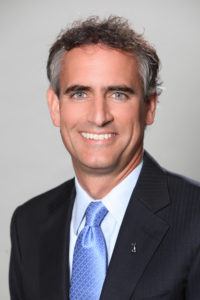
“It creates a mentorship opportunity. It creates a partnership opportunity. We’re taking their technology and putting it right into our customers’ storefronts and factories.” — Mo Tooker
“The Google partnership that we’ve been building for a number of years is just really exciting because we’re starting to build those solutions in the Google Cloud, and the AI solutions that are very common in these conversations, we’re co-creating these things with Google,” he said. “It creates a mentorship opportunity. It creates a partnership opportunity. We’re taking their technology and putting it right into our customers’ storefronts and factories.”
Miller added that this is the first time Lloyd’s Lab has partnered with an entity outside of the insurance industry like Google Cloud.
“And then partnering with one of our market participants [The Hartford]—obviously one of the industry leaders—we’ll just see that partnership continue to grow,” she said. “And I think what really drives us is the true beliefs that we have at Lloyd’s that by convening the best talent, creating diversity of capital and innovation advantage together, you’re going to continue to close the protection gaps that we see around the world. There’s so much happening around us when it comes to climate resilience issues, AI, cyber, places where we have gaps, where we need all of our minds together to come and align. So, that’s something that inspires us at Lloyd’s Lab. It was one of the reasons why we started the lab seven years ago.”
 Weather Service Confirms 2 Tornadoes Touched Down in Arizona Last Week
  Companies, Governments Fight Hacking Attempts in Rush to Patch PHP Flaws
  Who Structures the Problem in AI-Assisted Insurance Decisions?
  LA Fire Victims Set to Lose Case Managers Due to Standoff Between California, FEMA