




















For quite some time now, commercial auto carriers have debated the notion that there is an inverse relationship between the subsidization of telematics program costs and program performance.
The idea is that if the insured is not paying for their telematics solution, then they have no skin in the game and will not invest as much discipline into the program as those that pay for their solution. This is the old adage about people not valuing things that they didn’t pay for.
We took a look at this topic during a recent IoT Insurance Observatory Plenary Session. This global insurance think tank is focused on the profitable adoption of the Internet of Things and InsurTech trends across the insurance industry and was founded by insurance strategist Matteo Carbone in 2016.
Related article: Is Commercial Auto Having Its ‘Sprinkler Moment’?
Azuga has been managing commercial auto telematics programs for over a decade now. We analyzed the performance of a representative distribution of these programs to both understand the impact of subsidization as well as any other patterns that could explain performance impact. From our vantage point, performance is measured as an improvement in safe driving behavior scores with the eventual outcome of a reduction in losses.
Why Is Subsidization Important?
A 2025 panel at the IoT Insurance Observatory explored the key elements that drive the adoption of telematics programs. The consensus of the panel was that subsidization was the most significant variable that drove adoption of commercial auto telematics programs in production.
So, if the largest telematics programs are relying on subsidization to drive adoption, are they sacrificing performance to achieve scale?
The findings from the analysis surprised some of the participants in the Plenary Session but notably not those who currently have subsidized commercial auto telematics programs in production. After all, these carriers have visibility into performance and the return they are achieving on their investment. Presumably this explains why these programs continue to grow and drive positive returns. We also dug into the data to see if there were any other factors that had impact on performance.
Here is what we found.
There is virtually no impact on the performance of a program due to subsidization. For example, below are the performance measures from the cohort of programs that subsidize the first year of their program and then have the insured pick up the cost of the program in outlying years (unsubsidized).
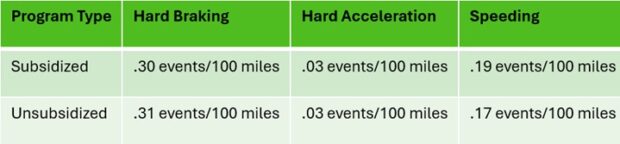
So, if not subsidization, what did have an impact on performance?
The first thing we looked at was whether there was a difference in performance across the program management structure. Azuga supports both a managed structure and an unmanaged program structure across our carrier partners based on their preferences. We started here as we do see a difference in performance based on the structural management of the program at the carrier level and wondered whether there would also be a difference at the insured level.
Managed programs assign an Azuga Customer Success Manager to the insured and the carrier risk management or loss control consultant to pursue priorities shared across the policyholder and carrier alike. A managed program can expand beyond core risk and safety management discipline to also focus on policyholder priorities such as achieving operational efficiencies and vehicle health. The managed program spans configuration management, feature management and recurring reviews that measure results to intended outcomes and drives course correction as required.
Another key aspect of managed programs is centered around driver recognition and reward programs. When there is something in it for the driver, we see sustained positive impact over time. The outcome of the managed program is a more engaged policyholder, and the belief is the ensuing operational cadence overcomes any risk of lethargy from not having “skin in the game” when the carrier is picking up the cost of the solution.
The table below shows the reduction in risk events over a 24-month period between policyholders in managed programs as compared to policyholders in unmanaged programs.
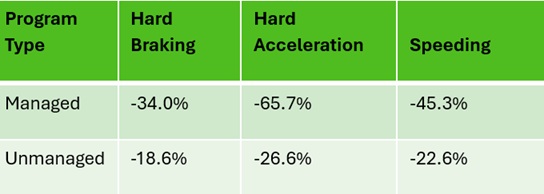
While continuing to look for patterns, another variable jumped out: video telematics. We looked at the performance of fleets with just telematics deployed versus those that also had video telematics (dashcam technology) deployed. As with program management, we found that video telematics also is a factor that favorably impacts program performance.
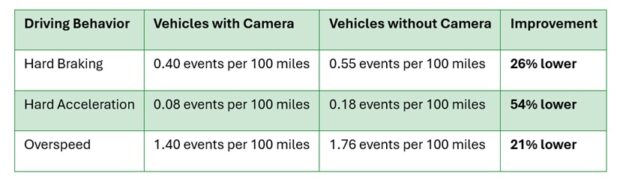
These findings were consistent with a study referenced in a recent article (Is Commercial Auto Having Its Sprinkler Moment?) published in Carrier Management by Matteo Carbone and JD Hassan in April of this year. That study found that fleets with dashcam technology outperformed fleets with just telematics by 25% in their overall safety score.
The conclusions from this session follow the above observations. That is, carriers that are considering whether to subsidize a commercial auto telematics program should do so as long as their program design includes a managed structure for optimal performance. Even if they do not want to start with a managed structure, the carrier can be confident that they do not need to bear the concern of suboptimal performance. There is always the opportunity to align the level of subsidization to performance over time. Finally, there are other technologies, like dashcams, that can further impact performance and the return on investment from a commercial insurance telematics program to both the carrier and the insured. In sum, the performance of a program is explained much more by the program structure and technology and less so by subsidization.
 Tech Bytes: New Partnerships at The Zebra, LexisNexis Risk Solutions
  LA Fire Victims Set to Lose Case Managers Due to Standoff Between California, FEMA
  Viewpoint: Six Questions Every CIO Should Ask Before Their Next AI Investment
  Building a Glass Box Not a Black Box at Elara Spatial