

















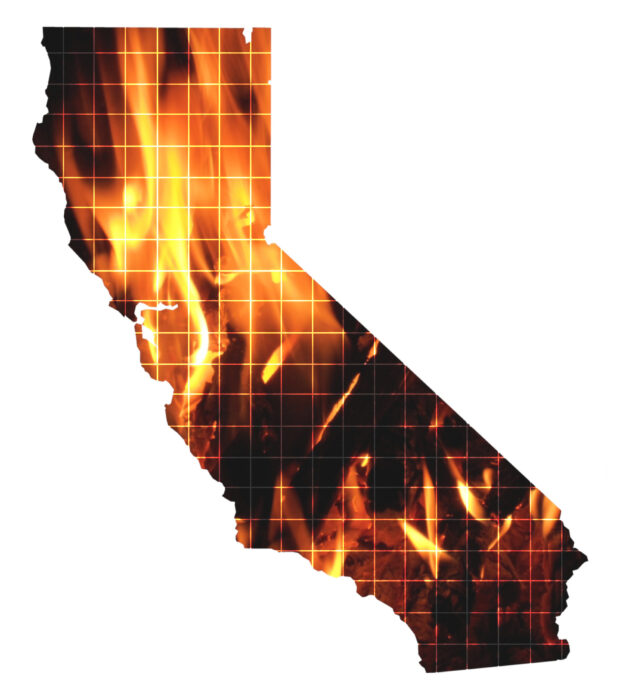
New analysis classified over one million California homes at very high wildfire risk, while showing that property-level mitigation can cut expected losses by up to 70%, according to data released last month by Guidewire HazardHub.
The study examined parcel-level data, historical wildfire modeling, and inspection research.
The comprehensive dataset reveals evolving exposure across suburban and wildland-urban interface (WUI) zones nationwide, giving insurers parcel-level visibility to better price and manage catastrophe risk.
California continues to lead the nation in total high-risk properties, with more than one million homes receiving HazardHub’s highest “F” wildfire risk designation (“very high risk”).
The top 10 states by total homes at “very high risk” (F-rated):
- California
- Arizona
- Colorado
- Oregon
- New Mexico
- Washington
- Nevada
- Montana
- Texas
- Idaho
Note: Pure exposure drops significantly after California.
Texas enters the top 10 with 31,106 “F-rated” homes, highlighting growing wildfire exposure outside traditionally recognized Western markets.
The top 5 states by percentage of homes at “very high risk”:
- Montana
- California
- New Mexico
- Wyoming
- Oregon
The findings indicate wildfire exposure is expanding alongside population growth, suburban development, and the growth of the wildland-urban interface (WUI).
But analysis shows that exposure in California remain highly concentrated as approximately 98% of wildfire-related property damage occurs within roughly 10% of the state’s highest-risk properties.
“Wildfire exposure, particularly in California, is highly concentrated and variable at the property level,” said Chris Folkman, vice president, HazardHub at Guidewire. “Broad regional assumptions overlook meaningful differences between neighboring properties. Parcel-level intelligence helps insurers recognize individual mitigation efforts, price risk accurately, and support broader insurance availability.”
Analyzing approximately 91,800 California home inspections alongside historical damage data, HazardHub identified massive loss-reduction benefits tied to property hardening:
Defensible Space: Homes with well-maintained defensible space were 65% less likely to experience significant wildfire damage.
Ember-Resistant Vents: Properties with ember-resistant vents showed a 40% lower likelihood of ignition compared to unmitigated homes.
Comprehensive Mitigation: Combining multiple resiliency measures reduced overall expected wildfire losses by up to 70%.
The findings support the California Sustainable Insurance Strategy’s goal of expanding insurance availability through advanced risk modeling and mitigation incentives, the HazardHub report stated.
 KCC Says Isaias Insured Losses to Be $3 Billion; AM Best Calls Storm an Earnings Event
  LA Fire Victims Set to Lose Case Managers Due to Standoff Between California, FEMA
  Viewpoint: Six Questions Every CIO Should Ask Before Their Next AI Investment
  Viewpoint: The ‘Unbundled’ Insurer Emerges in Age of AI as Value Chain Fragments