













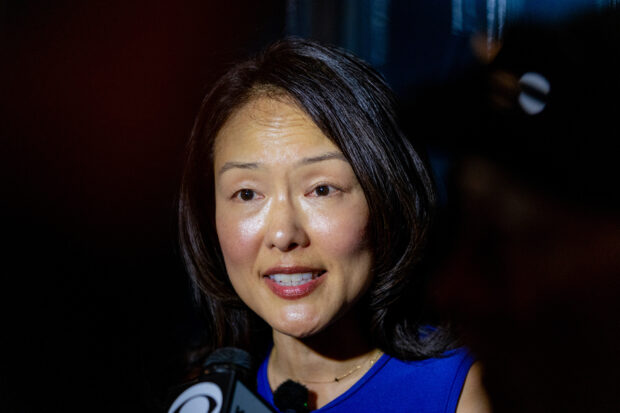
California’s newly elected insurance commissioner, a protégée of Vermont Senator Bernie Sanders, is promising sweeping changes to the state’s $3 trillion home and auto insurance market as climate-fueled wildfires drive up costs and private insurers flee.
Jane Kim, who defeated a mainstream Democrat supported by much of the industry, wants homeowners to pay into a public, nonprofit insurance pool that would cover as much as $400,000 needed to rebuild after a wildfire — keeping the focus on modest homes, not mansions. Private insurers would keep a role by offering coverage above that limit and continuing to cover theft, water damage and ordinary house fires.
Money left after claims and expenses would be saved for future losses and spent on fire prevention rather than go to shareholders and executives, said Kim, a former San Francisco supervisor. While details are still being worked out, Kim said such a “single-payer” system for disaster insurance would provide affordable, universal coverage with two main goals.
“One is that it’s nonprofit and so it doesn’t extort homeowners, and excess profits don’t go to CEO pay and shareholders and Super Bowl ads,” she said in an interview. “Two, that excess profits are invested in mitigation because the only way to make insurance affordable and available long run is to actually decrease risk.”
California’s insurance system has been reeling as private insurers exit the state and the owners of almost 700,000 properties are forced to rely on the insurer of last resort for fire coverage. That insurer, the state FAIR plan, limits reimbursement to $3 million per residence and often doesn’t cover smoke damage. The state granted a 29% premium increase this year to the FAIR plan, which covers $773 billion of property.
At the same time, high-profile disasters have underscored the state’s vulnerability. Last year’s wildfires in the Los Angeles area caused an estimated $40 billion of insured property losses, the world’s costliest natural disaster in 2025.
A separate increasing source of insurance risk Kim has yet to address is rising seas. This winter is expected to bring massive damage from flooding as El Niño conditions cause unusually high tides and heavy rainfall. High waves and tides have already caused extensive damage this year in coastal California cities including Malibu, Long Beach, Huntington Beach, Laguna Beach and San Clemente.
Premium prices for fire coverage would have two parts, according to Kim’s campaign website. One would be based on the home’s wildfire risk related to its location, structure and surroundings to cover losses in a normal fire. A second part would help cover years of widespread disasters that no individual homeowner, company or neighborhood could absorb by themselves.
The program would only cover existing homes to discourage new construction in wildfire zones.
Kim said she will need to write her home insurance plan with the Democratic governor-elect, Xavier Becerra, and the new state legislature after she’s sworn into office in January.
“An idea this big and this ambitious should require a lot of stakeholders and negotiating,” said Kim. “We want there to be a large table that is invested in and bought in to this concept as we work to change a system that is failing many Californians.”
Insurers have responded cautiously since Kim’s victory over Ben Allen, a state senator from the Los Angeles area, was called over the weekend. The industry has shown some signs of recovery after outgoing Commissioner Ricardo Lara implemented years of price regulations that took full effect in August.
“We’re committed to working with the new commissioner, policymakers and community partners on practical solutions that reduce risk, help customers better understand their coverage and support a sustainable insurance market that can protect Californians for years to come,” Bob Devereux, a spokesman for State Farm, the largest private insurer in California, said in an email.
An industry trade group, the American Property Casualty Insurance Association, congratulated Kim on her election but said too much state intervention would risk destabilizing an insurance market that has begun to show signs of recovery.
“Costly new mandates or regulatory actions that drive up costs or limit coverage options risk reversing this progress and worsening the crisis,” Denni Ritter, a spokesperson for the APCIA, said in a statement.
 Whether NFL Guardian Caps Prevent Head Injuries Still Up for Debate
 New Florida Property Tax Cut Could Impact Insurance Rates
 When Claimants Use AI: How Insurers Can Adapt Their Workflows
 Your Rating Rules Survived the Migration. Did Your Prices?