
















Cargo theft is no longer just a physical security problem, according to Michael Fisk, vice president of Roadmaster Group and a senior leader at Tri-State Motor Transit Co.
The new frontier sees thieves impersonating legitimate carriers, forging shipping documents, and walking away with loads worth hundreds of thousands of dollars before anyone realizes something is wrong.
Organized criminal networks are deliberately shifting away from smash-and-grab tactics toward identity fraud and document forgery.
“What we’re seeing is a fundamental change in how cargo theft works,” said Fisk. “It used to be about opportunity. A driver leaves a trailer unattended, and someone breaks the lock. That still happens, but the organized groups are doing something far more sophisticated. They’re hacking into freight brokerage systems, generating fake bills of lading, putting the right decals on a truck, and showing up at a shipper’s dock with the correct pickup number. Unless that shipper has protocols specifically designed to catch impersonation, they’ll hand over the freight without ever knowing it’s gone to the wrong truck.”
Fisk identified standard locks and seals as the single most pervasive security gap in the industry, not because shippers and carriers don’t know they exist, but because they underestimate how easily they are defeated.
“The lock on most trailers is not a serious deterrent to a professional criminal,” Fisk said. “It’s a signal. It tells a thief how serious you are about what’s inside. Standard locks and seals can be defeated in seconds. Most fleets haven’t upgraded because they’ve never had to. The organized groups targeting high-value freight have figured that out.”
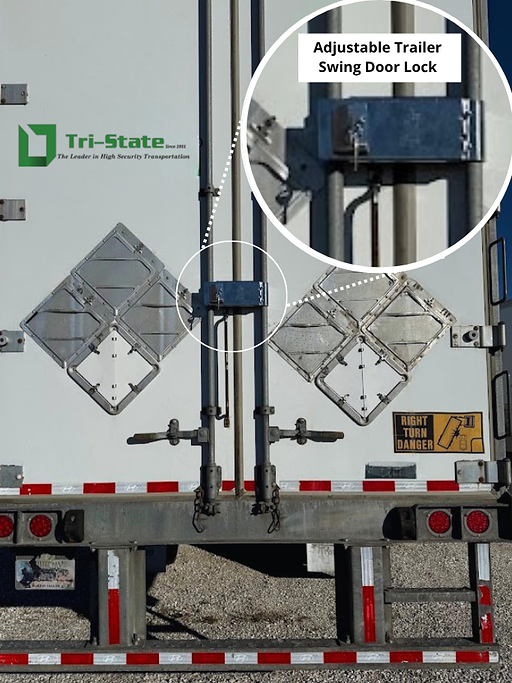
Tri-State uses specialized locks designed to cinch trailer doors together rather than securing them with a single latch point, and requires drivers to back trailers against walls or docks whenever stopped, thereby physically blocking door access without moving the vehicle.
He said shippers should look out for the following:
- Specialized locking systems that cinch trailer doors together, rather than standard padlocks that secure a single point.
- Satellite tracking is independent of cell coverage, so a load cannot go dark in areas where thieves tend to divert freight.
- Real-time cargo door monitoring, with immediate alerts the moment a trailer is opened outside an authorized location.
- Direct verification protocols for every pickup, requiring a call to a known, pre-verified contact rather than relying on email, text, or caller ID, all of which can be spoofed.
- Driver vetting that includes security clearance requirements for carriers handling government or sensitive commercial freight.
“Most shippers don’t think about this until something goes wrong,” Fisk said. “By then it’s too late. The time to ask a carrier how they handle impersonation attempts and what happens if a load goes off-route is before you tender the freight, not after.”
The summer shipping season elevates risk, as do major holidays, when reduced staffing and freight sitting in yards overnight create conditions that organized criminal networks deliberately exploit.
“Summer is not the time to relax your freight security posture,” Fisk said. “It’s the time to tighten it. Every long weekend is an opportunity for a criminal group that has already done its reconnaissance. The freight doesn’t move. The oversight does.”
Tri-State Motor Transit Co., a division of Roadmaster Group, provides specialized transportation solutions for both government and commercial customers, safely moving hazardous materials, arms, ammunition, explosives, secure government freight, and high-value/high-risk FAK (Freight All Kinds) shipments.
 Kin Offers HELOC to California Homeowners
  Zurich Insurance Group Completes Acquisition of Beazley, Names New Leadership for Insurer
  When Builder’s Risk Coverage Doesn’t Reach the Finish Line
  Register: Risky Future AI Tools for Digital Quoting ‘Demo Day’ on September 30