
















Homeowners insurance is one of the most heavily regulated industries in the United States. Regulations aim to protect consumers from arbitrary rates and unfair practices and ensure that insurers can pay claims. Despite these common goals, the relationship between state regulators and consumer advocates is fraught with tension and disagreement.
Executive Summary
Industry experts and consumer advocates weigh in on former Disney and Amazon legal honcho Merritt Farren’s regulatory proposal to assess a home insurer’s claims practices in rate request proceedings.Insurance Journalist Russ Banham sought the opinions to compile this follow-up to an article titled, “The Good Neighbor,” which we published in November. The prior article introduced Farren, who launched a months-long legal battle against insurer State Farm and the California Insurance Department as intervenor in a State Farm rate review hearing.
Few people know this better than J. Robert Hunter.
From 1970 to 1980, Hunter served as the Federal Insurance Administrator under Presidents Ford and Carter, directing the National Flood Insurance Program. For a while, he was a Texas Insurance Commissioner. In 1980, with the encouragement and support of Ralph Nader, he founded the National Insurance Consumer Organization, which later merged its work with the Consumer Federation of America.
Although retired since 2022 and nearly 90 years old, Hunter, a Fellow of the Casualty Actuarial Society, continues to provide his actuarial expertise as an expert witness in consumer-related insurance cases. Having interviewed Bob innumerable times since the mid-1980s, an email from him regarding a recent article I wrote in Carrier Management involving the rare intervention of a single consumer in California’s rate setting process was unexpected:
“Even though I am retired, I’m still reading your stuff—this time about the idea to look at quality of [an insurance] product as part of a rate filing.”
Related article: The Good Neighbor
He was referring to the article’s controversial subject: the proposal by a consumer intervenor, Merritt Farren, for the California Department of Insurance (CDI) to consider the quality of a home insurer’s claims handling practices in its assessment of the company’s request for a rate increase. Farren is an intervenor in rate review proceedings involving State Farm’s request for higher homeowners rates. He believes that if a carrier’s claims handling practices are found to be highly inferior, causing consumers undue frustration and stress at a time of great personal tragedy, then regulators should account for this in their analyses of the requested rate hike.
Carrier Management reached out to several insurance industry observers and consumer advocates to ask if Farren’s novel idea will benefit consumers, encouraging better claims handling practices by carriers, without adversely affecting an insurer’s financial solvency. Hunter supported the concept in his email:
“If a filing for higher prices comes in for a company with a very serious performance problem (like SF [State Farm] seems to have in every state I am watching), the Commissioner could demand a detailed plan from the insurer on steps it will take to remedy the situation a condition of ultimate approval of higher rates, a plan with clear steps that the Commissioner will order to be monitored by his market conduct team as part of the final [rate] approval. At least that much could work without interfering with the normal review, hearing and approval process.”
The Backdrop
A combination of public data provided by state insurance departments, the National Association of Insurance Commissioners (NAIC) consumer complaint indexes, and news reports analyzing regulatory actions suggests that State Farm consistently receives a higher-than-average number of consumer complaints. These complaints often mention low settlement offers, delayed claims processing, poor communication, and disputes over coverage interpretations across various states including California, Florida, and Texas.
While a high number of consumer complaints can trigger a market conduct review by CDI, regulators don’t leverage this information during the rate request proceedings. Farren believes that’s the optimal time to include this data, as denying a higher rate will encourage better claims handling.

Farren lost his home to the Palisades fire in January 2025 but did not experience frustration or stress with the insurance claim he filed with State Farm. However, he was perturbed by the significantly different, negative experiences of many of his neighbors. Having worked for many years as Amazon’s Associate General Counsel and Disneyland’s General Counsel—companies often extolled for exemplary customer service—he was dismayed when State Farm requested a 22 percent emergency interim rate increase less than a month after the wildfire.
Related article: The Good Neighbor
On May 22, 2025, Farren filed a 28-page petition to intervene in the department’s ongoing rate review proceedings involving State Farm. “I felt there were flaws in the rate-setting process because it didn’t consider an insurer’s treatment of consumers during the claims handling process in determining whether a rate increase was justified,” he told me in November. “I felt the absence of [State Farm’s] detailed claims performance was a crucial problem that should be addressed during the rate request process.”
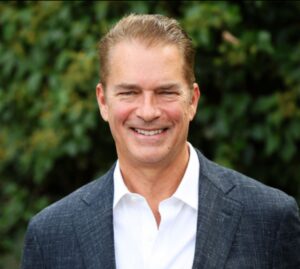
“I felt there were flaws in the rate-setting process because it didn’t consider an insurer’s treatment of consumers during the claims handling process in determining whether a rate increase was justified.”
Merritt Farren
State Farm and the CDI opposed his petition to intervene. The insurer’s counsel maintained that the claims handling issues he raised were irrelevant to the rate-setting process, which relies on historical loss data and financial projections. The CDI offered a similar sentiment, asking the judge reviewing the petition to prioritize the rate hike request and defer a review of claims handling issues to a later date.
On June 13, 2025, Administrative Law Judge Karl-Fredric J. Seligman granted Farren the opportunity to intervene. Hearings are scheduled to commence on State Farm’s current request for a 30 percent insurance rate increase on January 27, 2026. If State Farm is found to have acted improperly in the aftermath of the Palisades fire, repercussions could include financial penalties, legal exposure, and mandatory business changes. Fines alone could exceed tens of millions of dollars due to thousands of claims filed.
Related articles: Is State Farm General Too Big to Fail? Calif. Rate Hearing Concludes; State Farm’s Emergency Homeowners Rate Hike Gets OK in California; State Farm Still Wants a 30% Rate Increase in California
A Delicate Balance
Economist Robert Hartwig, a Clinical Associate Professor of Finance and Director of the Risk and Uncertainty Management Center at the University of South Carolina, opposes the plan. “This is a bad idea for several reasons, not the least of which is that the CDI has the authority to conduct an examination into any insurer at any time on any matter—including its claims-handling practices,” Hartwig wrote in an email. “It’s also the case that the CDI is already among the slowest in the country when it comes to processing rate filings. This [proposal] will slow things down still further.”

“The CDI has the authority to conduct an examination into any insurer at any time on any matter—including its claims-handling practices. It’s also the case that the CDI is already among the slowest in the country when it comes to processing rate filings. This [proposal] will slow things down still further.”
Robert Hartwig, University of South Carolina
Were this to occur, he contended in an interview that it would likely result in reduced home insurance availability and potentially higher rates in California. “The state already has the reputation as the worst in the country for regulatory rate suppression for homeowners and auto insurance. From 2018-2022, CDI granted rate requests that were 29 points below the filed actuarial indicating, meaning an insurer that filed for a 40 percent increase might expect to receive an increase of only 11 percent.”
Due to the possibility of approved rates below what insurers requested, combined with the onerous financial burden of continuing wildfire losses, several home insurers have exited the California market and non-renewed home insurance policies. State Farm, for instance, stopped accepting new applications for business and personal property policies in May 2023 and announced in March 2024 that it would non-renew about 72,000 existing policies on a rolling basis.
Hartwig agreed with the CDI and State Farm that an insurer’s claims handling practices are irrelevant to the rate-setting process. He explained that the primary mission of the rate review process is to ensure the solvency of insurers through a confirmation that rates are neither inadequate nor unfairly discriminatory, thereby maintaining the insurer as a going concern. “Issues regarding an insurer systematically denying or underpaying individual claims, while potentially serious, are separate matters of regulatory oversight that should not interfere with the actuarial methodology used to set overall rates,” he said.
While Ben Collier, Professor of Risk and Insurance at the University of Wisconsin, agreed that the primary role of the CDI and other state insurance department is an insurer’s financial solvency, he said regulators also must ensure that carrier claims practices are fair and non-discriminatory.
“Regulators must ensure the solvency of insurance companies writing business in a state to fulfill their obligations, but they also must look out for the interests of consumers, making sure the rates charged are reasonable,” he said. “I’m sympathetic that people who have just experienced a wildfire are already in one of the toughest points in their lives; having to jump through extra hoops to get paid on a contract with an insurance companies makes it even tougher. But there already is a [consumer] complaint mechanism that’s part of the regulator’s job.”
Policing Market Conduct
Collier is referring to the Consumer Services Division within CDI’s Claims Services Bureau. Aggrieved consumers can file an official complaint by calling a toll-free hotline at 1-800-927-HELP (4357). Once CDI receives the complaint, it contacts the insurer for its side of the story. The department acts as a mediator, working to resolve the issue; it does not act as a judge in the dispute, although it can prompt the insurer to review and resolve the claim fairly.

“I’m sympathetic that people who have just experienced a wildfire are already in one of the toughest points in their lives; having to jump through extra hoops to get paid on a contract with an insurance companies makes it even tougher. But there already is a [consumer] complaint mechanism that’s part of the regulator’s job.”
Ben Collier, University of Wisconsin
In 2023, CDI investigated over 56,000 consumer complaints. Regulators have the power to impose fines up to $10,000 for each willful violation of the state’s unfair practices law. However, major enforcement actions often take years to resolve and involve complex legal processes. Following the 1994 Northridge Earthquake, for example, CDI conducted market conduct examinations on six major insurers, including State Farm, Allstate, and Farmers. The investigations found major violations of fair claims settlement practices, including allegations that companies routinely delayed, denied, and undervalued claims, Consumer Watchdog reported.
Despite these findings, a prior CDI commissioner reportedly secured contentious agreements with the six insurance carriers. Although the insurance department’s own attorneys had put forward a $119 million penalty recommendation for State Farm alone, the collective group of insurers ultimately paid slightly more than $12.5 million via their settlements. Consumer advocates contended that the financial resolutions did not go far enough when weighed against the magnitude of misconduct detailed within CDI’s confidential documents.
The political fallout from the scandal, which highlighted the disparity between recommended and actual fines, led to new state laws like Code Sections 12938 and 12968 that make all CDI enforcement actions—including market conduct reviews of unfair or discriminatory claims handling practices—available to the public on its website. While transparency is a good thing, it does not testify to the rigor of these reviews, Hunter maintained in an interview.
“After decades of involvement with insurance departments, including as an insurance commissioner, I learned that market conduct examinations [of an insurer’s claims practices] are pretty weak and in most states are almost useless,” he said. “Unlike discovery in a lawsuit, where lawyers dig in and dig in and find stuff out, really troubling stuff in some cases, states don’t dig. Unless the market conduct review is targeted, they’re a waste of time.”
Hartwig demurred. “Without proof of some kind that there is such an approach, it’s a huge supposition that claims are being systematically underpaid,” he said. “It’s a stretch, a huge presumption, that it is mission No. 1 for an insurer to systematically deny or underpay valid claims. … If any evidence whatsoever of systematic or anecdotal claims handling practices emerges that disadvantage policyholders, insurers are held accountable for that.”
Need for Stricter Enforcement
This accountability should be tied to more thorough regulatory investigations into alleged carrier abuses, asserted Michael DeLong, Research and Advocacy Associate at the Consumer Federation of America. While he agreed with Hartwig that CDI’s rate request proceedings and unfair claims reviews should remain separate areas of examination and inquiry, DeLong contended that CDI needs to significantly upgrade the quality of its market conduct examinations.

“After decades of involvement with insurance departments, including as an insurance commissioner, I learned that market conduct examinations are pretty weak and in most states are almost useless. Unlike discovery in a lawsuit, where lawyers dig in and dig in and find stuff out, really troubling stuff in some cases, states don’t dig.”
Bob Hunter
“I’m wary about efforts to include claims handling [practices] in CDI’s rate reviews,” he explained. “Rate review needs to be its own thing to ensure rates are justified, sound and not unfair, resulting in a harmful impact on consumers. If connected, some insurance companies could exploit the system, maintaining that its claims practices are really good, but its claims experience is bad so grant us a higher rate increase that is justified.”
The better solution, DeLong said, is for the CDI to impose stricter requirements that ensure carriers thoroughly and promptly pay the claims they owe. “There have been too many stories over the years about insurance companies treating consumers terribly, not responding to phone calls and emails, passing them from adjuster to adjuster, requiring enormous amounts of paperwork, offering incredibly low payouts, and doing this repeatedly to encourage people to give up,” he said. “Denying claims can be good business strategy.”

“Insurance regulators need to collect more [claims] information, find some quantitative way to grade claims handling, and make it all public. If found to be treating consumers unfairly, regulators must enforce real penalties—truly substantial fines and not a slap on the wrist.”
Michael DeLong, Consumer Federation of America
Not all insurers pursue such tactics to hinder claimants. In J.D. Power’s 2025 U.S. Property Claims Satisfaction Study ranking 15 insurance companies, Chubb, Amica and The Hartford received top honors for home insurance claims satisfaction. State Farm, Safeco and Homesite were the bottom three insurers, with State Farm receiving a score of 661 out of 1,000 possible points, below the study average of 682.
Related article: Customers Not Happy With Carrier Property Claims Service
“There are companies like Chubb, where I worked from 1986 to 1989, that pay claims even if there is no explicit coverage, which is known as an ex gratia payment,” said Jerry Theodorou, Director of the Finance, Insurance and Trade program at R Street Institute, a U.S.-based center-right think tank. “They paid claims liberally because they wanted to maintain their reputation.” He noted that a book written by the large insurance company’s founder, Hendon Chubb, is titled, “If There Were No Losses, The Would Be No Premiums.”
“All of us newbies were required to read it,” Theodorou said.
Apples to Apples
Whether or not Farren’s proposal is given the green light and becomes mandatory, there is a consensus among some of the interviewees that a more robust way of assessing and grading an insurer’s claims practices for comparison purposes is needed. In his petition, Farren outlined several possibilities. They included comparing different insurers’ payout speeds, documentation demands, and rebuilding cost estimates—contrasting State Farm’s approach, for example, with competitors like Chubb, USAA, and PURE—and leveraging this contrast in the rate review proceedings.

“There are companies like Chubb, where I worked from 1986 to 1989, that pay claims even if there is no explicit coverage….”
Jerry Theodorou, R Street Institute
Scoring a carrier’s claims handling practices makes eminent sense and is achievable, Hunter contends. “There’s a huge difference in how companies handle claims, which suggests that some way of testing their different quality is possible; for instance, some kind of score if an insurer’s complaints exceed a certain amount,” he said. “If two carriers are charging the same rate and the claims handling quality of one of them is scored at half the other, something is obviously wrong.”
Collier from the University of Wisconsin has misgivings, cautioning that a comparison of insurers’ claims practices may fail to account for different carriers’ market appetite. “Chubb purposely segments the market to attract high net worth individuals as policyholders, making direct comparisons with other insurers segmenting a different market challenging,” he explained. “However, I do find value in insurance departments gathering more information about how well insurers score on claims.”
“If two carriers are charging the same rate and the claims handling quality of one of them is scored at half the other, something is obviously wrong,” Hunter said.
DeLong shares this sentiment: “Insurance regulators need to collect more [claims] information, find some quantitative way to grade claims handling, and make it all public. If found to be treating consumers unfairly, regulators must enforce real penalties—truly substantial fines and not a slap on the wrist.”
Hartwig fundamentally opposes Farren’s concept. “There is no way to develop a consistent, objective method for assessing claims handling practices across all insurers,” he asserted. “By introducing an extraordinary amount of subjectivity, the proposal would seriously undermine the actuarial integrity of the rate review process, [setting] a dangerous precedent that would open the floodgates to all kinds of other subjective measures other intervenors might believe should be part of the process.”
One way to reduce this subjectivity is to require all policyholders following the receipt of a claims payment to respond to five specific questions regarding their claims experience and tally them into a score. At present, no states currently mandate this responsibility. Assuming it was effected, Theodorou said, “It’s important to know the denominator—is it one bad claims review for 150 policies in force or 100 bad reviews for 150 policies? As long as you get a representative sample, it could be pursued. That said, people often only provide a review when their experience is bad.”
“It’s a stretch, a huge presumption, that it is mission No. 1 for an insurer to systematically deny or underpay valid claims,” Hartwig said. “If any evidence whatsoever of systematic or anecdotal claims handling practices emerges that disadvantage policyholders, insurers are held accountable for that.”
Undoubtedly, the upsides and downsides of Farren’s singular crusade will receive close scrutiny as the case resumes in January 2026. If the California’s insurance department is required to formally evaluate an insurer’s claims handling practices as part of its rate review proceedings, other states may follow its lead. At present, no states explicitly require this combination.
Even if the concept fails to pass muster, DeLong said the effort by the consumer intervenor is certainly worthwhile. “By bringing attention to a longstanding problem, his work may raise awareness and spur reforms, maybe a separate process handled by a task force that effectively holds insurers accountable for their misbehavior,” he said.
(Images other than speaker photos created by AI: Copilot and Adobe/Firefly)
 Florida OIR Approves Four More HO Rate Cuts as Citizens Keeps Shrinking
  An Already Intense Pacific Hurricane Season With a Long Way to Go
  AM Best: US Mutual Insurers Doubled Net Income in 2025
  Southern California Edison Wants State Wildfire Liability Deal Before Legislators Depart