
















Thankfully, members of the next generation of leaders in the property/casualty insurance industry have had no direct experience with insurance company failures, rehabs and restructurings that happened in the late 1990s and early 2000s.
Executive Summary
“Why do people work for you? What makes them stay over the years?”
Those are the types of questions Crum & Forster CEO Marc Adee asked himself to reverse engineer a workplace where employees feel supported and motivated to build decades-long careers.
Here, Adee, who came up the ranks as a casualty actuary and chief financial officer, talks about his focus on culture rather than numbers as he took the helm of a once-struggling insurer, now rehabilitated and growing under the Fairfax Financial umbrella, a hands-off parent with a long-term focus.
Adee is the author of a recently published book, “The Once and Future C&F,” about the history of the company.
Read more about the book in the related article, “Cigar Butts and Toxic Sludge: The Rebirth of a P/C Insurer.”
One man who remembers them, and worked alongside leaders who did heavy repair work that happened in those years, is Marc Adee, the chief executive officer of Crum & Forster. Adee wrote a book about the history of his company, which includes recollections of his experiences as chief actuary and chief financial officer of two companies related to the C&F backstory that no longer exist—and says that his experiences with “really crummy jobs (no pun intended)” gave him the confidence to assess and work through bad situations.
Still, he believes there are better ways for future leaders to figure out how to “come up with a game plan, execute and adjust on the run” when faced with the knowable and unknowable risks they will inevitably have to work through. During a recent interview about the book and his career, Adee spoke about how the combination of working with a company that isn’t going away and uses a decentralized operating model can put employees on track to create long-term career paths.
Highlights of our interview follow.
Learn more about Adee’s book, “The Once and Future C&F,” in the related article, “Cigar Butts and Toxic Sludge: The Rebirth of a P/C Insurer.
Could It Happen Again?
Consumed by compiling 200 years of history of his company, snippets of Adee’s research routinely bubble up when he attends social gatherings with industry peers. “If I was sitting next to you at a dinner, I’d talk about the book. And then my question was always, ‘For the 20 years from 1965 to 1985, what do you think the combined ratio was for the commercial lines industry?'”
Answers typically ranged from 102 to 115, depending on whether respondents factored in the cashflow underwriting that occurred in the 1970s and 1980s. Rarely does anyone come up with the real answer—250 and counting, Adee reported.
“For those 20 years, the industry was bankrupt if you restated everything. It probably took another 20 years before people figured out how bad it was,” he said, noting that C&F was one of the insurers that had to deal with the consequences in the early 2000s.
“And then 20 years later, nobody remembers it.”
“Think about the kind of amnesia that it would take to forget something like that,” he said.
The episode highlights “why this business is interesting, [and] also why people need to understand and respect unknowability,” he said, referring, for example, to unknowable long-tail asbestos and environmental liability losses that caused developed combined ratios from those years to balloon. “Unknowability is what it is. But there’s a lot that you can control—that you better get” right, he said, as he summarized his take on the actions of the Crum management team of the 1960s and 1970s. On the controllable side, the leaders of a long-time monoline property underwriter could have opted not to follow the market to write commercial multiline package policies.
“They hadn’t done all the things they could have done. And they also got clobbered by the unknowable.”
Could it happen again?
“I don’t think that particular variety could happen again, but a less severe version certainly could,” Adee said. “You still see the cycle. All the data and analytics doesn’t change the supply-and-demand driven cycle, the psychological part of the cycle.”
From an enterprise risk management standpoint, today’s leaders can take a lesson from the unknowns that destroyed C&F peers across those prior decades: “What is that thing that I’m not thinking about clearly?” They should be constantly on the lookout for that fuzzy risk, he advises.
Adee gave current examples related to cyber insurance and to excess and umbrella liability.
“There was a moment when people were worried about and baked cyber cat exposure into pricing. And that seemed super reasonable.” Then all of a sudden, the concern was forgotten. “We will worry about that if it ever happens,” he said, summing up the revised market sentiment. “That goes, a little bit, to the shortsightedness that we all have: ‘The cyber book looked better last year than property. Therefore I should write more cyber.’ But you’re discounting this kind of event that hasn’t actually manifested yet.”
Offering what he described as a more subtle problem for excess liability writers, who like C&F have compressed primary limits to combat social inflation trends, Adee said, “If you look at increased limits factors and how they’re developed and how they’re used, there’s no way that the nuclear verdicts are in that data. There’s no way that nuclear settlements are in that data. There’s no way that the shared-and-layered nuclear settlements are in that data.”
“If you haven’t thought of that, [then] you’re not charging enough for those layers.”
“How bad could that be?” he asked rhetorically. “It could get bad enough that ownership decides to go in a different direction.”
“Super long-term thinking” is required to survive to take advantage of the next hard market, he said.
A Long-Term Approach
Long-term thinking is a recurring theme of Adee’s book, and he repeatedly refers to the fact that C&F’s parent, Fairfax Financial Holdings, which acquired C&F back in 1998, did not go in a different direction, as previous owners had. A notable one was Xerox, the photocopier company, which owned C&F in the 1980s.
“Crum was one of those companies that because of their history—and it was very representative—[was] in a retooling phase during the hard market of the late 80s. They were in cleanup mode….They had to bring in someone to restructure and sell off the pieces” during the Xerox years.
“The Crum [that existed] at the end of that process was really a stripped-down Crum. It was the piece that couldn’t be sold off.”
When Fairfax bought it in the late 90s, C&F was “a blank canvas with maybe some balance sheet issues….Fairfax knew that. They have a very long-term approach,” he said, retelling the story for CM.
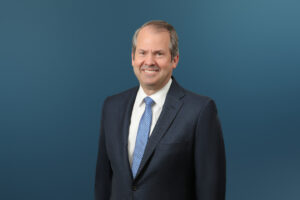
“Insurance is a numbers business. The numbers have to be there. It’s a people business too. The people have to be there.”
Marc Adee, Crum & Forster
Adee’s book describes the steps that Fairfax took to restore profitability, initially appointing new leaders, including AIG alums Bruce Esselborn and Nick Antonopoulos, who pivoted C&F’s business away from multiline standard business and toward “monoline segments of middle market accounts” that fell outside the appetites of big standard writers. The subsequent acquisition of Seneca Insurance, a specialty underwriter of small package business in the outer boroughs of New York City, followed. And the 2006 merger of C&F with Fairmont Specialty, another Fairfax company that Adee was leading at the time, was a further step towards growth of a new set of specialty businesses, which would include First Mercury and CoverX, E&S players also briefly led by Adee.
Crum & Forster today is a collection of specialty operations, which wrote $5.7 billion of gross premiums in 2024 with a combined ratio of 95.0 (IFRS 4).
Divisions include:
- The A&H Division started by Gary McGeddy 25 years ago “in his basement.” In 2024, the A&H team wrote over $2 billion of gross premium.
- The Surplus & Specialty Division, led by Tom Bredahl, a former reinsurance underwriter for Odyssey Re, whose first job at C&F was the restructuring of an E&S acquisition, First Mercury. In 2024, the division posted around $1.4 billion of gross premium.
- Seneca Insurance Company, led by Marc Wolin, who started working with Seneca more than a decade before C&F’s acquisition of the New York-focused writer in 2000, and becoming CEO in 2013. In 2024, Seneca wrote roughly $700 million of gross premium.
- The Commercial Lines and Executive Risk Division, straddling the specialty and standard lines worlds, under the leadership of John Binder. In 2024, gross premium for the division was about $800 million.
Source: The Once and Future C&F” by Marc Adee, CEO of Crum & Forster
Still, by the time Adee took the helm of C&F in 2015, there was something more that needed attention—the culture, he says.
Reporting that morale was low even as the company started to recover on paper, Adee explained why he believes the culture suffered, and also how Fairfax’s operating model and long-term approach to the business enabled him to create a great place to work “before I knew that was a trademarked concept.”
Getting to the why, he reflected on the situation that existed over the course of the prior decade. “Crum was still on its back foot” when the 9/11 hard market arrived. And, for the next 12-14 years, the market “was kind of sideways….You want to go hard, [but] the market was soft. And people aren’t that excited to come to work….It has this kind of snowball effect,” he said.
“It’s hard to do a big cultural redo when you’re in that kind of sideways position on the numbers….
“Insurance is a numbers business. The numbers have to be there. It’s a people business too. The people have to be there.”
Moving a Snowball Uphill
A decentralized operating model, empowering divisional leaders to run their own operations—enabled by Fairfax’s ownership and modeled after on the parent’s guiding principles—were central to the culture fix, Adee explained.
“Fairfax is all about this decentralized model of management. Crum runs distinct from Odyssey [Re] or Allied [World] or Brit or the other sister companies. And at some point, we decided that the Crum business was complex enough and big enough that we could decentralize.”
Decentralized specialty divisions, he said, “give people a lot of opportunities to shine. They can show what they’ve got. They can run their own division. They have everything they need in the division to make it work. And the trade-off is they have full accountability for their results without being able to say the corporate guys are causing trouble.”
While the decentralized structure was what Adee would have wanted when he was running a division, when he became chief executive in 2015, it wasn’t an idea that blossomed immediately—and even when it did, business unit heads weren’t initially on board either, he reported.
Related sidebar: How Decentralization Works at C&F
“When you get to the CEO spot, it’s a heady feeling having a thousand person strong corporate group….You have to have some discipline to be able to let go, and you have to have trust that the people you’ve got running those divisions are going to do the right things.”
Turning to reactions beneath him, Adee said, “The employees, I think in some ways lost trust with management before I got here.” He believes they essentially had two questions about management: “Will they do what they say they’re going to do?” and “If they do what they say they’re going to do, will it actually make sense and work?”
Management follow-through got some help from market dynamics to drive the momentum, he admits.
“We were right on the cusp of the golden era of E&S, but we were in the middle of cleaning up the E&S operation toward the end of ’13. I took that over, and that came online in a big way, right as that market started to go interesting places. The A&H group really does a spectacular job of finding opportunities and capitalizing on them.
“We had started a couple other groups in the middle there. Seneca hit an amazing run in New York.”
“So the market did help, but we had to be ready for it. And I think if we had started any later with the cultural changes, we wouldn’t have been ready.”
Long-Term Career Paths
“The Fairfax guys are long-term owners of companies like Crum and have no intention to sell, which gives us the ability to think long-term and build, which gives our people the ability to really design long-term career paths in a very interesting way,” Adee said.
 He noted that the COVID pandemic also gave rise to two types of culture-building activities that continue at C&F today. One is a fully hybrid work environment, which has not only enabled the insurer to hire good people attracted to being able to work from wherever they are, but has also necessitated a very event-driven culture. “In the last few weeks I’ve gone to five events that were very crowded with Crum people bonding and doing things that you can only do in person.”
Since the first week of COVID, Adee has also been writing a Friday check-in note to everybody in the company. At the time, he imagined that people were “sitting home wondering if we still had a company, what we’re doing and how it was all going to work,” prompting his first encouraging two-paragraph note hinting at opportunities that would arise from chaos. Some later multi-page notes include discussions of company-specific and industrywide insurance topics like production numbers, social inflation and increased limits factors. Others are personal musings about everything from the strawberry fields in his backyard to his habit of pen twirling, some accompanied by book recommendations, photos with his daughters, a vintage Christmas card featuring a child Adee and his brothers, and images to show off expert rib-barbequing techniques.
“This week I have to write No. 275,” he said. “When I’m out at a company event, people come up to me. They feel like they know me because I write to them every week,” he said. “They ask all these questions. It demystifies senior management,” he said.
Disclosed in the notes are details of one of his earlier jobs (as a comic book salesman in his teens), his days at Coregis (a vestige of C&F that got sold to GE in the 1990s), and the story of how he decided on a career in insurance (it involves a bet from his roommate’s father about actuarial exams). Many jobs described have nothing to do with Fairfax or C&F. In fact, unlike predecessor CEOs profiled in “The Once and Future C&F,” who worked their way up in one-company careers that spanned decades—starting as “office boys” in their teens and staying until their retirement years in some cases—Adee moved around.
Adee’s frequent references to opening up long-term career paths at C&F prompted a CM question about the modern workforce: Should young people set out to spend their careers at one company?
 Adee noted that he’s been with Fairfax for 25 years of its 40-year existence and reports that is not unusual. “There’s something about the culture of Fairfax that people just like,” he said, noting that he’s tried to replicate this at Crum. “The idea of this career-path focus for us is that people should have the opportunity to build that career over a long time. We are going to be here 25, 50 years from now.”
Adee offers “the concept of being in a flow state” to reinforce the idea that C&F—and the insurance industry, generally—are ideal spots to build careers. “You’re in the zone…You match your skills and abilities with the tasks at hand in a fashion that goes back and forth. [Sometimes] the challenge is heavier than your skills, and then you catch up. You keep elevating.”
“Insurance is one of those careers where you can do that over years or decades.”
When people look at insurance, they don’t necessarily see that. “We don’t do a great job of selling it,” he said, recalling how books like “Liar’s Poker” in the 1990s (unintentionally) attracted people to pursue careers as investment bankers. “Insurance has people that are every bit as interesting, and [maybe] even a level up from all of that.”
“But when you get people into a company, do you present challenges? Are you creating pathways?” Adee asks.
A recent initiative at C&F along these lines is Adee’s “And Plan,” he said, explaining a new route for people who aren’t seeing a job above theirs that is immediately available. “They can take on additional roles as brand ambassadors,” he said, noting that the company provides training on all its products and networking. “We send them forth to different events to represent Crum and get the name out,” he said. Sending folks from IT, claims or actuarial out to meet agents might be seen as “heresy” elsewhere, he quipped.
Related article: Viewpoint: Understanding the Future of Insurance by Studying the Past
“How do we get people out and developing their skills beyond what they’re doing in their job?” That is a central question that C&F is working to answer—and making progress, he said.
“If you were an actuary in the ’80s, there were plenty of opportunities to do interesting if somewhat unpleasant fixer uppers, or you’d see what happens when things go wrong. Fortunately, we don’t have those kind of issues at the moment.”
 Arctic Sea Ice Continues to Shrink at a Rapid Pace: Study
  Federal Bill Seeks to Reduce Work Week to 32 Hours
  Workers’ Compensation’s Real Challenge: Orchestration
  AI Data Center Boom: Understanding How Risks Are Changing