














Some details of a long-sought-after partnership with Tokio Marine aren’t precisely defined, instead relying on the good faith dealings and reputation of the Japanese insurance giant, Berkshire Hathaway executives said at the conglomerate’s annual meeting.
“It is not spelled out in a lot of detail,” said Ajit Jain, Berkshire’s vice chair of insurance operations, during the meeting in Omaha, Neb., on Saturday, referring to the third part of a partnership announced in late March that involves a financial investment, a reinsurance agreement, and a “strategic collaboration in M&A and global investment opportunities.”
“Normally, I would be very, very concerned about having open-ended strategic transactions,” said Jain, referring to the last piece. “But Tokio Marine, they are a quality company.” In Jain’s view, they do “first-class business in a first-class way,” he said, referencing a phrase he said he borrowed from foundational principles banking giant JP Morgan. “That is Tokio Marine in the insurance industry,” Jain said.
Describing the M&A collaboration, a March 23 Tokio Marine statement says, “The two companies will collaborate on global strategic investment opportunities, including M&A, executing joint investments to drive sustained business expansion…”
“Through the Strategic Partnership, by combining our proven M&A execution capabilities with NICO’s peerless capital strength, we believe we are able to broaden our strategic options and access to high-quality growth opportunities,” the statement said.
Related articles: Berkshire Hathaway to Invest $1.8 Billion in Tokio Marine; More Insurance M&A Deals on the Horizon?; Analysis: Japanese and Korean Insurers to Accelerate M&As in the U.S. and Globally
Said Jain at the Berkshire annual meeting: “We have a general statement that we work with each other. We’ll coordinate when it comes to finding opportunities elsewhere, running businesses operationally. And that is something that will evolve over time in terms of who’s going to bring what to the party,” he said, after giving some backstory on how the deal came about.
“We’ve tried year after year to get a relationship going with Tokio Marine & [Nichido] Fire,” Berkshire’s vice chair said, referring to the large Japan non-life insurer in Tokio Marine Holdings as a company that is “clearly regarded as a blue-chip company in the international arena.”
“Every insurance company would like to be associated with them,” Jain said, noting that getting to a partnership wasn’t easy. He explained, “One of the things we bring to the business is a capital partner, and Tokio Marine was cash rich. They really never needed capital in a big way.”
But after years of expanding in Japan, growth opportunities have become limited domestically for the company. “They’ve looked overseas, and over these last eight [or] 10 years, they’ve really got most of the low-hanging fruit overseas that they would like to get.” he said. “Nevertheless, they are keen and they’re hungry for business elsewhere outside Japan,” he added.
Related articles: Tokio Marine Weighs More Than $10 Billion of International M&A; Keiretsu No More: What Japan’s Insurance Market Reforms Mean for U.S. Insurers; Analysis: Japanese and Korean Insurers to Accelerate M&As in the U.S. and Globally
“Last year, we got a chance to spend some time with them and talked to them in very general terms about what the two of us could be doing and should be doing with each other. After that initial conversation, which probably took place nearly a year ago, things moved fairly quickly,” Jain reported going on to describe the three legs of the transaction announced last month.
“We wrote a check for $1.8 billion, and we got 2.5% of the stock,” he said, referring to the financial pact which has Berkshire’s National Indemnity Company (NICO) making a strategic equity investment in Tokio Marine Holdings, Inc.
In the second part of the deal, “we took a piece of the [property/casualty insurance] business that they write, and we compensated them for their efforts in getting the business, originating the business, and running the business,” he said, giving a simple description of a whole account quota-share reinsurance agreement whereby NICO assumes a portion of “a good and profitable book of business” that Tokio Marine writes in Japan and elsewhere. “We get a slice of their business for several years down the road,” he said.
As for the sketchier part of the partnership—the “strategic collaboration in M&A and global investment opportunities,” Jain said, “I certainly hope this serves as a springboard for both of us to move on to the next plateau.”
Tokio Marine, in its March 23 statement, made note of the fact that it has “steadily expanded [its] global footprint through disciplined acquisition principles” in recent years. Last year, a Tokio Marine executive discussed the possibility of spending $10 billion on acquisitions, according to a Bloomberg report.
“Well done, Ajit,” said Greg Abel, the CEO of Berkshire, referencing the Tokio Marine partnership as he concluded his remarks about first-quarter operating results for the conglomerate’s insurance and reinsurance operations during an early business session of the meeting. “It’s a strategic transaction,” Abel stressed. “Yes, there’s a financial aspect of it and we’re thrilled with that, but it is a long-term strategic partnership.”
Later, a shareholder referred to the Tokio Marine pact as a 10-year partnership with “a level of operational integration Berkshire has never done internationally,” asking Abel whether this signaled a shift toward active international partnerships under his leadership.
Abel did not confirm the time frame but said that the deal resembled the long-term nature of five other investments Berkshire has made in Japan. “We really think of those as forever because it goes beyond the investment, and it’s very much around the relationships we want to build there,” he said, referring to the stock piece.
“There’s also a great deal of faith there,” he said, referring to the underwriting opportunity present in the second component of the Tokio Marine deal. “We jointly participate in their risk and rewards associated with effectively also 2.5% of their book there now,” he said.
“Ajit says—and I take his word for [it]—that [Tokio Marine] is an exceptional company, and their performance has been remarkable. So, we’re thrilled to have them.”
As for the third piece, Abel reiterated, “That’s not defined yet. So, we’ll let that take its proper form” over time. “They’re the type of partner that has the same culture, same values as us,” he added.
“There’s little question it’s going to be exceptional for many years to come. But as far as pursuing an absolute acquisition in insurance or something like that, that’ll evolve with time… If such an opportunity materializes, we’d be thrilled with it,” he said.
Just Say No
Berkshire hasn’t done a large insurance industry acquisition, or “elephant,” in the language of Warren Buffett, chair and former CEO, since Berkshire’s $11.6 billion deal to buy Alleghany four years ago.
Related article: How Warren Buffett Does a Deal: Alleghany Merger Backstory
At Saturday’s meeting, Abel referred several times to the cash pile of roughly $380 billion, but neither Abel nor Jain gave any indication that there were any insurance industry acquisitions likely in the near term. Instead, the two executives and Buffett, in an on-site interview with CNBC’s Becky Quick during the meeting, each referred to the need for patience in allocating capital to acquisitions, investments and to insurance underwriting as well.
Jain delivered the most pointed commentary along these lines.
“Insurance, much like investing, is a game that requires patience, and it is very difficult to get people to sit back and do nothing. When I recruit people, my modus operandi [is] I tell them right up front, ‘Your job is to say no.'”
“‘You will get bombarded with deals day in and day out. But your base case is just say no…”
“‘Every now and then, you will come across a deal that’ll hit you with a two by four, and it will be screaming money. That’s when you come to me, and we’ll make a decision whether to do it or not.”
He continued: “All kidding aside, it is very difficult to sit there and do nothing while everyone else is being wined and dined by brokers and taken to London…”
“The real test of being successful—certainly in insurance, and therefore investing as well—is the ability to say no.”
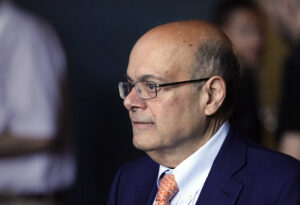
“‘Every now and then, you will come across a deal that’ll hit you with a two by four, and it’ll be screaming money. That’s when you come to me, and we’ll make a decision whether to do it or not.”
Ajit Jain (2018 AP Photo)
When CNBC’s Quick solicited Buffett’s take on the meeting and Berkshire’s progress at the midpoint of the meeting, Buffett seconded Jain’s analysis. “How’s it going?” she asked.
“It’s all working, [but] it isn’t our ideal surrounding environment in terms of deploying cash,” said Buffett.
“We’ve got the right management, and we can pick our spots. …So, sometimes we’re doing nothing.” Referencing Jain’s on-stage remarks about knowing when to do nothing when writing insurance, he said the same principle applies to investing. “The world is full of people that are offering you things to do. And then the question is to find one that you know makes sense. There may be 20 out there that make sense that you don’t understand, and you just leave them alone,” Buffett advised.
During the Q&A session of the meeting, a young investor asked Abel how to balance patience with action as she navigates uncertainty and rapid technology change.
Among other things, Abel said he, and Berkshire historically, start by asking, “Do we understand this business? Do we understand the opportunity? And more importantly, do we understand the risks?”
“Then we want to have a very understandable view of what the economic prospects look like for the next five, 10 years. … The next year matters, but we’re not in that investment for a year. It has to be a long-term view of where that opportunity will go.”
He continued: “We take it one step further. We’re going to be in these investments forever, so we… we like to have a strong view on the management team—that they’re capable and operate with high integrity.”
If that all lines up, the most important consideration, he said, is that “the value has to work for us to deploy our capital.”
“We’re not anxious to just deploy capital into subpar opportunities. We want to know it meets our principles, and then we’ll…act decisively—both quickly and with significant capital,” he said.
Patiently responding to an almost identical question from yet another shareholder about striking the balance between patience and action in investing (not specifically referring to the insurance industry), Abel said that while Berkshire doesn’t know what will happen tomorrow or three years into the future, its leaders do know that “there will be dislocations in markets that will allow us to act.”
He continued: “It’s not that we don’t see exceptional companies out there today that we’d love to own… Long-term, we’d be happy to own those companies because there’s excellent companies that have excellent management teams.”
But the prices relative to the opportunities aren’t aligned, he said, defining the opportunity in terms of “the economic prospects of that company and the related risks.”
“We’re not interested in acquiring those companies at that price—and that can be a piece of them or all of them,” he said, offering commentary that extended beyond the insurance sector.
Related article: Berkshire, Cyber Risk and the Strait of Hormuz: Insurability Hinges on Price
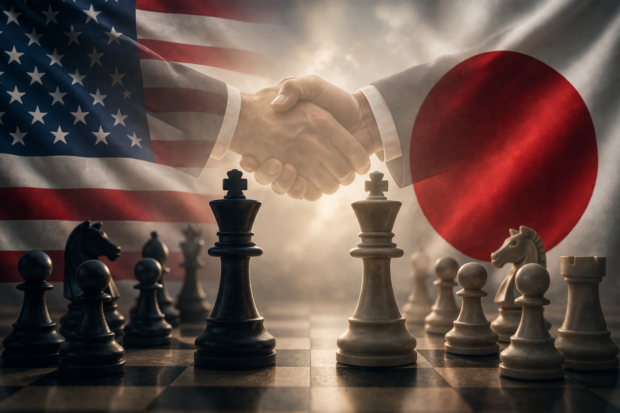
Featured image: AI-generated (ChatGPT)
 Viewpoint: The ‘Unbundled’ Insurer Emerges in Age of AI as Value Chain Fragments
  The Impact of Claims Experiences on Trust
  Lyft to Pay $272M to Settle California Rideshare Drivers’ Wage Theft Lawsuit
  Viewpoint: The One Thing Holding Back Insurers’ AI Efforts