



















In the corporate world, some of us hold titles that automatically define us as a leader. However, if you need to use that title to be recognized as such, you will surely fail. Leadership is often borne out of situations. Circumstances and challenges give rise to opportunities to lead, regardless of your position.
In fact, this occurred for many individuals as a direct result of the challenges of the COVID-19 pandemic, which is irreversibly changing the world in which we live.
Whether you direct a team of underwriters on a day-to-day basis, are a member of a group focused on the launch of a new product or service, or lead an entire organization, the fact is that your title doesn’t make you a leader—your actions do. If you make the choice to lead, I hope you might find a few of my own learnings about staying on course during challenging times useful.
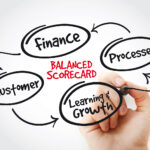
Clearly define your strategy and the path to success. If you tell a group of people to set off on a journey, but don’t tell them the destination or provide them with a map and directions, chances are everyone will end up in a different place. There are many tools and methods leaders can use to define vision, strategy and the path forward for their teams and colleagues. As a leader, the key is to find the approach that works best for you and your team and to focus on successful implementation. Personally, I have found Kaplan & Norton’s Balanced Scorecard and Strategy Map to be an effective methodology, not only to develop strategies and track their execution but to communicate that strategy and create organizational alignment and understanding.
Communicate, communicate, communicate. Once you’ve set your strategy, be very clear about not only communicating your vision but also what the journey ahead is going to look like. And do this time and again. Leaders are likely to have multiple audiences to communicate with and to, which usually require many channels and approaches. Our executive team holds weekly meetings, supplemented by quarterly meetings with the broader leadership group, to foster alignment and collaboration on corporate strategy. I also employ Town Hall meetings to keep our employee base informed on strategy, vision and progress, as well as a monthly email communication that always includes a strategic initiative feature from our Balanced Scorecard. This serves to reinforce the continual importance of understanding our strategy throughout the year.
Be aware of the influence of external factors. The COVID-19 pandemic has significantly altered and actually accelerated digitalization and data analytics, artificial intelligence, changing customer behaviors, and more. During these unprecedented times, flexibility is key, and organizations need to put strategies in place to deal with this “new normal.” For me, this means blending proven approaches for developing strategy and driving organizational change while also being acutely sensitive to the changing environment and its impact.
Set the right foundation to enable your future. Regardless of your industry, your company will not thrive—perhaps won’t even survive—if you don’t have a clear target picture for how you will meet the wants and needs of your customers. A leader must not only envision the future; he or she must also determine the foundational tools, systems, products and value propositions necessary to support and enable that future. At American Modern, we spent the last five years replacing our legacy systems with one integrated policy administration system, streamlining our supporting systems and processes, as well as refining our specialty insurance product offerings, for one core reason: without such technology, we would not be well-positioned for the future. I once believed technology could not create a sustainable competitive advantage for an insurance company. Today, my view is that we have become a tech company that just happens to sell insurance products and services. Without a technological edge, we would struggle to survive.
Be sure to listen, pay attention and pivot if necessary. When you are a leader, communication is a two-way street. You need to listen carefully to feedback. When developing our yearly strategy using Kaplan & Norton’s Balanced Scorecard and Strategy Map, our management team uses a structured and iterative top-down/bottom-up process to engage, collect and incorporate input from the broader organization. It’s also important to listen to your external audiences and address concerns—and to do this in a structured way. In fact, critical feedback from our distribution partners led to us building an intuitive quoting portal on top of our new policy administration system. While this portal was not part of our original plan, feedback clearly revealed that this addition was necessary in order to improve the customer experience.
Empower others to lead. An organization becomes more resilient when its talent readily takes on leadership responsibilities, regardless of title or corporate hierarchy. Existing leaders can foster growth in this area by identifying these opportunities and encouraging colleagues to step up and be involved in new, exciting and sometimes challenging ways. While these efforts may push some people outside their comfort zone, this temporary uncertainty ultimately leads to skill and career development. And you get the satisfaction of watching the people around you grow.
These six tips are far from everything you need to know to be an effective leader. But one thing that may be useful to keep in mind is something Henry Ford, founder of the Ford Motor Company, once said: “You don’t have to hold a position in order to be a leader.”
 Execs, Risk Experts on Edge: Geopolitical Risks Top ‘Turbulent’ Outlook
  Insurance Groundhogs Warming Up to Market Changes
  RLI Inks 30th Straight Full-Year Underwriting Profit
  Nearly 26.2M Workers Are Expected to Miss Work on Super Bowl Monday