













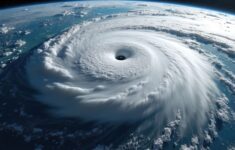

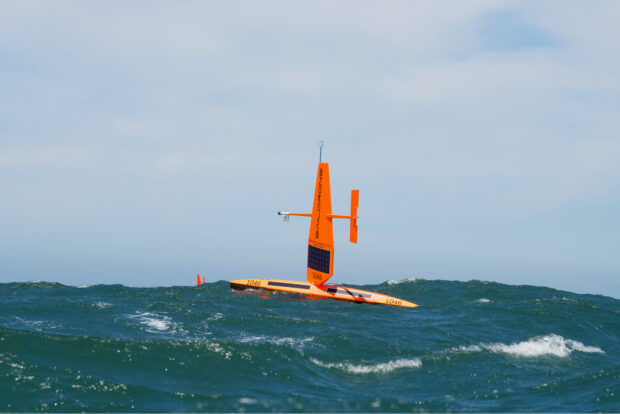
Ten Saildrone Explorer unmanned surface vehicles (USVs) will gather near-real-time data from inside extreme storms to improve rapid intensification forecasting and protect coastal communities.
The USVs will be strategically positioned in the western tropical/subtropical Atlantic Ocean, Caribbean Sea, and Gulf of America from August to November, coordinating with NOAA to maneuver the USVs in and around developing hurricanes.
NOAA researchers will study how exchanges of heat, moisture, and momentum between the ocean and the atmosphere influence storm intensity.
“This multi-year mission between NOAA and Saildrone is helping to improve our understanding of how hurricanes intensify, including when they strengthen rapidly before landfall,” said Greg Foltz, an oceanographer at NOAA and one of the principal investigators on the mission. “Each storm we observe gives us more data to evaluate and improve prediction models, which is critical for increasing forecast confidence, extending warning lead times, and strengthening the nation’s preparedness for high-impact weather events.”
Each Saildrone Explorer will be equipped with a suite of meteorological and oceanographic (metocean) sensors to measure wind speed and direction, air, surface, and sub-surface temperature, relative humidity, barometric pressure, salinity, and wave height and period.
Additionally, two USVs will carry NOAA ASVCO2 sensors to measure the exchange of carbon dioxide between the ocean and the atmosphere. The observations will support NOAA’s hurricane research and modeling efforts.
“The NOAA hurricane mission is one of Saildrone’s longest-running and most successful partnerships, and also one of the most technically demanding,” said Matt Womble, vice president of government relations at Saildrone. “This mission reinforces the value of mature, long-duration uncrewed systems for operating in environments where persistent data collection is otherwise impossible by traditional means. Better hurricane data supports better forecasts, and better forecasts strengthen national resilience—protecting lives, infrastructure, commerce, and critical operations. Saildrone is tremendously proud to continue this work with NOAA.”
The company has deployed five USVs in 2021, seven in 2022, and 12 in both 2023 and 2024 to study hurricane behavior.
The Saildrone Explorer is a 7-meter (23-foot) USV designed to deliver continuous observations across remote and extreme environments. The USVs used for the hurricane monitoring mission are equipped with a shorter, more robust “hurricane” wing, specially designed to withstand the conditions inside a tropical cyclone. Specifically, the wing was engineered to survive winds of over 110 mph and waves exceeding 50 feet high.
During the five year partnership, 21 named hurricanes and 46 tropical storms have been intercepted. In total, Explorer USVs have spent more than 2,600 days on mission supporting hurricane research.
 Six Flags Magic Mountain Retires X2 Roller Coaster Amid Brain Injury Lawsuits
  Finding Safer Ground: How Parcel-Level Data Is Redefining Wildfire Risk in California
  Rogue AI Agents Pose Uncertain Legal Risk for Anthropic
  AM Best: US Home Insurers in 2025 Book First Underwriting Profit in Seven Years