


















Late last week, Allstate unveiled Allstate Claims University, a 33,000-square-foot campus in Dallas, complete with hands-on property and auto labs—immersive training environments representing scenarios that claims professionals will face in the real world.
In a statement about the opening of the campus, Mike Fiato, executive vice president and chief claims officer at Allstate, said, “The investment in Allstate Claims University starts with our people and ends with our customers.”
“When someone’s home is damaged by a storm or their vehicle is involved in an accident, they need more than a claim processed: they need an expert who can understand what happened, explain what comes next and help them move forward.”
“By investing in our teams, we’re helping ensure customers receive the expertise, care and confidence they need when it matters most,” Fiato said.
The Allstate media statement did not disclose the dollar value of the investment that Allstate is making in the university buildout.
“The investment in Allstate Claims University starts with our people and ends with our customers.”
Allstate reported that the company has 23,000 claims professionals supporting roughly 8.5 million claims each year.
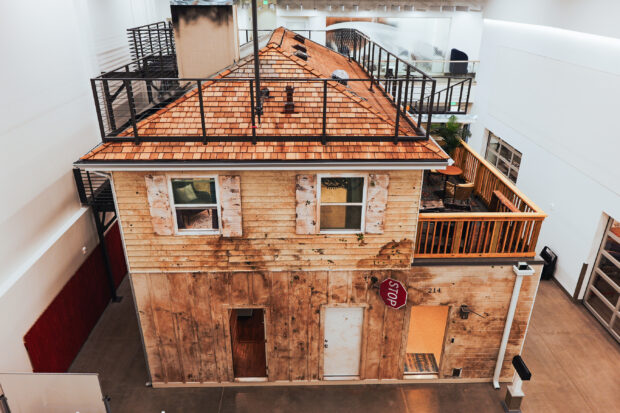
Offering a photographic view of one of two full-scale, two-story homes that recreate a range of property damage scenarios in the Property Lab, and one of 30 vehicles in the Auto Lab, Allstate said the scenarios help claims teams to sharpen skills before they arrive on the scene of a real-life event to assess real damage. The Auto Lab, for example, can help claims professionals better understand evolving vehicle technologies, repair methods and complex damage scenarios.
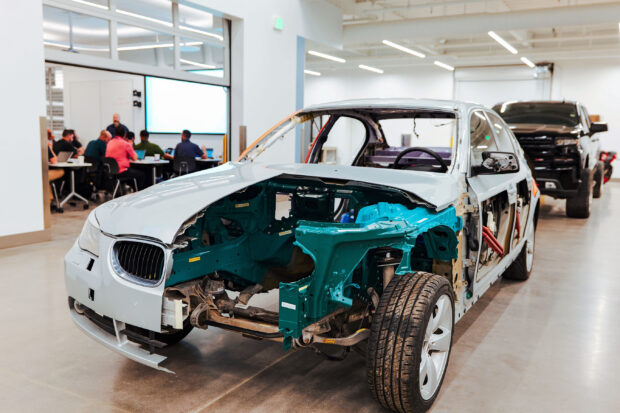
Allstate said the Auto Lab was designed using insights from more than 3.5 million claims data points. Among the 30 vehicles in the Auto Lab are electric, hybrid and conventional vehicles selected to represent common and complex damage scenarios.
Training relates to collision, flood, hail and structural damage, and includes repairs involving airbags, cameras, sensors and advanced driver-assistance systems.
The claims professionals also get hands-on access to diagnostic tools and watch repair demonstrations to help them better understand how new vehicle technology can affect damage assessments and repair decisions.
The Property Lab allows claims professionals to examine both visible damage and what can happen behind walls, ceilings and floors—what customers cannot see—with one of the homes recreating visible damage caused by water, fire, wind, hail and structural impacts, and the other exposing hidden building systems and materials.
Together, the two views help claims professionals understand the full scope of damage, equipping them to explain the recovery process more clearly to customers.
The bottom line: Severe weather, evolving construction methods and increasingly sophisticated vehicles are making claims more complex, Allstate said.
Allstate Claims University gives claims professionals practical experience before they arrive at a customer’s home or assess a damaged vehicle.
The hands-on preparation not only helps them to make more informed assessments but also to “explain repair recommendations more clearly and provide a more consistent experience throughout the recovery process,” Allstate said.
More accurate damage assessments can help customers better understand what needs to be repaired, make informed decisions, and move through recovery more quickly and efficiently.
Source: Allstate
Featured images: Images of Allstate Property Lab and Auto Lab provided by Allstate
 Workers’ Compensation’s Real Challenge: Orchestration
  The Impact of Claims Experiences on Trust
  Broad AI Exclusions in Insurance Policies Could Create Uncertainty, Marsh CEO Says
  Federal Bill Seeks to Reduce Work Week to 32 Hours