














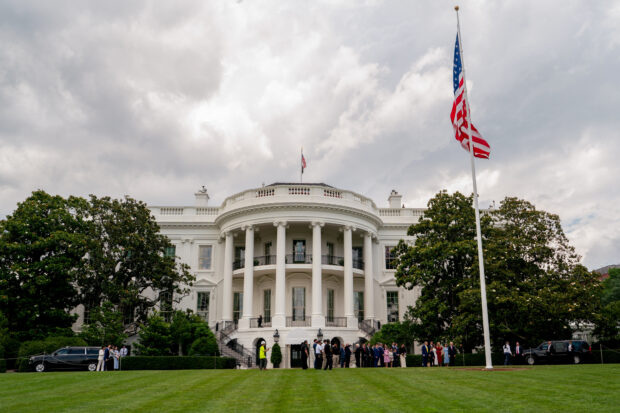
At a White House meeting on Thursday, officials from President Donald Trump’s artificial intelligence task force recommended that agencies ease their cyber liability policies in an effort to incentivize AI companies to report critical incidents.
The officials advised agencies that previous standards for taking regulatory action in response to cyber episodes may be outdated and have a chilling effect on important information sharing, according to an administration official who asked not to be named because the meeting was not public.
Agencies were urged to place limits on regulatory liability for the next 12 months and possibly longer, the official added.
The move to offer AI developers a liability carrot, rather than a stick, is a turnaround from earlier public statements that showed a willingness to invoke current law to punish companies that create unsafe products. Just last month, the same AI task force warned developers that they are required to report and resolve security incidents or face potential unspecified consequences.
The gathering, which was reported earlier by Semafor, took place in the shadow of Nvidia Corp.’s ouster of its chief executive officer, Jensen Huang, over affairs he had, including one with a woman suspected of spying for China. The scandal and Huang’s close relationship with President Donald Trump and top administration officials have generated intense scrutiny, particularly of Commerce Secretary Commerce Secretary Howard Lutnick, who attended the White House meeting.
Trump formed the group — known as the Super Intelligence Force — at the end of September, after growing public concern about catastrophic risks became too hard for the administration to ignore following a spate of breaches by rogue models. He also signed an accord with leaders of the AI industry’s most prominent developers including Nvidia, Anthropic PBC, OpenAI, Google parent Alphabet Inc. and Meta Platforms Inc.
The nonbinding agreement endorsed the use of outside auditors and safety precautions for cybersecurity, biosecurity, chemical threats and unintended actions by AI models. Trump called it “morally binding.” Days later, the Federal Trade Commission teed up the threat of legal action against AI companies related to product safety concerns.
During Thursday’s meeting, Jay Clayton, the force’s chairman and the director of national intelligence, said more private companies could be added to the accord in the future, according to the official. Clayton added that he was continuing to work with the accord’s signers on shared industry standards.
Emil Michael, a Pentagon under secretary and the task force’s vice chair, also spoke about his work with AI companies on an incident reporting protocols, the person added. Also in attendance were Federal Trade Commission Chair Andrew Ferguson, who also serves on the task force, Office of Science and Technology Policy Director Michael Kratsios and National Cyber Director Sean Cairncross.
Lutnick, Cairncross and Kratsios also discussed pre-release testing of AI models, which is carried out based on a voluntary June executive order. The National Security Agency and the Center for Advancing Innovation and Standards for Super Intelligence within the Commerce Department are both carrying out the testing, the official said.
SI Force Vice Chair Scott Kupor, who is also the director of the Office of Personnel Management, and Cairncross spoke about their efforts to protect critical infrastructure and government systems from AI-powered cyber attacks. The same day, Treasury Secretary Bessent said during a speech at a conservative think tank that a cyber attack on refrigerator systems and a blood bank in France was powered by Chinese AI models.
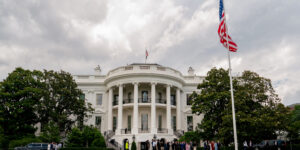
Photo: Photographer: Ken Cedeno/UPI/Bloomberg
 Multimodal Claims Intake with Agentic AI: A Practical Architecture
 Policy Disconnects, Deferred Mitigation Escalate Weather-Related Claims
 Email Cyber Attacks Becoming More Precise and Evasive: Report
 Allstate’s AI Ecosystem to Include a Personal Agentic Assistant for Customers