
















Crum & Forster CEO Marc Adee remembers what it was like in years past when he was leading divisions of a company then operating under a centralized model that forced him to fight for corporate resources.
“I want somebody thinking about my stuff all the time,” he’d say as he sought the services of a particular actuary. “He’s busy doing reserve reviews….That’s a corporate function, and actuaries can’t be in a division,” he’d hear back from the leaders he asked for permission to have exclusive help from the actuary.
The same type of response came when he wanted an IT professional to fix a pricing or operating system. “You’re No. 15 in line and only three things are going to get done.”
“You could end up with these circular discussions at the end of the year. ‘Well, you didn’t make your numbers.’ You didn’t give any support. ‘Well, we didn’t give any support because you weren’t going to make your numbers.’”
Even the claims function was centralized. “So, you’d have underwriters who didn’t know what was going on in claims.”
A decentralized model, like the one in place at C&F today, not only fixes these problems but creates long-term career paths to leadership within the company and promotes innovation.
Related article: How a Decentralized Structure Opens Career Paths at C&F
Looking outside the company, Adee notes that pronouncements about AI initiatives elsewhere “are very top-down. We are now going to do a bunch of AI and it’s going to be supply push,” he said. At C&F, “the people that are good at all things machine learning and AI and data science are sitting in the division looking for use cases that they will then satisfy based on what the division thinks makes the most sense.”
“It is not coming from me and getting jammed down. (‘We need some AI. I need to be able to talk about AI.’) It bubbles up.”
(Editor’s Note: C&F has a team of 400 professionals in India who help with technology. According to Adee, the divisions hire those professionals directly.)
Even some of C&F’s “social initiatives bubble up,” he said. “The best ideas come from the people that are closest to the customer and closer to the action.”
Continues Adee: “If somebody came in to me and said, ‘I would’ve done this if only corporate had let me’—that’s no longer a concept.”
C&F’s corporate group “is really a control function. We’re going to audit. We have kind of a robust ERM process that sits on top of everything. We’re looking for exceptions. We get referrals when stuff gets to a certain size or importance level. But we’re doing that in the background. [Corporate] is not necessarily driving our best ideas. They’re coming up from divisions.”
For the division head, “that’s a lot more fun. You’re really like your own CEO of that division. You own it.”
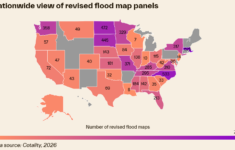
 Nearly 100% of U.S Now Covered by NOAA’s Flood Mapping Tool
  Wrongful Death Notice Filed in Kirk Death As Report Highlights University’s Security Deficiencies
  The Great Miami Hurricane: What a 1926 Catastrophe Reveals About Modern Coastal Risk
  Florida OIR Approves Four More HO Rate Cuts as Citizens Keeps Shrinking