


















Insurers are fundamentally transforming catastrophe (CAT) modeling approaches with artificial intelligence (AI), machine learning (ML) and advanced climate data analytics, as traditional models—without significant enhancements—no longer capture the evolving nature of climate risks.
Executive Summary
As climate risks intensify and traditional CAT models fall short, insurers must embrace AI and machine learning to stay ahead. AI enables real-time, data-rich modeling that enhances risk assessment and portfolio optimization. This article outlines a practical framework for integrating AI into CAT modeling—covering data preparation, enrichment and analysis.AI-powered tools enable insurers to handle complex, data-led tasks more efficiently, ultimately improving their ability to perceive and manage risk.
This article presents a practical framework for modernizing CAT models, leveraging AI-based solutions, cutting-edge technology and data sources, while accounting for emerging risk considerations.
A Paradigm Shift in Risk Modeling
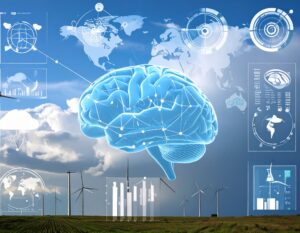
AI in CAT modeling is not just an enhancement to traditional methodologies; it represents a paradigm shift, redefining how insurers and reinsurers can understand, prepare for and mitigate catastrophic risks. By transcending the limitations of legacy systems, AI is unlocking opportunities to refine risk assessments, optimize resource allocation and reshape the overall CAT modeling process.
 One of the co-authors, Markel Group Managing Director Amandeep Dhillon, believes AI has the capability to “revolutionize how property risk is underwritten,” with potential AI-driven improvements in data quality and process efficiency allowing organizations to optimize risk selection and portfolio management.
However, for AI to be effective, its informing data must be captured, cleaned and made accessible to the CAT modeling software.
Modern insurers now employ deep learning algorithms that process vast amounts of property data, satellite imagery and climate information in real-time. These AI systems can automatically extract property features from aerial imagery, assess building characteristics and identify risk factors that traditional models might miss.
These insurers also move beyond this simple automation to integrate the different sources of data and quickly inform the damageability and vulnerability functions of catastrophe models:
Big data integration combines information from satellite imagery, sensor networks and social media feeds to enable a comprehensive view of diverse variables and enhance risk assessment accuracy.
Real-time data processing and modern analytics enrich the analysis of catastrophic events with information captured during and immediately after they occur.
ML algorithms can now process thousands of aerial images in minutes, identifying patterns of damage, vulnerability and correlations that might take human analysts weeks to assess. This capability has proven especially valuable in the immediate aftermath of major weather events, where rapid assessment can significantly impact response effectiveness and claims processing efficiency.
Preparing your CAT modeling software to accommodate these advancements will require a combination of in-house and outsourced provisions, supported by AI or similar technologies tuned to the following tasks.
5 Ways to Optimize Risk Analysis in CAT Modeling
To truly tap into data-driven insights in today’s complex global environment, the scope of CAT modeling must expand to include AI-based pre- and post-modeling tools, technologies and support services. Here are five areas to address that can help increase speed and accuracy in pre- and post-CAT modeling efforts:
Data capture—Two types of data are required. First, contract data, including layer or interest, line size, sublimits and deductibles, etc. Second, data concerning the insured location, including geographic data, replacement values and building information, such as construction type and occupancy data. These data may include structured and unstructured information extracted from manual and digital systems.
Data cleansing and validation—Automated data cleansing and quality control can help identify and correct data duplication, misspellings, wrong addresses, country code population errors, class-specific details and other anomalies. These processes can also standardize name and address formats, flag missing data, and perform other logical business checks. ML algorithms can be trained to improve this QC process significantly over a short period of time.
Data enrichment—By integrating third-party data sources and internal mapping tables, data can be enriched to improve modeling accuracy. For instance, geographic information should ideally be geocoded by latitude and longitude, as well as occupancy and construction codes, among other industry standards. ML-based algorithms and service APIs can combine to enhance this process, as well.
Uploading to a CAT modeling tool—CAT modeling tools provide the output for estimating losses associated with events and for quoting purposes. The data required for these outputs must be effectively integrated with the AI system to ensure speed and accuracy in calculating losses.
Output analysis—Timely output analysis can inform decisions regarding risk appetite, portfolio optimization, business planning, reinsurance placement, capital requirements, board and regulatory reporting, and post-event loss estimations, among other business requirements. Interactive dashboards can help communicate the findings for improved decision-making.
Embracing a Dynamic Future
Traditional CAT models are static, built on historical data that fails to account for the accelerating pace of climate change, urbanization and geopolitical shifts. AI enables dynamic, real-time modeling that integrates diverse, real-time data streams, such as IoT weather sensors, satellite imagery and social media sentiment analysis. It represents more than technological progress. It’s an invitation to rethink the role of insurers and reinsurers as partners in global resilience. It empowers providers to anticipate risks that previously seemed unpredictable, offering a proactive approach compared to traditional, reactive loss mitigation.
By harnessing state-of-the-art ML and deep learning algorithms, insurers can uncover hidden patterns in vast datasets and deliver actionable insights that refine underwriting, pricing and mitigation strategies.
What better time to educate your team on the evolving importance of AI in risk mitigation CAT modeling than now?
 Nearly 26.2M Workers Are Expected to Miss Work on Super Bowl Monday
  Retired NASCAR Driver Greg Biffle Wasn’t Piloting Plane Before Deadly Crash
  Lessons From 25 Years Leading Accident & Health at Crum & Forster
  Preparing for an AI Native Future