




















While InsurTech carriers selling personal lines insurance see software licensing deals as new avenues to growth, a technology company operating in the special niche of catastrophe-exposed property has found success moving in the opposite direction.
Executive Summary
The CEO of SageSure, Terrence McLean, describes the evolution of a startup technology firm, launched to license specialized software to insurers writing property risks in underserved coastal areas in the aftermath of hurricanes Katrina, Rita and Wilma, into an MGU that leverages the technology and relationships with multiple carriers to offer consistent capacity to agents struggling to place that business for middle-market insureds.Terrence McLean, chief executive officer of SageSure, a Jersey City, N.J.-based managing general underwriter, explains that the initial business—a technology company known as Insight Catastrophe Group—still exists and generates about $3 million of revenue per year. But the MGU, which produced over $462 million of premiums for carrier partners in 2019, is now the main focus of the company.
SageSure, which writes middle-market primary personal property insurance for a handful of carriers in underserved coastal areas, uses technology that scores the impact of adding each individual property risk (or set of risks) to a portfolio. With bigger investments in that kind of technology than traditional national homeowners carriers have made, SageSure has an edge in underwriting and pricing underserved risks, McLean told Carrier Management during an interview in January. “It’s not that they’re not smart enough or capable. Of course they can do that. They just decide that’s not where they’re going to put their investments because they’re not focused on that area,” he said.
In addition to scoring technology, which essentially delivers metrics like ROE, reinsurance cost impact, aggregation impact in real time as potential risks are considered for binding, SageSure has also made heavy investments in quoting technology that makes it easy for agents to do business with the MGU, which describes itself as “the largest independent residential property MGU in the U.S.”
Although at least one 2019 media statement issued about SageSure describes the company as a subsidiary of InsurTech firm Insight Catastrophe Group (ICG), McLean admits to being uneasy about using the descriptor “InsurTech” for either company.
“What I would say [instead] is that we are a technology company dressed up in an insurance company,” McLean said. “There’s a lot of buzz and conversation around the InsurTech space. We think of ourselves as a technology company. We operate a lot like a technology company. But where we’ve come from is much more an insurance focus—with actuaries who have been doing this for decades and a focus on managing profitable business.” (Editor’s Note: SageSure officially became the lead company at the end of 2020, with ICG now as a subsidiary.)
“We don’t think technology alone is enough to be successful in this. Risk management, exposure management [and] carrier partnerships where you trust this person like family” distinguish SageSure, he continued.
“The technology is critical, and sometimes I think I even potentially take it for granted, because we’ve always been good at that and it’s woven through the fabric of what we do. But at the core, I believe to be successful in this space, you’ve got to be insurance-focused and insurance-minded…One without the other does not work. Insurance-minded without technology is a real struggle. Technology without the insurance-mindedness I think is also challenging,” said McLean, himself a hybrid of both worlds.
Hard-to-Place Coastal Insurance and Technology
McLean studied actuarial science, finance and computer science before embarking on a diverse career path that saw him move from being an analyst and software development manager for investment banking firm Donaldson, Lufkin & Jenrette to become the chief operating officer of American Superior Insurance Company in Florida, and then into positions in the risk management group of RenaissanceRe before launching ICG and SageSure.
In 2005, McLean and Andrew DiLoreto, a former executive for Benfield Group and General Re, co-founded ICG, starting out as a software and services company for insurance carriers and MGAs writing cat-exposed property. “It was after two years of significant hurricane activity, 2004 and 2005,” he said, noting that the timing coincided with the pullback of large national insurers from cat-exposed markets.
“We had a really good product, but frankly, most insurance companies that are writing cat-exposed property don’t have the analytical tools at the point of sale. So, it was a real struggle,” he said, explaining the pivot from a software company to an MGU model. The MGU, leveraging the same technology, wrote its first policy for IAT Group in September 2009, he said.
While Insight had a “healthy amount of revenue” (eight figures) for several years, that wasn’t permanent, he said. “Our revenue went down to a couple million a year, and we de-emphasized that business.” He noted that ICG nonetheless still serves some happy 10-year clients. “But we haven’t invested in that model,” he said, adding that nearly 300 employees focus more on the MGU than software licensing today.
McLean also suggested that technology for scoring and pricing risks in catastrophe zones, which was novel back in 2005, is less unique today. “Every insurance company, every actuary that does pricing for cat-exposed property business understands the fundamental math that goes in. What we did is we operationalized it,” describing how ICG was able to integrate with AIR and RMS cat models, combining model output with a layer of logic—algorithms—to come up with the expected profitability or return on capital of a single risk.
“We made that all possible seamlessly,” he said, noting when a risk comes in (to the MGU or to carriers that do license the software), carrier-specific reinsurance costs and capital allocation strategies are layered with the modeling results to come up with prices to charge for breakeven results or to be at some prescribed level of profit.
For carriers looking to write more in cat-exposed areas, “we were clearly the most efficient way to do that. We had the best tool and for the least cost. But you had to be committed to using it. Most carriers simply just don’t use it,” he said.
“Carrier partners who have capacity are much more interested in people bringing them revenue than bringing them expenses,” McLean said, explaining why the MGU model made more sense.
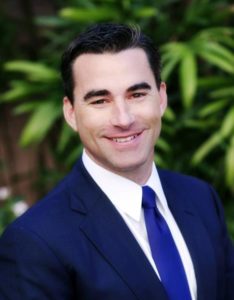 “Carrier partners who have capacity are much more interested in people bringing them revenue than bringing them expenses.”
Terrence McLean, SageSure
The revenue has to be profitable, he stressed. “We’ve made profits for all of our carriers every year since inception. That’s not something that most people can say when they’re writing cat-exposed property and they’ve been through hurricanes Sandy, Irene, Isaac, Matthew, Dorian, Harvey—I could keep going. Pretty notable ones,” he said, explaining that the track record relates to the “dressed up as an insurance company” part of being a technology company.
“We’re not a competitive marketplace. That’s not our model. We’re essentially an outsourced partner with our carriers,” he said, noting that SageSure has exclusive arrangements with the carriers in the regions where it writes for them. “We have a small number and they’re deep partnerships, with trusting relationships. I think of it as insurance done the old school way, where you really do trust that person you sit across. It’s not a transactional type of business model,” he said.
“We work closely with our carrier partners. Ultimately, of course, they retain all of the authority, but they give us a pretty long leash to run the business the way we need to. We have the expertise on staff: We have the actuarial staff, the product development staff, the underwriting staff. We do all of that work ourselves and then we hand the filings over to our carriers,” he said, noting that while they can say they don’t like what SageSure has come up with, that generally does not happen.
Winning the trust to operate with such a long leash takes “time, integrity, honesty,” McLean said. “Do what you say. Say something, have conviction and then actually go do it. Deliver solid results,” he said, noting that the basis of the first relationship with IAT Insurance Group started with a test state. They gave SageSure some capacity in New York, “and we produced exceptionally good results. We were also extraordinarily conservative.”
“Today, we would never be that conservative. The market wouldn’t tolerate” it, he said, referring to being so disciplined on underwriting guidelines and insurance-to-value that it frustrated distribution partners. “What that means is you bind a risk and you disrupt them after binding because you underwrite it after binding,” he said, noting that SageSure inspects 100 percent of the houses it writes.
“We were just putting out pending cancellation notices on a large number of policies early on. That’s challenging,” he said, going on to describe the importance of balancing agents’ needs and profitability promises to carriers. Incremental changes to loosen underwriting in order to help agents were done slowly, being mindful of the need for stability—not by “running into a market writing as much as you can. Not underwriting and saying, ‘Oops, I just lost a bunch of money. I need to jack up my prices. I need to non-renew customers.’ That’s disruptive, and we’ve been able to stay away from that. We very, very rarely shut down business,” he said. “We’ve never taken a double-digit rate increase,” he added.
Does that mean rates are high to begin with?
“Our close rate wouldn’t indicate that,” McLean responded. “Our rates are very competitive for a cross-section of customers we’re targeting” he said, noting that SageSure writes mostly middle-market admitted homeowners business at an average distance of 10 miles from the water. “We’re writing what we would consider very good business that happens to be relatively close to the coast. That’s the story,” he said. “The big national players generally shy away from it. Often, they’ll take some of it, but they generally have enough. They’re not seeking large growth in these areas as a general rule.”
While SageSure’s prices are higher than insurance prices for properties without hurricane exposure, they are lower than what other carriers charge for the same risks. The model for the business is to go after “those customers who we believe are overpaying with other players”—because those other carriers apply a “high-risk label” across the board without drilling down on differences in exposure.
“Clearly, Allstate, State Farm, Travelers, all these companies have the sophistication and they’ve got really smart people. But because they’re shying away from the coastline, they’re not making huge investments in getting that right. It’s logical. It makes sense,” McLean said, explaining that SageSure has made investments in technology and “rating algorithms that are dramatically more granular.”
“Hurricanes degrade over time. Wind speeds go down. There’s protection from trees and various things over land, surface roughness. I could go on and on. Because of those reasons, that house a mile inland doesn’t deserve the same rate” as the one right on the coast. “They, in fact, deserve a lower rate.”
“We can be more competitive for customers that deserve a better rate for risk reasons.”
 Lessons From 25 Years Leading Accident & Health at Crum & Forster
  AIG, Chubb Can’t Use ‘Bump-Up’ Provision in D&O Policy to Avoid Coverage
  Beazley Agrees to Zurich’s Sweetened £8 Billion Takeover Bid
  How Americans Are Using AI at Work: Gallup Poll