
















Though workers comp and auto remain profitable lines within the insurance industry, there a number of challenges to monitor, according to Enlyte’s 2026 Envision Trends Report, which explores the forces driving claim complexity.
Factors including litigation, workforce transformation, and evolving medical and vehicle challenges are reshaping claims management, while insurers and employers face mounting pressure from rising severity, longer claim duration and expanding operational demands, the annual report outlined.
An analysis by P/C guest contributor and industry expert William Wilt, president of insurance consulting firm Assured Research, examines how forces driving profitability in workers compensation and auto insurance are shifting as pricing cycles diverge due to distinct claim trends, litigation dynamics and competitive demands.
His analysis shows that while these lines still show signs of profitability, claims outcomes are shifting due to economic uncertainty and policy changes.
In personal auto, powerful swing factors come into play as market competition and coverage choices grow.
And while technology may lower injury frequency over time, the outcomes are highly dependent on adoption and real‑world behavior.
The report highlights how utilization, treatment timing and pricing dynamics are converging to increase severity across workers comp and auto claims.
Rising workers comp medical costs are being driven less by claim frequency and more by increasingly intensive treatment patterns, delayed access to scheduled care and higher utilization within existing claims.
In workers comp, mental health and comorbidities are also driving higher claims costs.
Evolving provider networks, shifting care delivery models and growing variability in access to care are reshaping workers comp outcomes, making consistency of care a critical driver of claim performance and recovery.
Identifying risk early to protect outcomes using AI-driven analytics, integrated pharmacy oversight and proactive clinical intervention can aid employers and claims organizations in keeping workers comp claims from escalating into prolonged, high-cost cases.
Concerns surround medical inflation, labor market softness and regulatory changes that could affect P/C organizations in late 2026 and 2027, the report noted.
Rising vehicle complexity, supply chain volatility and growing repair costs are transforming collision claims management, increasing the need for faster, more accurate and technology-enabled decision-making, the report added.
“Claims today are no longer defined by a single injury or event,” said Alex Sun, Enlyte CEO. “Across workers compensation and auto, we’re seeing increasing overlap in medical complexity, behavioral health, litigation exposure, regulatory change and technology-driven pressures.”
Analysis showed that leading claims programs are adapting to rising complexity through earlier intervention, integrated data and coordinated care strategies.
 Zurich Insurance Group Completes Acquisition of Beazley, Names New Leadership for Insurer
  How a Kelvin Wave Is Raising the Sea Level Along the West Coast
 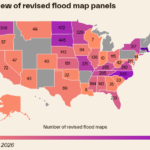 FEMA’s New Flood Maps Mean More Homes Require Flood Insurance: Cotality
  Nearly 100% of U.S Now Covered by NOAA’s Flood Mapping Tool