











The fleet market’s supply chain issues, added fuel surcharges, and high-dollar claims are reminiscent of 2020, according to the latest Amwins’ State of the Market Transportation report.
With the full impact of tariffs still unknown, the American Trucking Association estimated new truck prices could rise by $35,000. The rising costs could hinder the replacement of vehicles and drive up replacement parts, adding to potential insurance claims costs.
Commercial auto premiums increased an average of 9.4 percent over the past year, largely driven by nuclear verdicts, social inflation, and reinsurance costs, the report said, citing the Ivans Index as the source of the figure.
Some carriers have withdrawn from high-risk business auto lines and hard-to-write coverage, leading policyholders to seek coverage in the E&S or captive markets. Specifically mentioned in the report are classes like passenger transport, waste hauling, last-mile delivery, cannabis delivery and hazmat, which are among those facing heightened underwriting scrutiny and being forced into the E&S market.
Hired and non-owned auto has also been a difficult exposure for carriers to underwrite, the reports says, noting that coverage is either not being offered, or being offered at significantly higher premium levels.
In general, insureds with poor loss histories face limited options and higher costs.
Despite the somber outlook, Amwins remains optimistic that rates will stabilize as the market equalizes.
For now, capacity is tight for accounts with less than five years of experience and in coastal areas, with frequency remaining a constant concern for underwriters.
In New Jersey, an increased limit requirement of $1.5 million and claims frequency have led to a nearly non-existent market.
- The underwriting appetite in the Southeast makes it incredibly difficult to write accounts with less than five to six years of experience.
- Accounts with any losses are challenging, regardless of size.
- States like New York, California, Texas and Illinois continue to see limited active players
- The casualty marketplace in New Jersey is “essentially non-existent” due to high-frequency claims and an increased limit requirement of $1.5M.
Investment in safety technology is also helping to stave off rising claims costs, as it proves to be an invaluable resource in litigated claims.
The increased use of advanced technology by trucking firms and underwriters is also streamlining workflow, leading to cost savings.
Tort reform in Florida and Georgia has renewed interest among carriers in re-entering those markets, while the outcome of a recent Texas Supreme Court decision reversing a $90 million verdict against a trucking firm remains to be seen.
Carriers are wise to keep an eye on emerging risks, such as cargo theft, driver requirement scrutiny and violations, and electric and autonomous fleets.
Related articles: Why Insurers Struggle to Underwrite, Price and Reserve for Commercial Auto Risks; Better Results Ahead? Technology Improvements in Commercial Fleets; MGAs and Commercial Auto Insurance: Wave 2 Showing Promise
In a section on London capacity, the report notes some competitive pressure from domestic markets in the U.S. that are packaging auto physical damage and motor truck cargo coverages with auto liability, and offering the packages at reduced rates.
“We have been here before, and believe we are halfway through what is typically a three-year cycle during which domestic
markets look for additional revenue streams but quickly revert when losses begin to outweigh the premium being collected,” the report comments.
While the transportation market remains challenging, the report highlights that the carriers that will thrive will be those that emphasize underwriting scrutiny by using technology to assist in quick and accurate risk assessment.
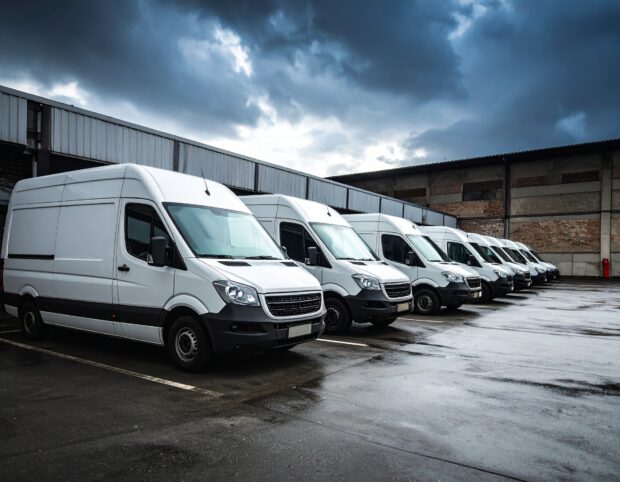
Featured image: AI-generated (Adobe Firefly)
 The Latest Launches from Vertafore, One Inc., Qumis
  Federal Bill Seeks to Reduce Work Week to 32 Hours
  Viewpoint: Insurers Are Automating the Front Office While Ignoring the Function That Determines Trust
  Laws to Protect Workers from AI Risks Signed by California Governor