
















If you own business Interruption insurance, and your business gets interrupted by COVID-19, the income you lose must be covered by your policy, right? Not exactly, as people across the country are now discovering.
Executive Summary
P/C insurance policies should be accompanied by plain language summaries—even if the underlying, indecipherable policy contract ultimately controls, writes Watermark Consulting’s Jon Picoult, suggesting the problems insurers are facing today as unhappy business owners turn to the courts for coverage of COVID-related business interruptions could have been avoided.Much to their surprise and chagrin, business owners are learning that business interruption insurance typically only pays out when there is physical damage to the covered property (such as when a restaurant has to close for an extended period after a fire guts the kitchen). Many policies even specifically exclude losses caused by, or resulting from, a virus.
Businesses are lawyering up to fight for what they feel they’re owed, after years of paying insurance premiums and now expecting compensation when they’re at their most vulnerable. Insurers are similarly girding for a fight, as they highlight all of the fine print in their policy documents that supposedly justifies denial of COVID-19 business interruption claims.
This is where the true failing of the insurance industry becomes apparent, because people simply don’t understand their insurance coverage. Is it any wonder that the average small business owner would have thought their business interruption insurance would cover them during a business interruption?
I looked at my commercial insurance coverage and, wading through pages and pages of legalese, I couldn’t figure out if it excluded pandemic-related interruptions—and I’ve actually worked in the insurance industry for nearly three decades. If an insurance insider can’t figure this out, should we really expect the average consumer to do it?
Insurers are the product manufacturers; they’re the ones accountable for documenting coverage terms and conditions in a way that can actually be understood.
Plain language coverage explanations aren’t a new idea, but it’s not one the industry has widely embraced. Insurers—and the agents/brokers who represent them—too often focus on customer acquisition, not customer satisfaction. Once coverage is purchased and a policy is delivered, focus shifts to the next sales target, while the just-sold customers try to make sense of the voluminous policy document dropped into their lap.
Many insurers’ general counsels will likely recoil at the thought of simple and straightforward policy terminology. After all, it’s in the fine print that insurers seem to seek refuge during times like these. If the lawyers insist on keeping the legalese, so be it, but at the very least, policies should be accompanied by plain language summaries (even if the underlying, indecipherable policy contract ultimately controls). Providers of ERISA-covered retirement and health benefit plans are already obligated to do this, and it’s a step in the right direction.
Furthermore, it’s not enough for insurers to just translate complicated terms and conditions into comprehensible language. What’s also needed are plain language explanations of potential loss scenarios, so policyholders can truly grasp in what real-world situations they are, and are not, covered. For example, in insurers’ eyes, their obligation to cover the impact of a hurricane depends on whether water damage was due to wind-driven rain versus rising water. That’s a seemingly inconsequential nuance to customers, but it makes all the difference to the insurer (and their willingness to pay a claim).
This is where the optics get even worse for insurers, because the possibility of a pandemic—and the potential confusion it would create for customers—was very much on the industry’s radar screen. Not long after the 2003 SARS outbreak, many property/casualty insurers added language to their policy contracts specifically excluding losses due to viruses or bacteria. For the insurance community, pandemic-related loss wasn’t some far-fetched scenario, on par with damage incurred from an alien invasion. It was a possibility the industry had planned for and protected itself against. And it was a scenario where one could logically expect that policyholders might misconstrue their coverage terms.
For this reason, in a post-SARS world, if insurers had truly committed to customer-centricity and information transparency, then they would have highlighted virus-related coverage scenarios to help foster policyholder understanding. But that didn’t happen widely, if at all, and so the emotional impact of COVID-19 on many businesses was amplified. Not only did they face a significant loss, they also faced a significant and unpleasant surprise.
Based on the policy fine print, many insurers are probably not legally responsible for COVID-19 business interruption losses. However, they are very much on the hook for something else—their failure to articulate coverage terms in a manner that most people can understand, and that’s a tragedy all on its own.
 Markel Expects to See Runoff Certainty With Enstar’s $1.2B Adverse Development Cover
 Xceedance Says for Insurers, AI Advantage Is in Orchestration
 Why Carrier AI Rollouts Stall: Three Types of Resistance Executives Should Treat Differently
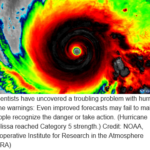 Despite Improved Hurricane Warning Maps, Public Understanding of Danger Lags