
















Over the past 15 years, there has been a steady increase in the number of people injured during the Fourth of July holiday.
Between 2006 and 2021, injuries involving fireworks climbed 25 percent in the U.S., according to a new report by the U.S. Consumer Product Safety Commission (CPSC).
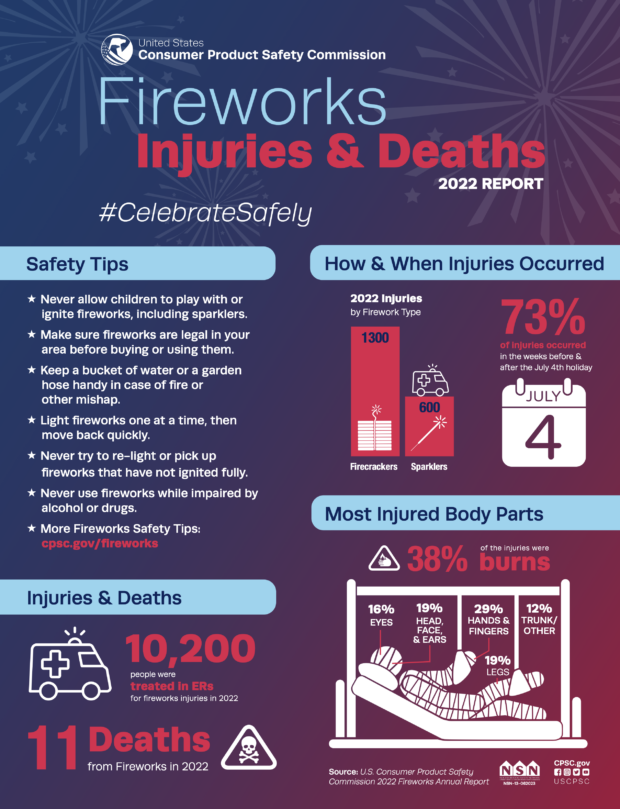
Last year, at least nine people died, and an estimated 11,500 were injured in incidents involving fireworks, the report found.
“It’s imperative that consumers know the risks involved in using fireworks, so injuries and tragedies can be prevented. The safest way to enjoy fireworks is to watch the professional displays,” said CPSC Chair Alex Hoehn-Saric.
Of the nine U.S. deaths reported, six were associated with firework misuse, one death was associated with a mortar launch malfunction, and two incidents were associated with unknown circumstances.
The estimated 11,500 emergency room-treated injuries involving fireworks in 2021 was noted to be a decline from the spike (15,600) experienced in 2020, during the first year of the COVID-19 pandemic, the report noted, when many public displays were cancelled.
An estimated 8,500 fireworks-related injuries (or 74 percent of the total estimated fireworks-related injuries in 2021) occurred during the month-long special study period between June 18 and July 18 last year.
The report that young adults, between 20-24 years old, had the highest estimated rate of emergency department-treated, fireworks-related injuries in 2021.
That same year, there were an estimated 1,500 emergency department-treated injuries associated with firecrackers and 1,100 involving sparklers.
The parts of the body most often injured by fireworks, in 2021, were hands and fingers (an estimated 31 percent of injuries) along with head, face, and ears (an estimated 21 percent), CPSC’s analysis found.
About 32 percent of emergency department-treated fireworks-related injuries in 2021 were for burns.
In 2021, CPSC also found that approximately 31 percent of selected and tested fireworks products contained non-compliant components, including fuse violations, the presence of prohibited chemicals and pyrotechnic materials overload.
 The Impact of Claims Experiences on Trust
  More Roller Coasters Shut Down as Authorities Probe Fatal Fall Off Georgia Ride
  Teen’s Death Prompts Plan to Ban New York Central Park’s Horse-drawn Carriages
  Viewpoint: Six Questions Every CIO Should Ask Before Their Next AI Investment