

















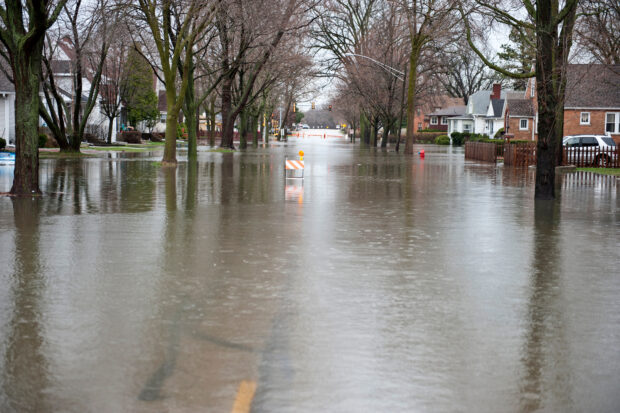
A new survey found three overarching themes that affect the purchase of flood insurance centered on awareness, action and coverage misconceptions, according to Chubb’s Flood Risk and Resilience report.
The survey of more than 1,500 high-net-worth homeowners, commercial businesses, agents and brokers identifies significant gaps in perceptions of flood risk and mitigation measures.
Heightened awareness of flood risk is growing, as evidenced by the 84% of homeowners and 72% of commercial businesses who said they agree that flooding is more common now than it was five years ago.
But many still don’t think the risk applies to them. The survey showed 62% of homeowners who haven’t purchased flood insurance for their primary residence cited “low risk of flooding” as a top reason for going without.
Underinsurance and higher out-of-pocket expenses for flood losses may be due to misconceptions about flood insurance costs and availability.
Of those surveyed, 36% of commercial businesses that haven’t purchased flood insurance cited premium costs as a main reason, while 4% of commercial businesses said that the “limited availability of policies” was a primary challenge they faced when seeking information about flood insurance.
Of the nearly one in five homeowners who reported not having flood insurance for their primary residence, within that group, nearly two-thirds said they didn’t purchase it because they believe their properties are at “low risk of flooding.”
One in five commercial businesses that hadn’t purchased flood insurance indicated a similar level of perceived low risk of flooding influenced their decision.
One possible reason, according to the report, is the fragmented way clients are receiving information about flood insurance.
With no single source, 70% of homeowners and 52% of commercial businesses surveyed cited their reliance on government-issued flood maps.
According to personal lines agents and brokers, just 47% of their clients use commercial models provided by their insurers to calculate flood risk.
Of homeowners who live within a three-mile radius of a body of water, 48% expressed increased worry, while less than a quarter of commercial businesses located in the same proximity expressed concern.
The study also found that the further away from the coast a homeowner or business is located, the less likely they are to purchase flood insurance.
Of those with sufficient flood insurance coverage, 52% of homeowners said advice from trusted experts influenced their decision to pursue flood prevention and mitigation measures.
Agents and brokers offered the top five reasons high-net-worth clients were reluctant to purchase flood insurance. They include:
- Clients think it is unnecessary — 42%
- High cost of premiums — 39%
- Consider it an isolated event — 36%
- Coverage misconceptions — 35%
- Complex nature of flood insurance policies — 24%
Interestingly, more than 80% of high-net-worth individuals in the survey reported that their primary residence was insured against flooding, though Chubb found only 5% of its clients hold the coverage.
The discrepancy might be because “a significant percentage of survey respondents mistakenly believe a standard homeowners policy covers damage from natural-catastrophe-related flooding.”
Even with flood insurance coverage, many policyholders may underestimate the amount of coverage they actually need, the report found.
Flood damage typically runs $50,000 to $100,000 on for the majority of commercial businesses.
While homeowners and larger commercial businesses exhibited an impressive knowledge of mitigation options, the same was not true for small businesses. And though homeowners were aware of flood mitigation options, many had not implemented them.
The survey results highlight areas where insurers, agents, and brokers can improve. Educating policyholders on the costs of flood damage and the risk can help bridge the knowledge gap that currently exists in the flood insurance market.
 Insurers Say French Supermarkets’ Cyber Insurance Unlikely to Cover Food Losses
  Workers’ Compensation’s Real Challenge: Orchestration
  Monster Tsunami Sent Water 1,580 Feet Up an Alaskan Mountain
  Broad AI Exclusions in Insurance Policies Could Create Uncertainty, Marsh CEO Says