




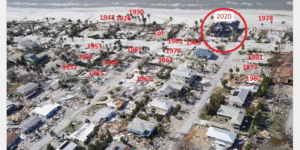












The insurance and reinsurance industry is facing a sustained increase in catastrophic and location‑based risks from extreme weather and natural catastrophes to political violence, terrorism and complex industrial losses.
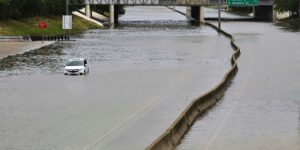
In the U.S., 2025 was the sixth consecutive year in which total catastrophic losses topped $100 billion, and in the UK, insurers paid out a record £6.1 billion in property claims in 2025, with an estimated £1.2 billion of those claims coming from adverse weather events, following catastrophic rainfall and flooding throughout the country.
To combat that trend, many insurers have raised rates and exited markets deemed too high-risk for their current books of business—neither of which is a winning strategy for long-term improvement in customer experience or brand loyalty. Insurers are not going to be able to price their way out of their current dilemma forever.
With unpredictable and unprecedented weather events rapidly becoming the norm, insurers and specialty carriers are increasingly coming to the realization that the catastrophe (CAT) risk models they’ve relied on to build their actuarial forecasts for decades are no longer enough to keep pace. They need more real-time, dynamic models that can address the types of unique, client-specific risks that were once deemed too specialized to track. They have become too big to ignore.
Fortunately, this unprecedented run-up in risk has come at a time when technology is transforming the way insurers think about risk modeling. Now, some industry leaders are turning to powerful AI risk modeling and simulation capabilities to prepare for the worst, without jeopardizing customer relationships along the way. The result is a far more customized approach to property insurance than anyone would have thought possible even five years ago. Based on my firm’s work with several pioneering property and casualty insurers, here’s how some of those breakthrough approaches to AI-powered risk modeling are starting to take shape.
Hyperlocal Coding
This shift reflects an industrywide understanding that traditional, annual CAT modeling cycle reviews are no longer sufficient. Insurers now recognize the need to augment established workflows from major CAT model providers like RMS and Verisk with AI‑enabled processes that accelerate and enhance decision‑making.
Some of the changes that are having the biggest impact to model accuracy are enhancements to the way data is collected and fed into existing models. One of the biggest barriers to accurate CAT modeling has always been data quality and data preparation.
If, for example, a business had a distribution center located on the outskirts of London, legacy models would analyze historic trends in catastrophic risk over the past several years based on basic geographic and building type coordinates. Those models would then feed underwriting programs that would allow the insurer to assess likelihood of a claim and assign a premium value.
That’s all fine and good if historical patterns hold true. But with the recent trend in unpredictable events, that level of detail is not enough. Insurers should also be able to identify details about building construction—whether it is framed with metal or wood—surrounding vegetation, staffing levels, evacuation plans, even exposure to possible geopolitical events and other non-weather-related risks.
All of these can now easily be tracked across aerial imaging technologies, more detailed broker questionnaires and other data sources, but the process of importing those discrete and highly unstructured data points into an existing risk model has proven to be a challenge.
Now, however, with AI-powered data extraction and analysis tools, it is possible to aggregate and organize massive amounts of data and automatically input that information into existing catastrophe models to greatly improve their precision.
Perhaps more importantly, instead of underwriters spending hours manually cleaning spreadsheets or interpreting PDF schedules, AI systems can now incorporate these granular details in real-time—in many cases supporting CAT risk assessments before a quote is ever made.
Assessing Cumulative Risk in Real-Time
The other major change taking place among pioneering insurers is using this powerful data extraction and aggregation technology to take a far more accurate snapshot of accumulated risk. In addition to applying an increased level of scrutiny to each individual policy, insurers can now analyze their total real-time CAT exposure across all location‑driven perils, such as wind, flood, earthquake, terrorism, political violence, marine aggregation, energy clusters and more.
In the days before AI, aggregating, sorting and applying all of the data required to do this type of analysis would have taken three-to-four hours per policy. Instead, most carriers would just add up their total risk at the aggregate level maybe once a year and leave it at that. Now, carriers can take a much more accurate, proactive approach to portfolio steering and, importantly, protect themselves against unintentional over-exposure.
AI-powered tools are making it possible to zero in on individual pockets of risk by city block and lot number, type of client, and risk type—and run stress test scenarios on all of them instantly at the push of a button. This is a level of granularity that was always off limits due to the artificial barriers of time, data silos and data detail, which have now been removed by AI.
Forward Looking Risk Models
As the depth and precision of data available to the industry continues to improve, it’s now becoming possible to capture real-time data and cross-reference it with historical data to identify trends consistent with growing and waning risks and adjust strategy in response to actual events. The result is a more stable, defensible and accurate view of risk. This is the level of certainty the industry demands right now, and the good news is, it is becoming more widely available and adopted by the day.
 River Deltas Sinking Faster Than Sea Level Rise Pose Risk to Millions: Study
  Viewpoint: Why Brokers Have Little to Fear and Everything to Gain From AI
  U.S. Weather Agency’s New Mobile Fleet to Provide Rapid Storm Insight
  How Leaders Can Maintain Humanity in the Modern Insurance Era