



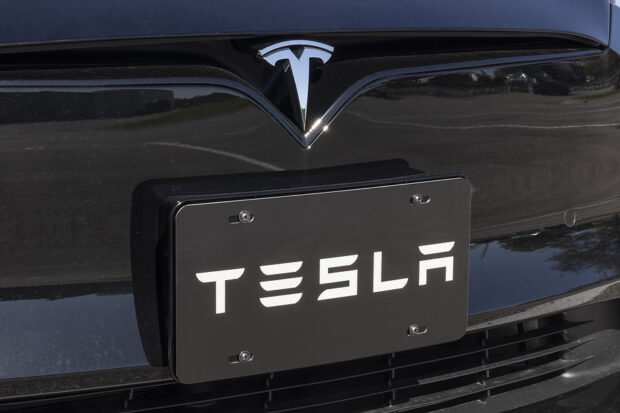
In a Utah office, hundreds of Tesla workers scrutinize video collected by vehicles using the automaker’s Full Self-Driving (FSD) feature. Some clips show the cars hitting cats, dogs or deer, along with more-routine accidents. Sometimes, they don’t brake before impact. Often, they speed. Occasionally, the workers see near-misses of children playing in the street.
Known as “data labelers,” these staffers train Tesla’s AI-powered driver-assistance software. They annotate incidents of good and bad driving and escalate problems to engineers working to improve the system.
Tesla CEO Elon Musk says FSD will soon make all Teslas fully autonomous. But interviews with nine former labelers and a former Tesla self-driving engineer show that the technology continued to struggle in recent months to execute basic maneuvers – such as avoiding emergency vehicles or stopping for school buses loading or unloading students.
Despite such dangerous shortcomings, Musk and other executives have increasingly touted FSD’s safety as they pushed Tesla to stage public displays of the fully autonomous capability the CEO has promised investors every year for a decade. The displays include a robotaxi pilot in Austin, Texas – launched last June with some human safety monitors in the cars and others working remotely.
Inside Tesla, as these events approached, staffers worked long hours mapping routes and training the software on specific hazards to make the company’s self-driving technology appear more capable than it really is, four of the former Tesla employees told Reuters. The staffers said these labor-intensive safeguards are impossible to deploy on a broad scale.
Those efforts, which haven’t been previously reported, undermine Musk’s long-stated claim that Tesla’s self-driving technology will soon work anywhere globally and doesn’t require the same laborious local mapping of roads and hazards employed by rivals. Musk has said Tesla takes a simpler approach, relying solely on cameras and AI, that will allow it to scale up its robotaxi service at “hyperexponential” speed and offer current Tesla owners full autonomy through software updates.
Musk and other Tesla leaders have bolstered the impression of robo-competence by citing company safety statistics that they say prove FSD is already up to 10 times safer than human drivers.
A Reuters examination of Tesla’s statistical methodology and interviews with company insiders show Tesla isn’t close to safely delivering self-driving vehicles at scale – a central promise underpinning the automaker’s $1.6 trillion stock-market value.
The examination included a Reuters analysis of how Tesla compares its own crash data to federal crash data; a review of the comparatively rigorous methodology employed by robotaxi competitor Waymo; and interviews with 11 traffic-safety researchers who reviewed Tesla’s methodology for Reuters. The review found several invalid data comparisons underlying the statistics in Tesla’s FSD safety report, which 10 researchers said amounted to misleading marketing rather than a serious investigation into a critical safety issue.
Tesla, for instance, exaggerates the technology’s safety by comparing a rate of crashes in FSD-piloted Teslas that triggered airbag deployments to a federal crash rate for all vehicles that includes far less-severe accidents. The company also compares its cars to the average U.S. vehicle – which is much older than the average Tesla. That distorts the results because all automakers have recently launched new safety features that reduce crashes, the researchers said.
“Any new car is dramatically safer than a 12-year-old car,” said Phil Koopman, a Carnegie Mellon University engineering professor and autonomous-vehicle safety expert. “It’s like saying: ‘My jet airplane is faster than your World War II bomber.’ Yeah, so, what’s your point?”
Tesla didn’t respond to detailed questions from Reuters for this report.
Tesla’s CFO, Vaibhav Taneja, first made the 10-times-safer claim last July, after Tesla’s Austin robotaxi launch. Tesla Board Chair Robyn Denholm repeated it at a November meeting where shareholders approved a pay package granting Musk up to $1 trillion in Tesla stock. Musk, at the same meeting, displayed a chart with the slightly more modest claim of “85% less crashes,” based on recently revised Tesla methodology.
“We almost feel comfortable allowing people to text and drive, which is kind of the killer app,” Musk told shareholders. “In the next month or two – we’re going to look closely at the safety statistics – but we will allow you to text and drive, essentially.”
Six months later, Tesla hasn’t greenlit texting and driving with FSD. The fine print on its FSD website continues to warn: “Currently enabled features require active driver supervision and do not make the vehicle autonomous.” Tesla has often cited such disclaimers when sued over serious accidents.
FSD is widely regarded as capable of navigating many driving situations, sometimes for long periods. But full autonomy has proven elusive for Tesla and other companies, as it demands flawless execution by the technology – including in the most complex driving scenarios.
Seven of the former data labelers told Reuters they wouldn’t trust FSD to drive them. “We have all seen it fail,” one said. Another said he wouldn’t ride in a Tesla robotaxi “if you fucking paid me.” One veteran self-driving engineer, who reviewed Tesla crash data for years, called its safety claims “bullshit.”
“Definitely,” the engineer said, “don’t trust Elon on this.”
‘TRAUMA TEAM’ REVIEWS NEAR MISSES
Tesla’s data labelers get a close-up view of FSD’s capabilities as they review footage from vehicles equipped with eight exterior cameras.
The former employees reported regularly seeing FSD fail at basic tasks, including pulling over for emergency vehicles and giving motorcyclists enough space. Sometimes, they saw FSD-piloted vehicles fail to brake on freeway off-ramps, including a case where a Tesla hit a concrete wall. (The footage, they said, didn’t show whether anyone was hurt.) Two employees said clips showed FSD failing to avoid construction zones. In one such incident, a Tesla drove into the zone, nearly striking workers, one of the people said.
Reuters did not review the videos; this account is drawn from the former staffers’ descriptions of footage they viewed.
Inside Tesla, managers carefully controlled access to the videos. Because employees only see clips they’re assigned, they may or may not see FSD’s worst failures.
One data-labeling team focused on near-misses of pedestrians, three employees said. Known informally as the “trauma team,” one source said, these employees worked in Palo Alto, California, with special permissions to view the footage. Engineers closely guarded the trauma-team clips, but some footage would occasionally “slip through” to other teams, the person said.
The person and another employee said they saw clips showing drivers manually taking over at the last second when FSD failed to recognize pedestrians in crosswalks. Two other former employees recalled seeing videos last year of FSD-piloted Teslas nearly hitting children.
Tesla has for years faced federal investigations and lawsuits involving crashes, including fatalities, that drivers or regulators blamed on failures of FSD or its older Autopilot advanced driver-assistance system.
The U.S. National Highway Traffic Safety Administration (NHTSA) opened an investigation into Autopilot in 2021 after a series of collisions involving Teslas striking emergency vehicles. The investigation led to a 2023 recall in which Tesla installed software upgrades to better detect when drivers stop paying attention and alert them.
NHTSA has four active investigations into FSD and Autopilot, including one involving dozens of cases where vehicles using FSD failed to stop for red lights or turned into oncoming traffic. Another one probes whether Tesla’s 2023 upgrades to Autopilot were sufficient to address the safety problems. The agency is also investigating at least nine FSD-involved incidents, including a fatal crash, where the system failed because of reduced visibility in conditions such as fog or sun glare.
Tesla last year was hit with a $243 million verdict after an Autopiloted Tesla crashed in Florida, killing a 22-year-old woman and severely injuring her boyfriend. Tesla has appealed. The company has settled several similar cases involving serious crashes without disclosing terms.
When asked by Reuters, NHTSA didn’t address the findings in this story about FSD safety and Tesla’s methodology. The agency referred questions about Tesla’s safety claims to the U.S. Federal Trade Commission (FTC).
The FTC declined to comment on Tesla’s safety statistics. Some consumer advocacy groups and U.S. senators have called on the FTC to investigate Tesla’s marketing of Autopilot and FSD.
The FTC has brought no enforcement actions against Tesla.
INFLATED STATS ON TESLA FSD SAFETY
As Tesla employees watched videos of FSD’s missteps, the company’s board and CEO ramped up their claims about the technology’s safety and readiness for full autonomy. For much of last year, leaders at Tesla promoted the 10-times-safer claim.
“A car on FSD being 10x safer” will drive sales, Tesla CFO Taneja said in a July earnings call. “Even at $99 a month, it’s like you’re getting a personal chauffeur for almost $3.33 a day.”
A key problem with Tesla’s methodology stems from one comparison error that inflated Tesla’s claimed level of safety by a factor of three. The automaker counted Tesla crashes with airbag deployments and compared them with federal data on all crashes in which a tow-truck removed a vehicle – a far less restrictive criterion. Crashes requiring tow trucks often aren’t severe enough to trigger airbags.
Tesla took this apples-and-oranges approach even though apples were readily available for comparison: The federal data it used included crashes where airbags deployed. This flawed methodology produced the finding that Teslas using FSD or Autopilot travel 10 times farther between crashes than the average human driver.
The more valid comparison – using airbag-involved crashes for Teslas and all other cars – finds Teslas using the driver-assistance systems travel about three times farther between crashes where airbags deployed, according to an analysis performed for Reuters by Marco Benedetti, an assistant research scientist at the University of Michigan Transportation Research Institute and a former NHTSA statistician. Two other traffic-safety researchers vetted Benedetti’s calculations and agreed with the findings.
But that doesn’t mean FSD is actually three times safer than the average driver, Benedetti said, because of several other flaws in Tesla’s methodology.
Tesla tweaked its approach in November to include only data for vehicles using FSD and exclude those with Autopilot. Including Autopilot had increased Tesla’s claimed miles between crashes because it’s a less sophisticated system intended only for highways – where cars rack up miles and crash far less frequently than on urban streets. The company, however, continues to use the flawed airbag-crash comparison on its website to claim FSD is seven times safer than the average human driver, or about 85% safer expressed as a percentage change.
Several other flawed measurements employed by Tesla cast doubt on whether FSD is any safer at all, Reuters found.
The automaker, for instance, doesn’t consider vehicle age when comparing the crash rate for its cars to the national rate. Tesla compares its vehicles – which are just 4.1 years old on average, according to S&P Global Mobility data – against all U.S. vehicles, which have an average age of 12.8 years. That skews the results, 10 safety researchers told Reuters, because almost all automakers have more recently started offering groundbreaking safety features, including blind-spot monitoring and automatic emergency braking, across their lineups.
Tesla also reduces its crash tally by only counting wrecks that happen either with FSD switched on or within five seconds of the feature being turned off. The U.S. government, by contrast, requires automakers to report crashes occurring within 30 seconds of an advanced driver-assistance system being deactivated.
Tesla says FSD could save more than 32,000 lives and prevent more than 1.9 million injuries annually. Some traffic-safety researchers called those figures meaningless because they are based on the unrealistic assumption that every U.S. vehicle, including freight trucks and crash-prone motorcycles, would be replaced by an FSD-enabled Tesla car – and that every Tesla car is, in fact, at least seven times safer than the one it replaces.
WAYMO’S MORE RIGOROUS APPROACH
The premise of Tesla’s safety statistics is also flawed because FSD isn’t a truly autonomous system, 10 traffic-safety researchers said. Tesla isn’t comparing its technology to human drivers, as executives say. Instead, the automaker is comparing the average human driver to another average human – one driving a Tesla using FSD. Tesla also fails to consider that these drivers can turn FSD on and off – and research shows motorists often avoid using advanced driver-assistance systems in complicated traffic situations where the tech feels unsafe to them. Tesla’s own data shows FSD is used mostly on highways.
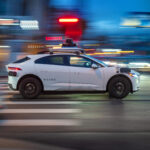
Alphabet’s Waymo, by contrast, compares its fully driverless robotaxis, now deployed in 11 U.S. metropolitan areas, to human-driven vehicles in similar conditions.
Related article: Senator’s Probe Reveals Lack of Transparency in Remote Assistance Use in Self-Driving Cars
Waymo takes a more rigorous approach than Tesla, examining crash data in markets where it operates and adjusting for the types of roads and neighborhoods its robotaxis traverse. Waymo focuses on specific crash rates – such as those with airbag deployments or serious injuries – for both its cars and human-driven cars in the same markets.
“We’ve got to be really careful with the language we use,” said John Scanlon, a Waymo safety researcher. “You need very specific research questions and very specific conclusions.”
Waymo also points out shortcomings in its data and collaborates with outside researchers to publish its safety statistics in peer-reviewed journals. Tesla, by contrast, seeks no peer review and publishes only top-line statistical safety claims while keeping its underlying crash data for Tesla cars secret.
VIDEOS OF TESLAS STRIKING DOGS, CATS AND DEER
Inside Tesla, data labelers get an unvarnished view of FSD safety. Three former employees described several videos showing Teslas failing to recognize animals and striking them at speed – without braking.
Five former employees said specific teams focused on FSD’s problems recognizing school buses. That’s a concern raised by a technology-safety group called the Dawn Project, which aired ads during the 2023 and 2024 Super Bowls showing videos of FSD-enabled Teslas failing to stop for buses with stop signs and flashing lights.
Two former employees said they saw similar video clips inside Tesla.
Five former data labelers described a harried, disjointed work environment, with priorities shifting based on directives from Musk and FSD engineers. The data-labeling unit struggled with chronic turnover because of the monotonous work and generally low pay, they said.
Tesla higher-ups often launched new projects in reaction to news reports or social media posts showing FSD making mistakes, four former employees said. One described an effort to address how sunlight could obscure cars’ exterior cameras. That was prompted by a social-media video showing how light reflecting off a passenger’s watch blinded one of the cameras, shutting down FSD. Another effort on railroad crossings followed news reports about FSD-driven Teslas failing to stop at them.
FSD clips also regularly showed speeding, five of the employees said, which engineers and others up the chain treated as a low-priority problem.
One employee said labelers saw Teslas regularly exceeding speed limits by 20 to 30 miles per hour after the automaker introduced an FSD “Mad Max” mode enabling more-aggressive driving. Another labeler reported seeing an FSD-piloted vehicle traveling 60 mph in a 25-mph zone.
BEHIND THE CURTAIN OF TESLA’S PUBLIC ROBOTAXI DISPLAYS
As Tesla employees struggled to train FSD, Musk touted Tesla’s self-driving capabilities in October 2024 in a flashy robotaxi unveiling at the Warner Bros. studio lot near Los Angeles. The invite-only crowd cheered as Musk gestured to about 20 prototypes of the two-door “Cybercab,” which has no steering wheel or pedals, crawling around the studio.
“The cars are just going by, with no people,” he said.
Musk has said Tesla’s software is designed to work anywhere, navigating unfamiliar landscapes in real time. But for weeks preceding the Cybercab event, staff tested the prototypes every night from 6 p.m. until dawn, collecting video of the route the cars would follow at the launch, according to two former data-labeling employees. Labelers spent hundreds of hours annotating curbs and road markings on the video to prevent embarrassing incidents, the employees said.
Waymo performs such mapping on a large scale before launching in specific cities – an approach that Musk has repeatedly dismissed as too costly and slow. Musk in 2024 derided Waymo’s “very localized solutions” as “quite fragile.”
After the Warner Bros. event, Musk declared on a January 2025 earnings call that Tesla would be launching robotaxis in June 2025 in Austin. He touted the technology as a “generalized AI solution” that didn’t require “high-precision maps of a locality.”
For months before the Austin launch, however, Tesla extensively filmed features in a limited robotaxi zone to map the area, capturing stop lights, road signs and other features. Data labelers annotated that video to ensure the software could handle challenging scenarios, including passenger pickup and responding to emergency vehicles, according to two employees with direct knowledge of the matter.
The Utah data-labeling staff, three of the employees said, doubled in the half-year before the Austin launch to about 300 workers. The department, they said, worked primarily on projects to make the carefully controlled Austin test go smoothly.
As Tesla data labelers prepared for the rollout, the software was still erratic, two of the employees said. With each FSD update, some driving behaviors improved. Others worsened. In the Utah office, two large screens displayed statistics on miles between driver interventions for FSD – a key autonomous-driving safety metric.
“It would go up and down like the stock market” with no consistent improvement, one of the former employees said.
The vehicles hit the streets with two sets of human safety monitors available to grab control: one sitting in the front passenger seat, and others watching remotely. In Utah, labelers could see on videos when the remote monitors took over the vehicles. One former employee said the Austin routes were designed for a limited area so the cars’ software could be trained extensively on specific maneuvers on particular streets.
“It was like, ‘OK, we trained a car'” to operate in a restricted zone, the person said. “You can’t get creative outside of that.”
Four of the sources said scaling up safely could take years. In July, a month after the Austin robotaxi launch, Musk predicted the service would expand to serve half the U.S. population by the end of 2025.
In January, Musk falsely claimed Tesla operated 500 “robotaxi vehicles” in Austin and the San Francisco Bay Area, adding he expected that to “double every month” on an “exponential curve.” Musk has said Tesla operates a “robotaxi service” in the Bay Area when it in fact only operates a ride-hailing service under a state permit, typically used by chauffeurs, that requires a human driver.
In reality, nearly a year after the Austin launch, Tesla still operates only about 50 robotaxis there, according to a recent slide presentation by city officials. The vehicles traverse a limited and carefully mapped zone, three of the sources said. Some still have human safety monitors in the front passenger seat, based on recent observations by a Reuters reporter.
In April, Tesla said it was rolling out robotaxis in Dallas and Houston, alongside maps showing the serviced areas.
Reuters reporters who recently tested the service in both cities found long wait times and erratic availability. On three occasions when a reporter managed to get a ride in Dallas, the robotaxi wouldn’t drop him at his downtown destination within Tesla’s advertised service area.
Each time, it left him about a 15-minute walk away.
(By Chris Kirkham in Los Angeles and Rachael Levy in Washington. Additional reporting by Benjamin Lesser, Norihiko Shirouzu and Sheila Dang. Editing by Brian Thevenot and David Crawshaw.)
 KCC Says Isaias Insured Losses to Be $3 Billion; AM Best Calls Storm an Earnings Event
  Federal Bill Seeks to Reduce Work Week to 32 Hours
  Who Structures the Problem in AI-Assisted Insurance Decisions?
  Tech Bytes: New Partnerships at The Zebra, LexisNexis Risk Solutions