


















The Trump administration is considering potential changes to North American trade rules that would raise tariff costs on U.S. automobile imports and push manufacturers to boost domestic production, according to people familiar with the matter.
U.S. officials have discussed requiring vehicle imports to have a minimum amount of U.S. parts, said the people, who asked not to be identified discussing the private deliberations.
Another option under consideration would limit the ability of automakers to lower their tariff rates under the U.S.-Mexico-Canada free trade agreement, effectively raising the costs to bring vehicles across the border, one of the people said. The considerations are at an early stage and it isn’t immediately clear how that might work in practice.
Administration officials have floated the potential changes internally and with people close to the auto industry ahead of a planned review of the so-called USMCA trade agreement, the people said. No formal proposals have been made yet to trade leaders in Canada or Mexico, said the people, who characterized the deliberations as preliminary.
An official from the Office of the U.S. Trade Representative told Bloomberg News that the administration is working to reshore US manufacturing, including through the review of USMCA, but declined to discuss what proposals are under consideration.
“At the negotiation tables, there is no discussion of increasing auto tariffs or increasing rules of origin for autos,” Luis Rosendo Gutiérrez, Mexico’s deputy economy minister for trade, said Wednesday on the sidelines of an event in Washington.
A spokesperson for Dominic LeBlanc, Canada’s minister responsible for US trade, declined to comment.
White House and Commerce Department representatives did not respond to requests for comment.
The considerations reflect frustration in Washington that trade policies have yet to produce a substantial reshoring of automobile and component factories to the US. President Donald Trump imposed a wave of tariffs last year to push companies to build more domestically, including a 25% tariff on imported vehicles and auto parts.
While automakers have pledged billions in new investment and announced plans to move some production to the U.S. from Canada, Mexico and Japan, a substantial uptick in auto investment has yet to materialize. The U.S. remains heavily reliant on imports to satisfy domestic demand, particularly for vehicles starting at $30,000 or less.
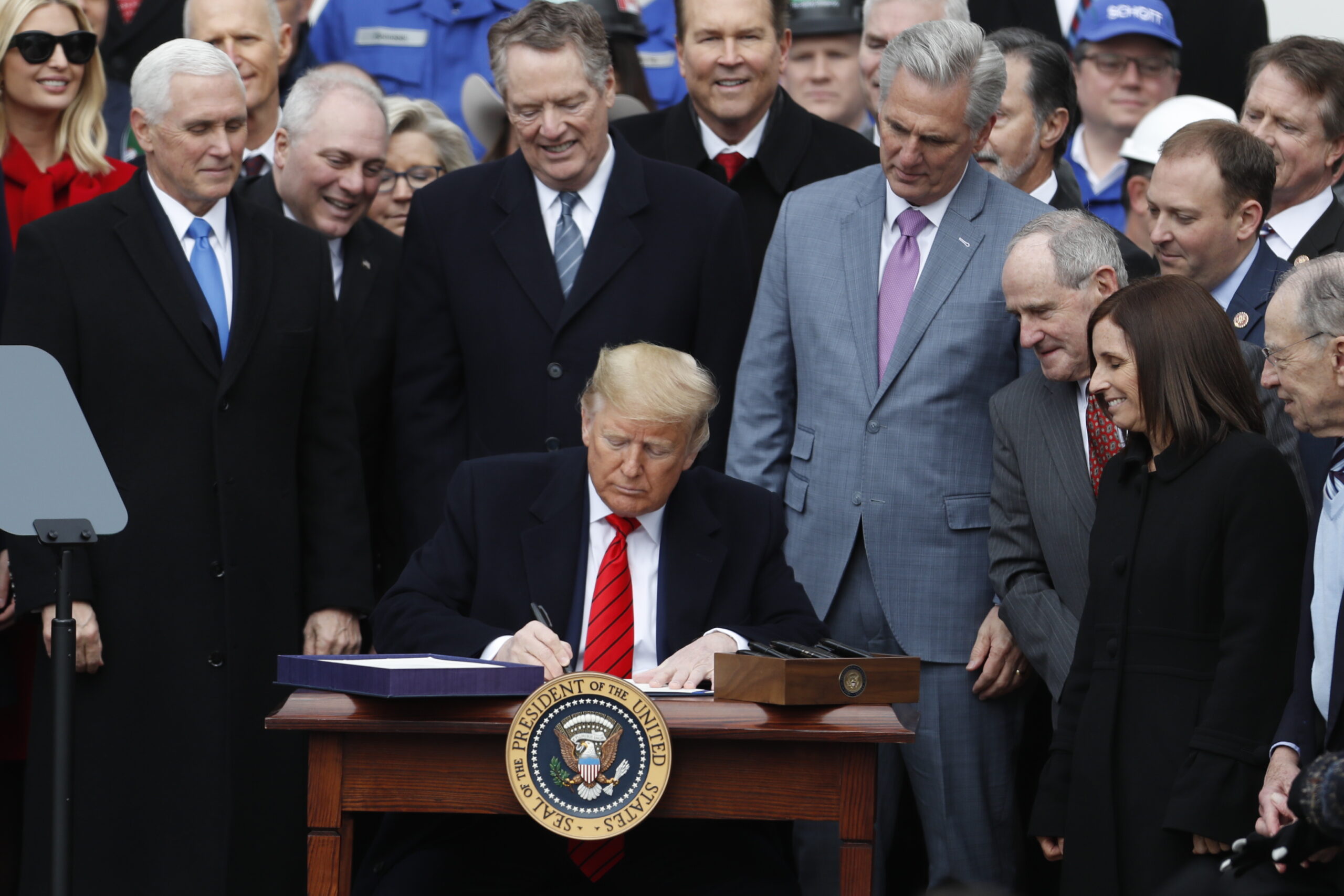
Autos are among the industries that US and Mexico officials are set to discuss when a delegation led by U.S. Trade Representative Jamieson Greer travels to Mexico on April 20. Ahead of those talks, Commerce Secretary Howard Lutnick criticized USMCA as a “bad industrial policy,” saying it should be changed to benefit the US.
“I think it needs to be reconsidered and re-imagined correctly,” Lutnick said Friday at the Semafor World Economy summit in Washington.
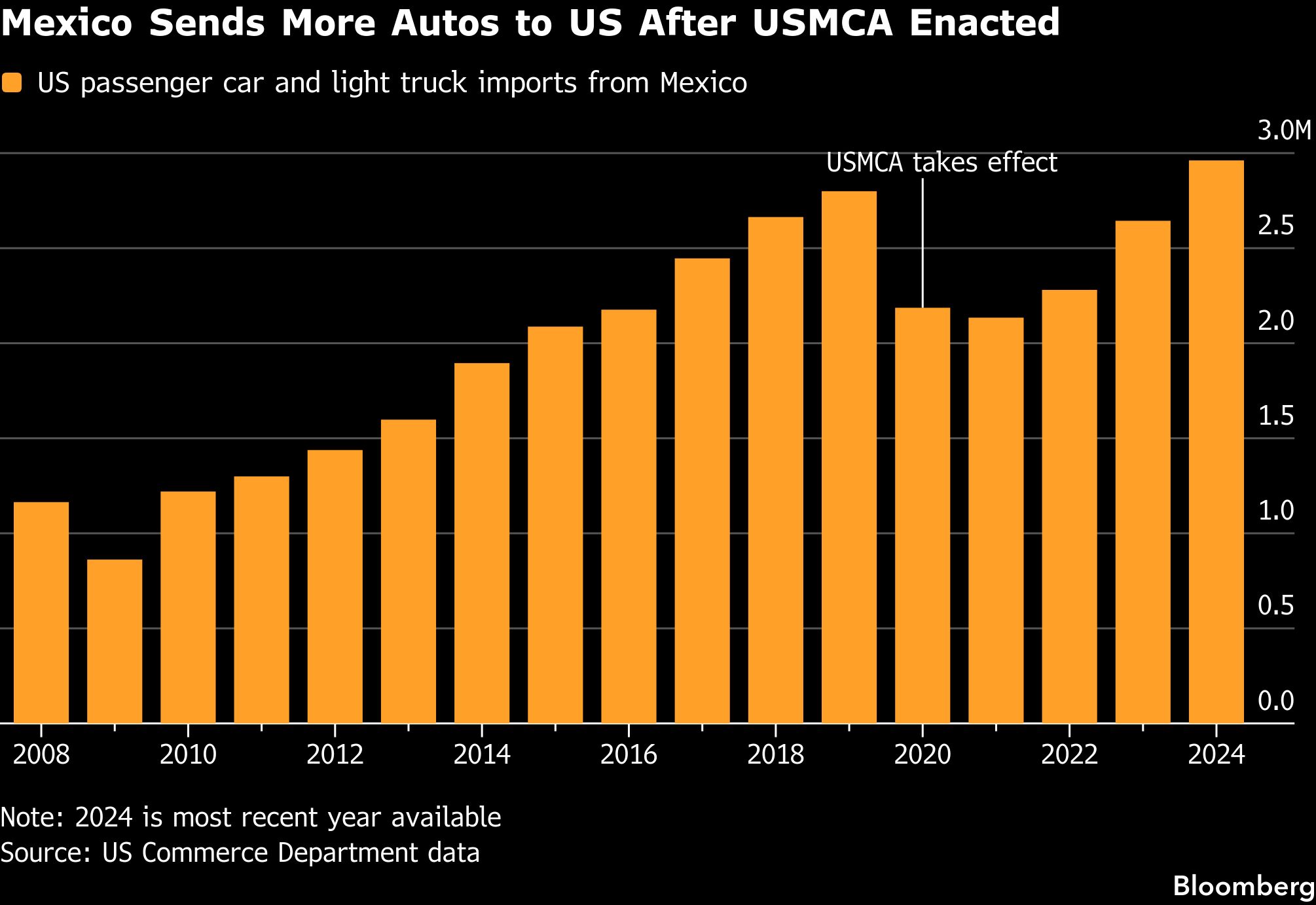
Under current USMCA rules, 75% of a vehicle’s parts must come from the U.S., Canada or Mexico. Additionally, 40% to 45% must be made by workers who make at least $16 an hour, among other requirements. Under those rules, which took effect in 2020, vehicles could cross borders in North America duty-free.
Trump’s tariffs on automobiles and parts upended that dynamic, upsetting many automakers that have used USMCA and its predecessor to turn the continent into a global hub of automotive production.
The U.S. is currently applying tariffs to the non-US content of otherwise USMCA-compliant vehicles from Canada and Mexico. The Trump administration has pledged to tariff USMCA-compliant auto parts in the same way, though has not yet done so, possibly due to the complexity and red tape of any such measure.
After fierce lobbying by the auto industry, the Trump administration has also extended other forms of tariff relief, such as allowing automakers that assemble vehicles in the US to reduce duties paid on imported parts that are subject to tariffs.
The administration is pondering ways to rein in those tariff-reducing measures to raise how much companies would pay to bring USMCA vehicles across borders, one of the people said. That could subject U.S. imports of USMCA-compliant vehicles to an effective tariff of roughly 10%, which is higher than what Detroit’s carmakers currently pay, the person said.
U.S. carmakers have said the tariff relief is crucial, in part because it helps level the playing field with Asian rivals who pay a flat 15% tariff on autos imported from South Korea and Japan.
The U.S., Canada and Mexico must decide by July 1 whether to extend USMCA.
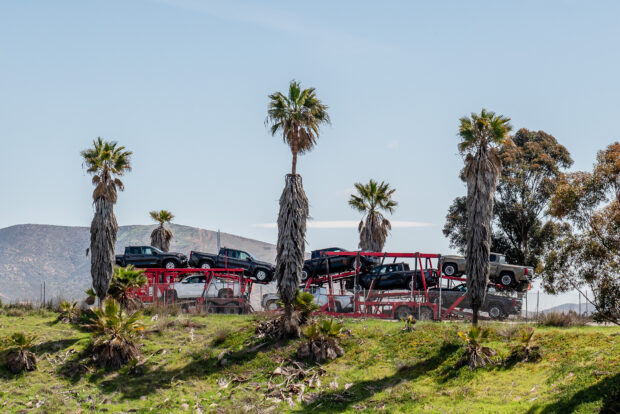
Top photo: A semi-truck carrying new Toyota Tacoma vehicles crosses into the U.S. at the Otay Mesa port of entry on the U.S.-Mexico border in San Diego, California, on Thursday, March 27, 2025.
 Nearly 100% of U.S Now Covered by NOAA’s Flood Mapping Tool
 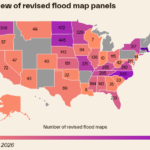 FEMA’s New Flood Maps Mean More Homes Require Flood Insurance: Cotality
  An Already Intense Pacific Hurricane Season With a Long Way to Go
  Six Flags Magic Mountain Retires X2 Roller Coaster Amid Brain Injury Lawsuits