
















Members of Congress from both sides of the fence reintroduced the Bipartisan Railway Safety Act of 2026 late last month, according to a news release issued by the Senate Committee on Commerce, Science and Transportation.
Senators say the legislation is needed to strengthen rail safety requirements, improve train inspections, boost support for first responders, and increase penalties on rail companies for wrongdoing.
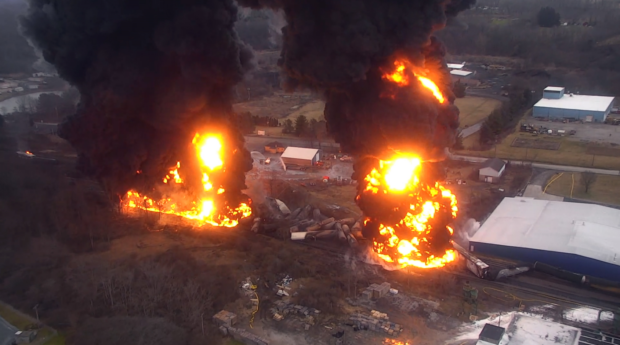
U.S. Senators Maria Cantwell (D-Wash.), Ranking Member of the Senate Committee on Commerce, Science and Transportation, Jon Husted (R-Ohio), Amy Klobuchar (D-Minn.), Eric Schmitt (R-Mo.), Tammy Baldwin (D-Wis.), Roger Marshall (R-Kan.), John Fetterman (D-Pa.), and Bernie Moreno (R-Ohio) say the Railway Safety Act of 2026 responds to the lessons learned following the Norfolk Southern train derailment in East Palestine, Ohio, and includes NTSB recommendations.
“The Railway Safety Act will make communities across the country safer,” said Sen. Cantwell. “It has been over three years since the Norfolk Southern derailment disaster in East Palestine, Ohio, and it is past time for Congress to act. Our bill requires railroads to deploy technology that could have prevented the East Palestine derailment, holds large railroad companies accountable through stiffer fines, and ensures that trains carrying hazardous materials are held to a higher safety standard.”
The legislation requires the use of defect detectors, expands hazardous materials train safety restrictions, and ensures rail cars are properly inspected and maintained. It maintains key provisions to support first responders, reforms the Department of Transportation’s (DOT) Hazardous Materials Emergency Preparedness (HMEP) programs to ensure fire departments can purchase personal protective gear, requires railroads to tell states what materials trains are carrying through their communities, and creates a program to make fire departments whole after responding to a derailment.
The Railway Safety Act of 2026:
- Mandates the use of defect detection technology to make railroads stop trains when something is wrong, which could have prevented the East Palestine derailment. The bill requires hotbox detectors to be deployed an average of every 15 miles, compared to every 25 miles currently.
- Expands the list of hazardous materials that are subject to higher safety standards, like vinyl chloride carried by the East Palestine train, and requires speed restrictions, better braking, and route risk analysis.
- Improves emergency response by notifying states about the hazardous materials being transported by rail through their communities and strengthening railroad emergency response plans.
- Prevents improper railcar inspections and mandates a new requirement that ensures railcars are properly maintained. It’s been shown that Norfolk Southern recommends only 30 seconds for railcar safety inspections.
- Increases civil penalties for rail safety law violations from $100,000 to $10 million to ensure safety laws are taken seriously.
- Requires two crew members to operate a train to prevent a situation where only one person is on the train in an emergency.
- Ensures firefighters are made whole after responding to major derailments. The DOT can reimburse first responders for overtime, equipment costs, and health care assessments.
- Expands the existing Hazardous Materials Emergency Preparedness grants to allow fire departments to purchase the personal protective gear that keeps them safe.
The safety act was originally introduced in February 2023 by Ohio and Pennsylvania Sens. Sherrod Brown, J.D. Vance, Bob Casey, and John Fetterman, along with Sens. Marco Rubio (R-Fla.) and Josh Hawley (R-Mo.).
 Viewpoint: The One Thing Holding Back Insurers’ AI Efforts
  Building Trusted Insurance Brands: How Nationwide Delivers Tangible Value to Customers
  Majority of Online Scam Campaigns Target Common Infrastructure: Study
  Lyft to Pay $272M to Settle California Rideshare Drivers’ Wage Theft Lawsuit