

















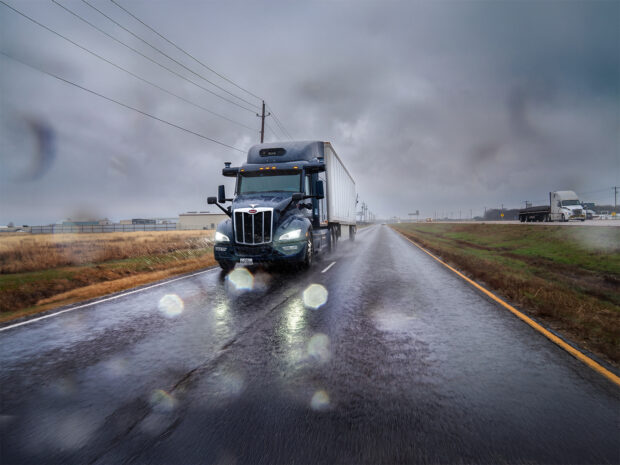
As robotaxis continue to expand routes across the U.S., driverless freight operations are being tested in several markets, according to self-driving tech company Aurora Innovation, Inc.
Last month, the company announced it is tripling its autonomous network to 10 routes, including the ability to navigate the diverse geography and climate of the southern United States.
“Expanding across the Sun Belt and introducing customer endpoints enables us to provide our customers with the capacity they need to move goods at a scale that wasn’t possible before,” said Chris Urmson, co-founder and CEO of Aurora. “Being a carrier is a game of margins, and if autonomy can work around the clock, it will be key to growing our customers’ businesses.”
The company’s latest software release is its fourth since deploying driverless trucks via its Aurora Driver program in April 2025. The program is a self-driving system designed to operate multiple vehicle types, from freight-hauling trucks to ride-hailing passenger vehicles.
The first release validated initial driverless operations between Dallas and Houston. The second validated operations at night, and the third validated El Paso.
Before clearing the release, a rigorous validation process comprising over four million tests was executed.
The benefits of the driverless fleet include the ability to exceed Hours of Service rules.
The operations have been validated on the approximately 1,000-mile trip between Fort Worth and Phoenix, a route that extends well beyond Hours of Service (HOS) limitations.
Without mandatory rest breaks, transit times are cut by half from traditional single-driver fleets.
With Phoenix, Aurora is tripling its driverless network to move freight between Dallas and Houston, Fort Worth and El Paso, El Paso and Phoenix, Fort Worth and Phoenix, and Dallas and Laredo.
The software upgrade also includes map automation, which significantly reduces the time to map new routes, and the ability to navigate roads during inclement weather conditions.
The autonomous tech company boasts zero collisions over the 250,000 driverless miles recorded as of January 2026.
The company expects to have more than 200 autonomous trucks in operation by the end of the year.
 Nearly 50,000 Cars Damaged by Floods This Year: CARFAX
  AI Data Center Boom: Understanding How Risks Are Changing
  Highway Safety Agency Plans to Revise Outdated Vehicle Lighting Rules
  Viewpoint: The One Thing Holding Back Insurers’ AI Efforts