
















The Insurance Institute for Highway Safety announced a new online tool that shows how specific changes to seat belt laws would affect belt use and fatality rates in each state.
Using statistical models that the IIHS developed, the seatbelt calculator estimated that approximately 277 lives would have been saved if every state had optimal belt use laws in 2023.
“This calculator will help advocates and policymakers understand the safety benefits a state can reap with simple legislative changes,” said Chuck Farmer, IIHS vice president for research. “For the 22 jurisdictions that already have the strongest provisions in place, it shows the cost of any potential backsliding.”
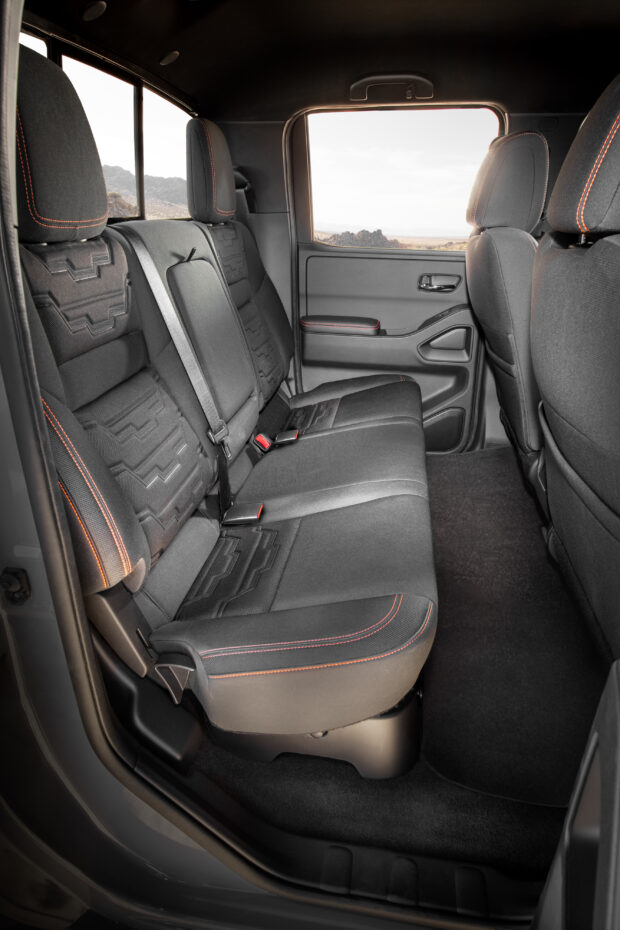
Seat belt laws vary widely throughout the 50 states and the District of Columbia, according to the research institute. While New Hampshire is the lone state that doesn’t require seat belt use in the front seat, it is one of 16 states that don’t require adult passengers to buckle up in the rear.
If the state enacted a seat belt law covering all seating positions and allowing primary enforcement, it could cut deaths of passenger-vehicle occupants 13 and older by 8.9%, the IIHS estimated.
States with only front-seat laws and secondary enforcement could also make big progress with legislative tweaks. Nebraska could see a 6.6% drop in deaths if it enacted a rear-seat belt requirement and primary enforcement for both the front and back.
Laws also vary according to the type of enforcement.
Primary enforcement laws allow police to stop a vehicle and issue a citation solely for failure to buckle up. Under secondary enforcement laws, police can only enforce seat belt requirements if the driver commits another violation first.
If states moved to primary enforcement alone, there would be a substantial benefit for those that already require belts for all occupants. Montana, for example, would see a 6.4% drop in fatalities from that change.
Georgia has a primary enforcement law for the front seat, but no law for the back seat. If it enacted a rear-seat requirement with primary enforcement, it would cut overall deaths of teen and adult passenger-vehicle occupants by 0.7%, thanks to a 12% cut in rear-seat deaths, the auto safety researcher noted.
Failure to use a seat belt remains a huge factor in road deaths, the IIHS said. “Among people 13 and older killed in crashes while riding in passenger vehicles in 2023, only 45% were confirmed to be using belts.”
Seat belt use rates are generally lower in states with weaker laws. Studies have consistently shown that requiring belts can sway holdouts, and laws with primary enforcement are more effective than those that allow only secondary enforcement.
Vehicle technology can also increase seat belt use.
Research has shown that persistent visual and audible reminders that go well beyond the 4- to 8-second reminders required under federal regulations are highly effective at changing behavior, the IIHS found.
The rating of seat belt reminders began in 2022, prompting manufacturers to make rapid improvements, the IIHS noted. Research shows that 71% of 2025 vehicles evaluated earned a good rating for their belt reminders, compared with just 16% of 2022 models.
IIHS’ seat belt law calculator can be found at https://www.iihs.org/research-areas/seat-belts/seat-belt-law-calculator
 AI Models May Soon Self-Replicate Across Smart-Home Devices, Anthropic Warns
  The Impact of Claims Experiences on Trust
  Texas Reports Downward Trend in Home, Auto Insurance Rates
  Lyft to Pay $272M to Settle California Rideshare Drivers’ Wage Theft Lawsuit