

















According to a recent Wall Street Journal analysis, personal auto insurance policyholders have a “near-flip-of-a-coin” chance of being paid on liability claims and medical claims.
Executive Summary
Industry veterans who care about the level of trust in the P/C insurance industry analyze changes in claims operations, agent-customer relationships, underwriting decisions and communication practices that might be weighing on customers. “Some of it is on us,” says one, dismissing the idea that billboard attorneys are causing ill will. The actions of opportunistic lawyers may not explain rising levels of auto liability claims being closed without payment, another observes.-Part of a series-
Ouch.
Just about a week after I wrote a LinkedIn post and a related article (“A Matter of Trust“) asking, “Does the property/casualty insurance industry have a trust problem?” the WSJ article titled “If You Get in a Car Crash, the Risk Is Growing Your Insurance Won’t Pay” (subscription required) seemed to give consumers a big reason not to trust insurers. After all, claims experiences—bad ones, in particular—are among the most important factors influencing trust in insurance, past research has found.
Is it any wonder that a dozen carrier executives “politely declined” my invitation to talk about what trust-building leadership looks like in the industry, what their companies are doing to maintain and build trust, and whether the insurance industry can be a beacon of trust that reverses a downward spiral in society and institutions that experts at Edelman and Swiss Re have been highlighting since last year?
The WSJ’s Aug. 9 article reporting that the percentage of auto insurance liability and medical claims closed without pay landed at 45% for 2025, compared to 35% in 2016—and similar trends for 10 individual insurers—followed a late May report from the same journalists on homeowners insurance, “The Home-Insurance Coin Flip: Nearly Half of Claims Result in Zero Payout.” The home insurance article showed similar upward patterns in claims closed without payment for five out of 10 large insurers.
Within the homeowners article, insurance industry representatives cited increased coverage deductibles, uncovered flood claims, and claims later reopened and paid as some reasons for the trends observed. To Daniel Lewis, a 35-year veteran of the industry, higher deductibles are a reasonable, better-late-than-never corrective reaction to a homeowners crisis in recent past years.
The crisis was “partly of our making,” he said during an interview where he spoke about poor underwriting decisions, lack of communication and declining numbers of experienced claims professionals as some of the drivers of profit—and trust—problems of the recent past. Lewis was not responding to the WSJ finding but instead answering my call for volunteers to examine trust in the insurance industry, citing these same factors as trust destroyers.
Lewis, who rose from “boots-on-the-ground” adjusting to carrier leadership, and who now owns Hawkeye Consulting and Claim Service where he works with policyholders on claims dispute resolution, was one of a handful of industry participants—sitting outside the executive suite of customer-facing carriers—who contacted me to say they cared deeply about the industry and wanted to explore ideas about the level of trust.
William Wilt, president of Assured Research, was another. A Fellow of the Casualty Actuarial Society, Wilt, like Lewis, has been involved with the industry for more than three decades. “I want it to be successful. I fully buy into the industry’s role as an integral component of the financial and personal and business ecosystem,” said the analyst whose career included multiyear stints at PwC, Moody’s and Morgan Stanley before founding his own research firm for insurance nearly 15 years ago. “And I fully buy into its importance for people and for companies to address the unexpected in a fiscally responsible way,” he said, explaining why he thinks trust is an important topic.
But even the seasoned insurance industry analyst found it hard to explain the findings about auto insurance from the Wall Street Journal.
 “As MGAs and delegated underwriting authorities and all the MGUs, etc., are growing, it does put in one more layer of companies between the insured and the company bearing the risk… Does that make the purchase of commercial insurance increasingly just a transactional endeavor?”
William Wilt, Assured Research
Wilt noted that over the years, working as an analyst, he routinely receives inbound phone calls from investors who suddenly “discover these things called the annual statements,” enlightened by the amount of data but not fully understanding schedules of information that others have been using for decades. Often, he said, an investor sends out a “25-year-old Harvard MBA to analyze the heck out of some companies” they’re interested in. “Wait, slow down here,” Wilt recalls telling excited callers who believe they’ve unearthed new insights. He imagined that someone had gotten the ear of the WSJ journalists with the closed-without-payment information, which might be similarly rationalized away.
“I was approaching it from that perspective,” he said. But recalling some work he had done earlier this year gave him pause. “When you look at total liability claims, I’m pretty sure that they’re really flat,” he said, referring to the trend in those total counts. “I would understand why closed without payment was rising, if total claims were also rising.” That would then support the idea that “more people are contacting attorneys,” Wilt said, referring to one reason briefly cited by a State Farm representative in the article.
“We’re getting claims that we can very quickly dismiss because people are just contacting attorneys who are taking a flyer,” thinking that they might be able to get some money out of a claim without actually checking the policies, Wilt said, offering more color to State Farm’s reference to “advertising-driven attorneys” contained in the article.
“But my observation was that total liability claims have been flat. So, if closed without payment is rising, that does suggest that there’s maybe some change that the insurance industry might want to speak to and explain,” he said.
“I was surprised at how consistently it was rising across all the companies that were cited,” he added.
Wilt decided not to dig this any further. “I’m just going to let the industry tackle this one because it’s not clear to me why it is going up so much,” the analyst said, referring to claims closed without payment.
After the interview, Wilt did, in fact, feel compelled to perform a more rigorous analysis of closed claims trends for auto liability. Interested readers can connect with him for more information via the Assured Research website. https://assuredresearch.com/
Five days after the interview, and 10 days after the WSJ auto article published, it did draw a reaction from the head of an industry trade group. “These claims are a magnet for billboard lawyers and fraudsters seeking to profit off the system… Claims closed without payment don’t mean insurers are wrongfully denying claims,” wrote David Sampson, president and chief executive officer of the American Property Casualty Insurance Association, in his letter, “Meritless Claims Will Raise Everyone’s Rates,” published on Aug. 19.
‘Some of It Is on Us’
Lewis, who has seen the industry from two sides—working for carriers and now for insureds in dispute resolution—is critical of insurers blaming all the industry’s profit and trust problems on third parties.
Offering the policyholder perspective, he said, “There are a lot of struggles when dealing with insurance companies, especially on the claim side of things, that are forcing customers to have to make tough decisions like litigation or appraisal.”
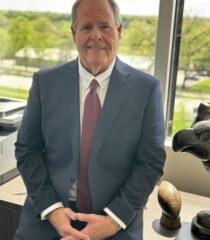 “People today are still relating to the claims experience of what their dad and mom had maybe 30 years ago.”
Daniel Lewis, Hawkeye Consulting and Claim Service
On the carrier side, “We’ve got the plaintiffs’ attorneys and the billboard attorneys. We know all that. We’ve got fraud… I’m very, very understanding of what goes on and how that impacts the insurance industry.”
“But there’s so many other things that we could do better—that could prevent some of the ill will that’s out there. We’re just kind of ignoring those other signs and wanting to push it off to the billboard attorneys or to this or to that without really asking, ‘Could we have truly done better on this?’ or ‘Why did it get to this point?'”
Before CM even posed a single question, Lewis explained some of the things that prompted him to reach out. “We aren’t perfect as an industry. And there’s a lot of things that we’ve created on our own side of things—that we’ve done wrong or tried that haven’t worked, which are now showing their ugly face.”
“We’re so good, as an industry, to be able to point fingers at everybody else and not necessarily [acknowledge some] decisions made years ago.” Offering one example, he said, “We got rid of underwriting in the field 15, 20 years ago. [But] there was a reason we had them in the field—so that we had good risks on the property side.”
“Now, all of a sudden, we’ve got a homeowners crisis, and that’s partly of our making. It’s not [entirely] because of the weather and the fraud and everything else that we like to point to,” he said.
On the claims side, “a lot of what I’m seeing is just lack of communication,” Lewis said, also citing lack of experienced personnel. “We all know that the insurance industry went through talent crunch in every division, and it’s still seeing those effects now.”
Bottom line: “We’ve got to take ownership of that and say, ‘OK, a little bit of this is probably us. We didn’t have the most experienced people, or we didn’t write that policy exactly like we promised to write it. [Let’s] take a little bit of that [blame] instead of pushing it off,'” he said.
Having witnessed the claims process evolving since 1990, Lewis said he is concerned “that customer trust is broken” as carriers balance operational goals and policyholder needs. “Leadership needs to hear an honest, unfiltered perspective from industry veterans who remember when this was a profession that we were proud of and when the majority of our customers trusted us and the promises we made,” he wrote in an email prior to our interview.
Is Trust Declining? How Did We Get Here?
For Wilt, the decline in trust is less clear. “I suppose if I were to say I don’t feel like the trust issue with insurers has worsened, somebody who wanted to play devil’s advocate could counter that, [asking] why every insurance company has been citing increased attorney representation across virtually all types of claims,” he said. That includes workers compensation, he observed.
“We know from history that people who are injured often contact an attorney, but in theory, it should be a straightforward ‘here’s the injury; here’s the compensation you’re owed.'”
Pausing to consider the overarching decline in trust in institutions that’s been widely reported and the industry-specific trend of increased attorney involvement in claims, he concluded, “I suspect we’re going along on the same general trend—downward, it feels like.”
Seth Rachlin, assistant teaching professor at Arizona State University’s School of Social and Behavioral Sciences, also sees a deterioration in trust in the industry that mirrors a downward decline across many types of organizations. “Trust is a solution to situations of uncertainty,” he wrote in an email to Carrier Management. “Trust, therefore, is the natural human response to risk, making it central to the business of insurance.”
Rachlin, whose name is familiar to the insurance industry through prior positions as global insurance industry leader at Capgemini and as president of information and analytics at Advisen (now Zywave), is the co-author of the soon-to-be-released book Social Capital at Work: Building the Hidden Asset that Drives Trust, Engagement, and Performance. Bringing the two worlds together, Rachlin views declining trust in the insurance industry through a wider lens of deteriorating social capital and the loss of true human connectedness.
Giving some background, Rachlin said, “Loneliness is rising. Collaboration feels harder. Many organizations are managing workflows while neglecting the connective tissue that makes work work.”
Rachlin and Burrows argue that the solution is to invest in social capital. A how-to guide for leading through disconnection and building trust, the book shows “how to strengthen the networks that drive results, prioritize depth over volume, communicate with purpose, design environments that spark interaction, foster belonging, bridge divides, measure impact, and stay human in an AI-powered world,” Rachlin promises.
“Trust builds over repeated interactions through which we assess one another’s behavior… In a world where interactions are ever fewer and connection is more attenuated (one in which loneliness abounds), trust is in short supply,” he writes.
There are at least two ways in which the growing trust deficit impacts insurance, he believes.
First, on the underwriting side, as exchanges between brokers and carriers are digitized, “we risk losing the glue that makes the industry work,” he writes. “The relationships between brokers and underwriters are the hidden infrastructure that allows risk transfer to happen.”
“The word of a trusted broker is worth as much (if not more) than all the pages of information in the underwriting file.”
On the claims side, Rachlin, like Wilt, pointed to increased numbers of personal lines claims that involve legal counsel, rising level of fraud and growing numbers of claims closed without payment. In Rachlin’s view, it’s evidence that “trust between carriers and claimants is almost entirely gone.”
“Insurance customers don’t trust their insurers to pay. Insurance carriers don’t trust their customers to file honest claims,” he said, speculating that the why behind the distrust may be traced to “the declining significance and importance of the agent.”
Throughout the history of the industry, agents “offered a meaningful relationship (‘a good neighbor’) that customers could count on when they needed it most.”
“In the absence of this interpersonal trust, claims become a battlefield for the lawyers,” he told CM via email.
From where he sits in the middle of America (Iowa, to be exact), Lewis offers a similar take.
“People today are still relating to the claims experience of what their dad and mom had maybe 30 years ago,” he said, noting that he often hears policyholders talk about the days when “dad’s agent was our neighbor. He’d have a claim, he’d go down and he’d talk to him. And that agent had some ability to help through that situation.” Today, carriers “almost don’t want the agent involved at all anymore. Yet that’s the contact that most people still do have.”
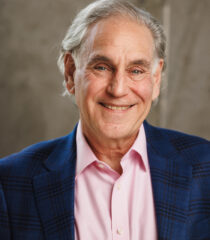 “The word of a trusted broker is worth as much (if not more) than all the pages of information in the underwriting file. As we move to digitize the broker-carrier exchange, we risk losing the glue that makes the industry work.”
Seth Rachlin, Arizona State University
“It’s just so important that they have that contact other than the web or other than just a phone call,” he advised. “They need to know who their main point of contact is, who they can trust… Not having five, six different people touch their file at a time. That’s a huge thing,” he said. “This isn’t the way it’s supposed to be,” policyholders complain, harkening back to their parents’ experience.
“‘It’s a different claims process. Your agent now probably has no authority to settle it.’ Maybe we haven’t explained that to the policyholders enough,” he said, speculating that 80% of the disputes he’s involved with “could have been avoided if there was just somebody that took ownership from a claims perspective and resolved it, however that would be.”
They didn’t. “And unfortunately, we opened the door, as an industry, to that billboard attorney,” he said.
Lewis isn’t suggesting that we turn the clock back. Instead, “transparency is the big thing,” he said, recommending that process changes need to be communicated. “And two adjusters probably max, in my opinion, when you have a claim. The more touches, the worse the experience for a customer,” he said.
Wilt noted an industry trend that may put another wrinkle in what traditionally has been a relationship-heavy business. “As MGAs and delegated underwriting authorities and all the MGUs, etc., are growing, it does put in one more layer of companies between the insured and the company bearing the risk.” In commercial insurance, where he believes this dynamic is more apparent, it’s reasonable to ask, “Does that just make the purchase of commercial insurance increasingly just a transactional endeavor?”
He continued: “I’m not trying to throw shade at MGAs or to say they don’t care about their customers. But the reality is it does create that extra layer of separation between the policyholder and the ultimate underwriter.”
Wilt also posited the idea that being solely transactional could be a reasonable path in a situation where certain executives of a commercial insurance company view this as a natural course in a world that’s evolving in that direction.
In fact, some would argue that this is a reasonable trust-building path even on the personal lines side where tech-savvy MGAs have been delivering parametric solutions for wildfire, flood, windstorm deductibles and other perils in recent years.
“Parametric insurance, by its very design, does away with the claims adjustment process as we know it and creates as close to an Amazon-like experience with insurance as it gets,” Alex Korb, principal of Alternative Risk Solutions, wrote in an email to Carrier Management.
Unlike Wilt, Korb did not refer to MGAs, nor did he use the term “transactional.” But like Lewis and Rachlin, he views the claims adjudication process as a primary driver of mistrust of the industry.
“Trust in insurance, at its basic, is earned through seeing the product ‘in action,’ which certainly means fast, hassle-free payments after agreed upon events,” wrote Korb, whose nearly 30-year career in the industry includes a prior position as a manager at Verisk Analytics and a role as head of parametric insurance at synthetic-aperture radar satellite operator ICEYE. “Parametric insurance hits on additional levers to boost insureds’ trust such as transparency of payments, flexibility on use of funds, intentional broadness of cover, among others,” he wrote.
He added: “One doesn’t need to wait for a Cat 5 storm to hit to see the product in action. Parametric payouts might intentionally start at Cat 1 level,” reporting that these insurance solutions are often purposely structured to pay out frequently. That means they offer more opportunities for insureds to see the product work for them, potentially building trust.
 LA Fire Victims Set to Lose Case Managers Due to Standoff Between California, FEMA
 Viewpoint: Six Questions Every CIO Should Ask Before Their Next AI Investment
 Who Structures the Problem in AI-Assisted Insurance Decisions?
 Insurance AI’s Next Test: Can Carriers Trust the Data?