















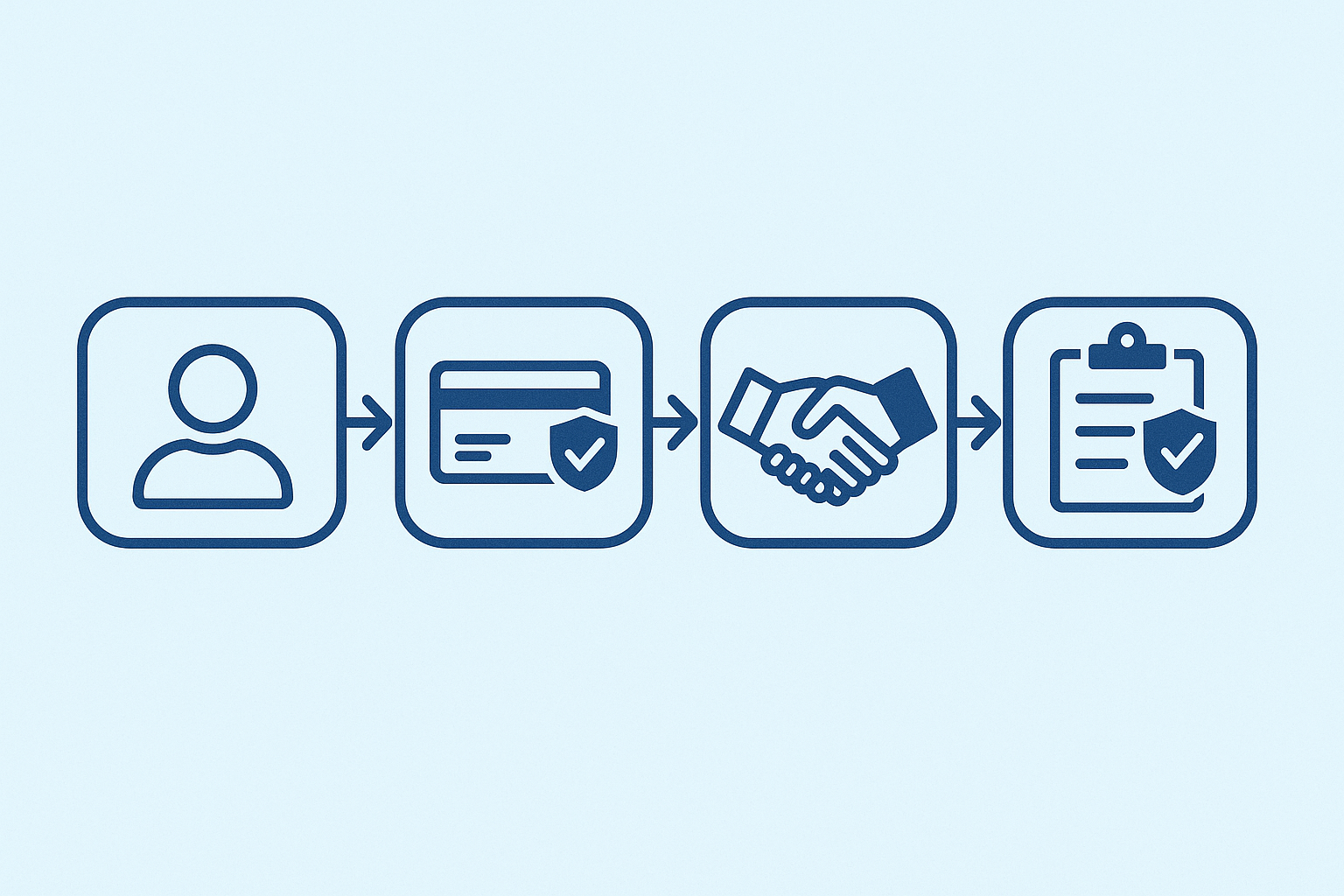
Consumer expectations are fundamentally reshaping how insurance is delivered and experienced. Rather than purchasing insurance as a separate transaction, today’s customers expect protection to be woven seamlessly into the products and services they already use—from credit cards and travel bookings to retail purchases and utility services.
For brand partners (non-insurance brands), this integration drives stronger customer loyalty and new revenue streams.
For insurance providers, success depends on building cohesive ecosystems that align with partner goals while delivering invisible, effortless protection.
Creating effective embedded programs requires building ecosystems that align with brand partners’ goals, boost customer acquisition and retention, and deliver frictionless protection. Both partners achieve success through thoughtful collaboration, seamless integration and deep understanding of the customer experience.
What Is Embedded Insurance?
Embedded coverage automatically activates within a non-insurance product or service, eliminating separate purchase decisions. Credit cards include automatic travel insurance or purchase protections. Travel platforms embed trip cancellation coverage in bookings. Retailers build product protection into the checkout experience. These solutions enhance brand partners’ customer acquisition, retention and trust through protections that are easy to access and utilize.
Unlike point-of-sale add-ons that require separate customer decisions, true embedded insurance activates automatically and operates as an intrinsic feature. The distinction is critical. When a traveler books a flight, trip-delay coverage activates automatically—no additional transaction, no separate cost. When a cardholder swipes their credit card, fraud and purchase protection activate with every transaction, adding value without extra steps.
Understanding the Value Exchange
A common question arises: If coverage is automatic, don’t customers pay more than they would without it?
The answer lies in how brands and insurers structure these partnerships. Costs are typically absorbed through economies of scale; spread across the entire customer base; or offset by the significant value brands gain from increased customer lifetime value, reduced churn and competitive differentiation. For many brands, the cost of embedded coverage is less than the expense of acquiring new customers to replace those lost to competitors offering better protection. The embedded coverage becomes a retention tool that pays for itself through sustained customer relationships.
Why Embedded Coverage Matters
Today’s consumers demand frictionless experiences that address their needs without adding complexity. Embedded insurance meets this expectation by providing protection that feels invisible, strengthening trust and brand loyalty. For instance, when a credit card covers a damaged purchase or a travel platform resolves a disrupted trip with a streamlined claims process, the protection feels like a natural extension of the service. This enhances customer satisfaction and reinforces the brand’s value proposition, fostering long-term engagement.
By embedding insurance into everyday products, brands deliver peace of mind without disrupting the customer journey. This approach builds trust and creates a competitive edge, as consumers increasingly value services that anticipate their needs seamlessly.
Customization in Action
These examples highlight how embedded insurance can be tailored to fit different industries and customer segments, enhancing the user experience while supporting brand partners’ objectives:
- Credit Card or Membership Protections: Many credit/debit or membership platforms include embedded benefits like travel protection, purchase protection, extended warranties or fraud coverage. For example, a cardholder buying a smartphone might benefit from automatic coverage for accidental damage or theft. Tailored to the cardholder’s spending patterns, this protection ensures relevance without complicating the experience. The result is integration that reinforces the card’s utility, encouraging continued use and loyalty.
- Travel Insurance: Travel platforms increasingly embed trip cancellation, delay or medical coverage into bookings. For instance, a traveler booking a flight or hotel might receive automatic protection for trip interruptions, activated at purchase and managed through the platform’s systems. This eliminates the need for a separate insurance purchase, aligning with the platform’s goal of a streamlined booking experience. Coverage can be customized based on trip details, such as destination or travel dates, ensuring it meets the traveler’s needs.
- Retail & E-Commerce: Online and brick-and-mortar retailers embed product protection plans and extended warranties directly into the purchase flow. A customer buying electronics automatically receives coverage for accidental damage or malfunction without navigating separate insurance forms. This increases basket size while reducing returns and building trust.
- Utilities & Home Services: Utility companies embed home service line protection (covering water lines, electrical systems, HVAC) as part of monthly billing. Customers gain peace of mind for infrastructure failures, while utilities reduce call center volume and improve satisfaction scores.
- Connected Devices & IoT: Smarthome platforms and connected car services embed protection against device failure, cyber incidents or data breaches. Coverage activates with device registration, aligning protection with the connected experience customers expect.
Building a Collaborative Ecosystem
What does collaboration look like?
- Start with brand values. Solutions should enhance the core relationship and align with the partner’s brand values. For example, a luxury credit card brand focused on premium travel experiences requires embedded coverage that reflects that positioning—comprehensive trip protections with white-glove claims service, not basic trip cancellation. The insurance becomes an extension of the luxury brand promise.
- Engage diverse stakeholders. Involving multiple stakeholders from both sides—insurer and brand partner—leads to better integration and cohesive user experiences. Creating successful embedded solutions requires collaboration across product development, risk management, operations, finance, customer experience and technology teams. A travel platform embedding trip coverage needs its product team defining the booking flow, its tech team integrating claims APIs, its finance team modeling the business case, and its customer experience team designing support touchpoints. Insurance partners must mirror this structure for seamless collaboration.
- Evaluate program goals. Brand partners might seek additional revenue generation, customer loyalty, increased customer interactions—or all of the above. A regional bank embedding purchase protection may prioritize cardholder retention over direct insurance revenue, while a travel marketplace may view embedded coverage as both a retention tool and a profit center. Understanding these priorities shapes program design.
- Assess risk. Beyond coverage, insurer partners should provide risk management support from R&D to market, helping address financial challenges and industry exposures. For a utility embedding home service line protection, the insurer should analyze claims patterns, identify high-risk geographies and help structure coverage limits that balance customer value with sustainable economics.
Providers must integrate coverage into the brand partners’ existing systems to ensure a frictionless experience.
Avoiding Common Pitfalls
Poorly executed embedded programs lead to operational challenges, customer confusion, brand damage or regulatory scrutiny. Understanding common mistakes helps providers and brand partners build stronger solutions.
- Retrofitting Traditional Insurance Products
One critical pitfall is attempting to retrofit traditional insurance products into embedded contexts without proper integration. Consider an auto dealership trying to embed conventional auto insurance: each customer requires individual underwriting, policy issuance involves separate paperwork and insurer communications, premium payments operate independently of the vehicle financing, and the coverage functions as a standalone product rather than an integrated feature. This creates friction rather than eliminating it—customers must still make separate insurance decisions at the point of sale.
True embedded automotive solutions look different: automatic tire and wheel coverage that activates with vehicle purchase, prepaid maintenance plans integrated into financing, or roadside assistance tied to the vehicle VIN and managed through the manufacturer’s app. These solutions require no separate decisions and operate as native features of vehicle ownership.
- Mischaracterizing Optional Add-Ons
Another mistake is mischaracterizing optional add-ons as embedded insurance. Offering travel insurance at checkout or a separate fraud protection plan for a credit card requires a distinct purchase decision and is not truly embedded. True embedded insurance operates automatically—like trip-delay coverage in a flight booking or fraud protection with every credit card transaction. Providers must ensure coverage is designed as a native feature, with automated risk assessment and seamless claims processing to avoid friction.
Why Tailored Embedded Insurance Succeeds
Brands seek protection solutions that enhance their offerings without adding complexity. Tailored embedded insurance becomes a competitive advantage—but only when it operates invisibly, delivering protection without disrupting the user experience.
This requires operational alignment, stakeholder collaboration and seamless integration. By embedding coverage into the core service, providers enhance partners’ resilience and customer trust while avoiding the pitfalls of traditional insurance models.
The Future of Embedded Insurance
As consumer expectations shift toward frictionless experiences, embedded solutions will play an increasingly vital role. The future of embedded insurance will be shaped by several key trends:
- AI-Driven Personalization: Machine learning will enable real-time coverage adjustments based on customer behavior, automatically scaling protection up or down as needs change—trip coverage that increases for international travel or purchase protection that elevates during holiday shopping.
- IoT Integration: Connected devices will provide continuous risk assessment. Smarthome sensors will inform embedded home service coverage, connected cars will enable usage-based embedded protection, and wearables will integrate health coverage with wellness programs.
- Vertical Expansion: Embedded insurance will move beyond financial services and travel into new applications such as healthcare (embedded in telehealth platforms), education (embedded in online learning) and gig economy platforms (embedded in freelancer marketplaces) etc.
For providers, getting the ecosystem right means more than technical integration. It requires collaboration, customization and alignment with brand partners. By prioritizing these principles, providers can create embedded insurance programs that enhance the customer experience, strengthen brand loyalty and deliver measurable value.
As the industry evolves, the most successful programs will make protection an invisible yet essential part of the value proposition and customer relationship.
 FEMA’s New Flood Maps Mean More Homes Require Flood Insurance: Cotality
  Viewpoint: The One Thing Holding Back Insurers’ AI Efforts
  The Latest Launches from Vertafore, One Inc., Qumis
  Amazon Cargo Plane Pilots Weren’t Warned About Wind Before Miami Crash: NTSB