

















“Ask Why. It’s how we learn new skills, grow as a team, and invent. Without asking ‘why?’ we’d never get to the deeper understanding needed to create breakthroughs.”
Those are the words that describe the No. 1 principle of Branchers—employees of Columbus, Ohio-based Branch Insurance, an InsurTech that offers nearly instant bundled personal lines insurance at prices below more established brands. They also are among the first words that job seekers landing on the career page of Branch’s website will see, along with eight more principles that define the culture—what Branchers call their roots.
Executive Summary
Branch Insurance Co-Founder and CEO Steve Lekas asks a lot of questions—and he doesn’t give up on a mission. Those two character traits become clear when Lekas tells the story of his career journey that ultimately led him to create a mission-driven company striving to take insurance back to its roots as a “force for communal good” and a nonprofit called Safety Nest, aimed at reducing the uninsured population in the U.S.It’s that first root—Ask Why—that probably best explains how Co-Founder and Chief Executive Officer Steve Lekas ultimately came to connect with the idea of building a company around a mission “to make insurance less expensive so more people can be covered.” But the exact question of why insurers were offering policies that many people could not afford wasn’t the initial one that nagged Lekas. The one that started him down the road to form Branch was, “Why aren’t we growing?”—and it came to him when he was working in a senior strategy role at Allstate over a decade ago.
Observing that premium growth was outpacing Allstate’s average annual growth, he realized that the delta between the two growth rates represented defecting clients. “As well-intentioned and smart and motivated as we were, we didn’t seem to be able to grow the business. So, I started asking my mentors, ‘How did we ever get this big?'”
No one knew, he reported, noting that those secrets died with former generations of Allstate leaders.
Lekas became obsessed with the question. He did his own research. His study of Allstate’s roots as a tire brand that sold insurance in Sears stores, of the history of State Farm (started by a farmer who was upset by the fact that farmers were being charged the same premiums as city drivers for auto insurance), and of the more well-known stories of GEICO and Progressive growing market share through direct sales all had a common thread. “There had only been one recipe for making a really big personal insurer, which was to have a less expensive product than your incumbents, typically coupled with something else,” Lekas said.
Armed with that answer, it would take Lekas years—and different industry experiences beyond Allstate—before he would put together the “something else” that would shape Branch. The distinctions would ultimately include finding alternatives to costly advertising wars and using data to make the delivery of the industry’s cheapest personal insurance options—bundled policies—more efficient. Guiding his decisions along the way were those stories of the roots of the industry he uncovered as he researched the growth question. In particular, stories of early farm county mutuals resonated with the executive.
“When the barn burned down, people would get together to help each other put it back up…There was no institutionalized capital to deal with the uncertainty. In these early moments, you had farmers sitting around a table…Everyone knew everyone. And when someone’s barn burned down, I might clear the table, and I’d be grateful, but you wouldn’t hold it over my head because you know someday it would happen to you. The uncertainty was certain in some way. That mutual accountability was such a key element to the underwriting model,” Lekas said.
“In the era of big brand marketing, we somewhat destroyed the understanding that the money is ours,” as the policyholders, he said. “Today, a lot of the big mutuals don’t even acknowledge it.”
Lekas felt compelled to reintroduce the idea that insurance is a communal product. “Definitionally, each of us buying from the same company are pooling a resource. That resource is then drawn on by each of us who have a covered loss,” he said, articulating one facet of another Brancher root, which would later be expressed with the words “getting back to getting each other’s back.”
In keeping with these principles, years later, Lekas and co-founder Joe Emison would decide to structure their company as a Public Benefit B Corp managing a reciprocal exchange, Branch Insurance Exchange, and Branch would also manage a nonprofit program, or a 501(c )(3) known as Safety Nest, designed to combat the financial exclusion problem of uninsurance.
Related article: Ben & Jerry’s, Patagonia, and Now Insurer Branch: All Certified B Corps
“This is the correct insurance regulatory model for Branch because Branch isn’t what saves clients from life’s uncertainties. It’s the community and its members who pool small bits of their resources to save the unfortunate few from falling off of their life’s trajectory,” Lekas said in a 2020 media statement when the reciprocal exchange was officially launched.
‘Someone Has to Do This’
Between the time Lekas started hitting the history books to understand the makings of industry giants and the launch of Branch, first as an MGA in 2017, Lekas had two more work experiences in traditional roles, each providing new insights for the not-yet-imagined future startup.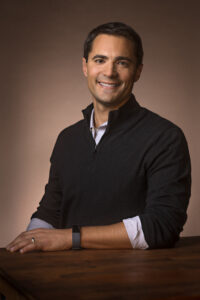
First, Allstate bought Esurance with the goal of creating the Allstate of the web. “They wanted to make Esurance a multiline writer, replicating the Allstate business model, but direct,” he said, reporting that Allstate sent him out to San Francisco in 2012 to build the first online home insurance business in the United States from scratch. “We did that successfully, built it to a hundred million in five years, ran less than a 60 loss ratio, which was less than target all along the way.”
But the online application consisted of 83 questions to purchase home insurance online, he recalled. That’s 81 too many. In a series of online articles he’s posted on Medium years later (in 2021), Lekas describes the even worse application process for customers who could ultimately save about 16 percent by bundling home and auto insurance but would have to answer twice as many questions to get there. Eliminating this “friction tax” was another problem to add to the list while trying to model the growth formula of the past—delivering cheap but adequately priced insurance.
In 2013, Lekas decided to move his growing family back closer to his original home in Cleveland, Ohio, taking a job with data vendor Verisk Analytics. “The moment I got there, I felt so unaware. I’d poured so much energy into understanding the insurance organism where I could see all parts of it. And I touched all those pieces as I built from scratch. But when I got to the data side and I saw the economics of data—where data existed, how to think about the pedigree of that data—and then I thought about how we make rates, and how we file with the departments, I immediately saw an ability to make the products that I’m familiar with instant without compromising on underwriting integrity.”
Lekas, who has a computer and information sciences degree, and Branch Chief Technology Officer Emison, a tech entrepreneur (previously co-founder of BuildFax) would later include “Automate It” as one of the nine root principles of the company. And automation would shave a list of 150 bundle application questions down to just two: name and address.
Frequently, when Lekas speaks and writes about jumping from the comfort of a good job in the traditional industry to launch an InsurTech to solve the various problems he was identifying, he describes being “compelled” to action. But was it the growth problem? The demise of the industry’s communal roots and the growth of big brand marketing wars? The serious affordability and complexity issues? Which one was causing his sleepless nights?
Lekas put himself back in the moment. “It was less a specific part of the problem and more [the idea that] everyone would love to have this if someone could make it possible. And it might only be me who sees how to do it. If there was this commonly understood thing that was good, then someone would need to create it. You would have to have a unique set of experiences to even see that it was possible.”
He noted that the time period was now around 2016, when the likes of Root and Hippo were becoming Verisk customers, and “the world of the possible” was opening up. “They had to approach it based on their experiences, with what they knew they could change. But insurance is such a complex and nuanced business. The only way that you can really make new differentiated value in a hyper-competitive space like this is to understand what today is and why it works that way…What I really wanted to do, and the mission we talk about at Branch, is our mission is to make insurance less expensive so more people can be covered. And it really is hearkening back to what we believe is good and noble as insurance people—that insurance allows a society to grow and thrive in a way that it won’t without…”
“[But] we’ve left a lot of people behind, and if we can structurally reduce the overhead, it will naturally lower the bar to inclusion…Aside from each of us just paying less, this would be a natural benefit that insurance is designed to provide…”
“I started to feel, ‘Man, someone has to do this. And it might have to be me.”
While “save 15 percent in 15 minutes” is certainly now part of the industry lexicon, Branch’s mission-stated reason for marching toward affordability—”so more people can be insured”—is not. Why did Lekas become so concerned about the people who could not afford insurance at all?
Reliving that moment again, Lekas recalled the criticism that mutual insurer Nationwide received around that time for a well-intentioned Super Bowl commercial that featured a child who had died. (Editor’s Note: The ad’s purpose was to start a conversation around preventable accidents.) “It was met with real unhappiness by a world that viewed it,” Lekas said.
Going on to describe the positive role that insurers play with their charitable foundations and through investments in municipal works, he saw one big disconnect as he reflected on the industry’s social responsibilities and memories of his first role in the insurance industry, which was in claims. “If you wanted to do something socially positive, the thing we do as insurance people is we protect people from uncertain events. It was strange to me, especially having dealt with so many uninsured motorists in my claims career, that as much as the industry donates, as much as it believes in this ideal of protection, we’ve left 30 to 40 million Americans without car insurance who drive, not to mention the other insurance gaps that exist.”
In working toward a solution to the uninsurance problem, Branch earmarks a portion of premiums from its insurance operations to a separate nonprofit program known as Safety Nest. (Read about Safety Nest in the sidebar: “Setting Up a Safety Nest: When Cheap Insurance Still Excludes Millions,” published on CM’s website.)
Saving a Bundle
A first step toward increasing the population of insureds was making the cheapest form of personal insurance—the insurance bundle—even cheaper with an efficient application process.
Back in 1931, “the application to buy Allstate insurance was name, address, year, make, model. You’d clip a [Sears catalog] coupon, you’d mail it in, they’d mail you back a dec page,” Lekas reported. Between 1931 and 2022, we found another 110 variables that meaningfully segment the risk—statistically true and approved by departments of insurance. Every time you add one, your actuarial or data science groups are excited to have this [new] segmenting input, but it ultimately makes the application one question longer.”
And it wasn’t always accurately explaining risk, Lekas suggested, offering an example from his past experience on the design team for Allstate’s homeowners product. “We found that people who smoked had a slightly higher incidence of non-wildfire fire…But if you introduce an application question that asks, in a financial context, ‘Do you smoke?’ the consumer generally knows the [underlying] question being asked is, ‘Do you want to pay more for this product?'”
“So, what you ended up having is a marginal benefit to lift, theoretically, using the datasets we had gathered to develop the math. But then practically speaking, no one smoked. You added friction to the application but got no benefit on the underwriting side.”
The technology and data available in 2015 and 2016 allowed Branch to bring applications back to the simplicity of 1931. Lekas and Emison sought to constrict the 100-plus variables down to those for which data could be “confidently gathered mechanically,” and developed technology to support it. “We weren’t skipping anything. We were going out and getting all of the data, corroborating it and assuring that it was you, multi-sourcing, and running through this algorithmic waterfall of gathering information in a sequence that allowed us to fill out a thick file about you, your home, your cars, the people that live with you, who are drivers, your credit history, your court history, and these kinds of things that insurers would otherwise ask you.”
“We built this instant ability that allowed consumers to bundle for the first time,” he said, noting that bundles are the most coveted part of the personal lines market but expensive for incumbents to deliver with disjointed internal processes built separately for home and auto insurance.
Distribution Evolves
According to marketing information on Branch’s website, about half of its customers bundle today, saving more than $500 in the process.
Another way that Branch saves customers money is through a referral program that pays bonuses to insured members for referring their friends to Branch and discounts to the friends who sign up (in states where regulation allows). “You can give them [friends] a direct offset to the cost of otherwise acquiring them, that will persist for as long as you’re both members of the exchange. This is a throwback to almost every mutual,” he said, noting that Nationwide and Amica took referrals for early customers. Importantly, a referral model saves a big expense that otherwise adds dollars to premiums charged by insurers using direct-to-customer models: TV ads.
Branch Insurance, which operates as a reciprocal exchange (and as an MGA is some states) reportedly grew premiums 4.5-times last year, and currently writes in 35 states and Washington, D.C.
The InsurTech gained unicorn status in 2022 and is not (yet) cash-flow positive.
Branch has a deep commitment to culture, driven by its mission to make insurance less expensive so more people can be insured, and was named one of Glassdoor’s Best Places to Work in 2022 and 2023.
Branch was an early adopter of embedded insurance, too. With Rocket Mortgage as an original investor, the company had a natural avenue to deliver insurance seamlessly to customers at moments of relevance, also striking partnerships with Vivint and Smart Home early on. At the time, Lekas recalls telling his team, “I don’t think there’s a play for us in agency, because there’s already so many companies serving that space. What would be so unique about us?”
He was wrong. Branch started getting inbound requests from agents who saw the technology Branch had built out in the marketplace. “If you put yourself in an agent’s shoes, the agent is typically spending 30-45 minutes with a consumer in the data entry, in the Q and A, to get to a bundled outcome. The agents would like the bundled business better than any other segment as well because it has the highest lifetime value, allowing them to grow more sustainably. [They] were very loud in telling us that we were useful to them. We were needed.”
Agents have been valuable to the startup InsurTech, too, becoming the fastest-growing form of distribution for Branch. “Direct, we have managed it to a smaller growth rate, simply because of its high capital intensity,” Lekas said, referring to the expensive moat that GEICO has built via advertising dollars. “Part of the beauty of the embedded model and the agency model is it’s either an absolute low acquisition expense, or with agencies, you pay it as you go,” he said, differentiating between paying upfront acquisition costs and paying a high cost of agent commissions but incurring those over the customer lifetime. “The oxygen of a startup [is] not to run out of money…In this way, agencies can be a huge benefit to building,” he said.
Planning for a 100-Year Future
While discussions about corporate structure, data and distribution were part of the agenda in the earliest days of Branch, even when the staff consisted of just two men—Lekas and Emison—they were also purposefully sitting down to craft a clear mission statement and Brancher principles to support it. “It’s probably going to be the most interesting part of Branch in retrospect. It was so important to us because I would never have quit my job and my career to just have a startup…Maybe this is lunacy. I couldn’t tell you. I suppose history only decides this, but we were building for a hundred-year future,” Lekas said, explaining the intentional commitment to culture that landed the company of now more than 450 employees on the Glassdoor’s Best Places to Work (top small and medium) for two years running. (Related article: “Inside-Out Branding: How One P/C Insurer Made Glassdoor’s Best Places to Work List“)
Lekas knew from his own past work experiences that malaise creeps into big companies over time and that the “perfection of that customer experience that you can very much have as the sole proprietor or the only employee” gets lost as companies grow. “That is very difficult to replicate across dozens of layers and thousands of employees. And we believed that the only way you could do this was first to have a mission and to be clear about why you’re here. What’s the purpose that you bring to the world?”
“That mission, if it could be clearly articulated and well understood, would be an aligning force,” he said.
Lekas admitted that the mission, as written, is actually unachievable. “We’ll always be trying to make insurance less expensive than what we could make it before.”
“The fact is that three-and-a-half years in market, we’re generally insignificant in the scheme of insurance,” said the CEO of the InsurTech unicorn when asked how he measures success today. “It won’t be that way forever, so long as we continue to execute with discipline and in a way that creates new differentiated value to our members. I’m so proud of our team, but the amazing achievements that we’ll be known for are all yet to come,” he said.
In particular, Branch and SafetyNest are working the uninsured population in America down to 2 percent or less, from the 13 percent level where it stands today, Lekas said.
 Building a Glass Box Not a Black Box at Elara Spatial
 More Roller Coasters Shut Down as Authorities Probe Fatal Fall Off Georgia Ride
 AAA Survey Reveals Disconnect in Drivers’ Obeying ‘Slow Down, Move Over’ Laws
 LA Fire Victims Set to Lose Case Managers Due to Standoff Between California, FEMA