


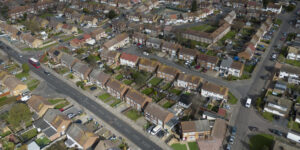















Driven by powerful winds, three wildfires burned rapidly through neighborhoods in Spokane, Wash. Crossing natural and constructed boundaries, the fires damaged or destroyed nearly 1,000 buildings, leaving families homeless and the community with years of recovery ahead. First responders prioritized evacuation and life safety, but once again, the demand for suppression eclipsed their capacity.
One of the moments that changed how I understood wildfire came when I saw fire move through a supermarket parking lot. At first, it seemed counterintuitive: There was little vegetation across the pavement, yet the fire kept advancing. The cars, plastics and other materials surrounding the buildings had become the fuel. It clarified a lesson I had been learning since I began creating defensible space around Western homes in 2001: Vegetation may carry wildfire into a community, but once structures and everyday objects ignite, the community carries the fire.