

















A significant number of data centers are being built in areas that are exposed to extreme weather risks brought on by climate change, a report by XDI has found.
A study of roughly 2,600 planned data centers worldwide indicates that more than 150 will be on high-risk properties, according to the analysis by XDI, which looks at physical climate impacts. Key hazards include coastal inundation, high heat and riverine flooding, it said.
“We are not adequately preparing for climate change,” Karl Mallon, founder and head of science and technology at XDI, said in a press briefing ahead of the report’s release on Thursday.
More than 70 of the roughly 150 high-risk data centers are set to be built in North America, compared with 45 in Europe and 12 in East Asia, the analysis found.
In the UK, rain-induced flooding is the main threat to data centers intended to train large AI models, according to a separate report published by the MSCI Institute. Higher temperatures are also a concern. In 2022, London data centers used by Google and Oracle Corp. buckled under the effect of record heat, knocking some websites offline.
The XDI report also cautioned against underestimating indirect risks. “A data center designed to remain operational during an extreme weather event may still fail if surrounding infrastructure is not,” it said.
Asset owners still have an opportunity to offset such risks. Decisions about “site selection, engineering standards and resilience investment may materially influence” the climate resilience of such infrastructure, XDI said.
“A huge chunk of global capital is going into this area,” Mallon said. “If we get this wrong it will be a very expensive wrong.”
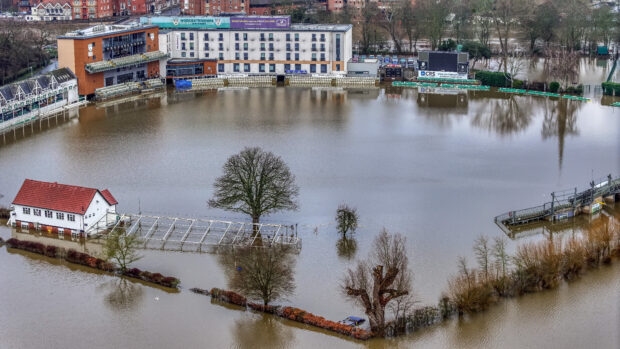
*Top photo: Flood water covers Worcester, England in Feb. 2026 (Christopher Furlong/Getty Images)
 LA Fire Victims Set to Lose Case Managers Due to Standoff Between California, FEMA
  Viewpoint: Six Questions Every CIO Should Ask Before Their Next AI Investment
  Hawaii Likely Needs $1B in Disaster Recovery, Resilience Funds
  Workers’ Compensation’s Real Challenge: Orchestration