













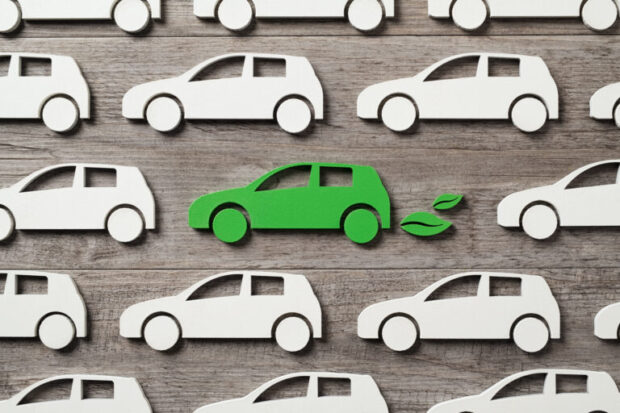
A new report suggests that while electric vehicle sales have slowed, collision claims in the U.S. and Canada have increased, according to auto physical damage solutions provider Mitchell International.
Its latest report, “Plugged-In: EV Collision Insights,” revealed that collision claims rose 14% in the U.S. and 24% in Canada.
While sales of new battery electric vehicles (BEVs) decreased approximately 2% in the U.S., claims for repairable vehicles continued to climb.
The share of repairable claims also increased by 6% for plug-in hybrid electric vehicles (PHEVs) and 20% for mild hybrid electric vehicles (MHEVs) year over year in the U.S., and 26% and 29% in Canada.
“Even as BEV adoption slowed in North America last year following the end of government tax incentives, the auto insurance and collision repair industries still saw claims volume rise since more of these automobiles are on the road than ever before,” said Ryan Mandell, Mitchell’s vice president of strategy and market intelligence. “Due to their dense electrical architectures, software-driven systems and interconnected, sensor-heavy designs, these vehicles require additional diagnostic and calibration operations when damaged that can add cost, complexity and cycle time to each repair.”
In 2025, BEVs averaged 1.70 calibrations per estimate compared with 1.63 for hybrids and 1.54 for automobiles with an internal combustion engine (ICE).
Total loss market values dropped across most powertrain types, with BEVs experiencing the largest decline, 6% in the U.S. and 13% in Canada, the report found. Shifting consumer sentiment, accelerated depreciation, and increased availability of lower-cost models contributed to the decline.
Average severity for repairable BEVs fell by 5% in the U.S. and 2% in Canada. While remaining flat in both countries for PHEVs, claim costs for MHEVs increased by 4% to $5,054 in the U.S. but held steady in Canada at $6,267.
 The Technology Taking Parametric Insurance Mainstream
  Zurich Insurance Group Completes Acquisition of Beazley, Names New Leadership for Insurer
  When Builder’s Risk Coverage Doesn’t Reach the Finish Line
  Hurricane Hunter Data Reveals 4 Signs of a Strengthening Storm