















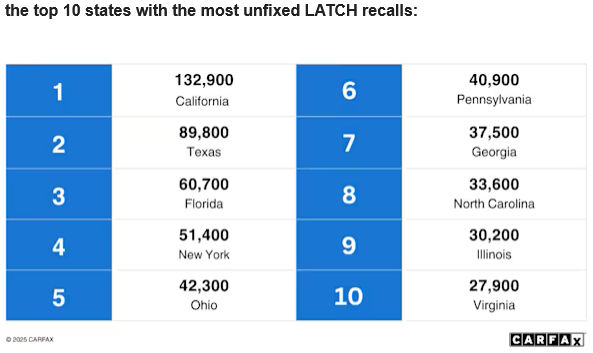
Nearly a million vehicles currently on U.S. roads have open recalls for defective LATCH connectors, potentially putting millions of children at risk, according to a new alert by vehicle history provider CARFAX.
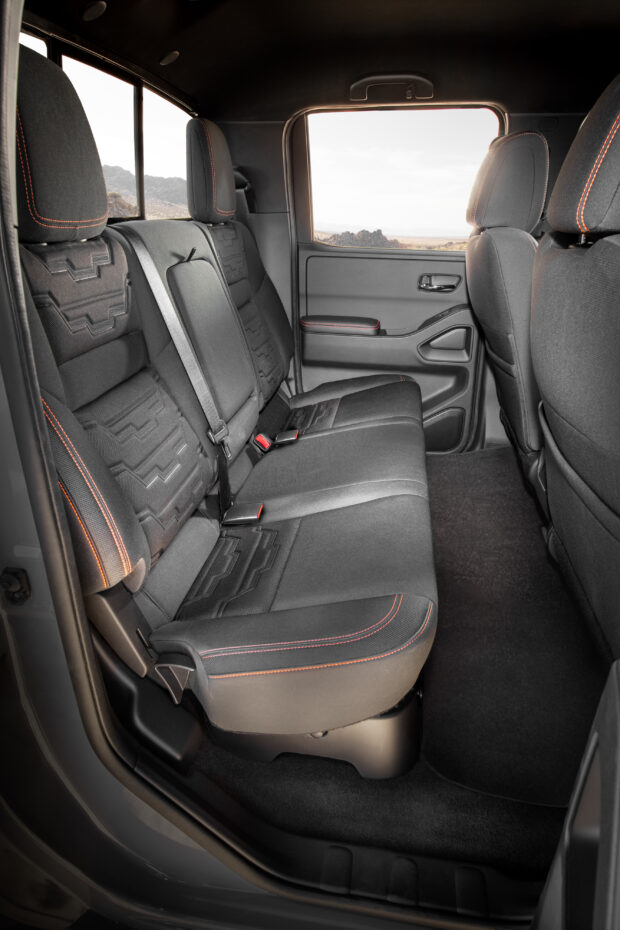
LATCH, which stands for Lower Anchors and Tethers for Children, is the child seat anchoring system required in most vehicles since 2003; it uses built-in metal anchors and tethers to secure car seats without relying on seat belts.
The anchors are a critical safety feature that strap child seats to hold them firmly in place, helping keep children properly restrained, especially in a crash.
CARFAX analysis shows hundreds of thousands of vehicles have been recalled in recent years for child seat anchor defects, including faulty welds, misaligned anchors, and coatings that could interfere with or prevent proper installation.
The issues affect a wide range of vehicles across different makes and model years.
“LATCH systems are designed to protect our most vulnerable passengers,” said Faisal Hasan, vice president of Data at CARFAX. “These recalls are not isolated to just one automaker or model year, so parents should check right away if their vehicle has an open recall and schedule free repairs as soon as possible.”
What to Do:
Check for Recalls: Use the free CARFAX Recall Tracker to see if your vehicle has an open recall at carfax.com/recall.
Schedule Repairs: Contact a dealership or manufacturer to get a repair at no cost to you.
Know Your Anchors: There are two types of anchors – the lower anchors and tether anchors. Familiarize yourself with the locations of each and consult your vehicle and car seat manuals for guidance. Proper use is critical. Studies have shown that child restraint misuse rates remain significant even with LATCH systems, underscoring the importance of correct installation.
 US States Allege Corteva Spinoff a Bid to Evade PFAS Liabilities
  Amazon Cargo Plane Pilots Weren’t Warned About Wind Before Miami Crash: NTSB
  Weather Damage Turning Into Long-term Debt for Homeowners: Report
  California Tops List of Homes Facing Extreme Wildfire Risk, Mitigation Cuts Risk up to 70%