



















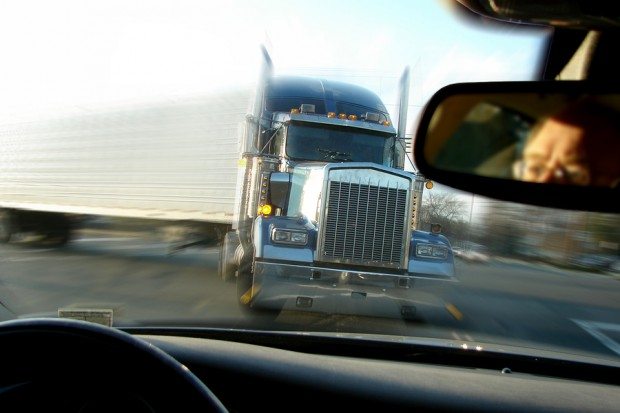
While severe collisions declined last year, many factors influence commercial driving behavior. Though seasonal changes and distractions are expected, geopolitical factors add to less predictable freight patterns, shifting driving hazards inland.
Utilizing commercial drivers’ dashcam data in the U.S., Mexico, and Canada, Motive’s AI Road Safety Report examines how collision patterns evolved over the past year.
The dashcam firm’s data science team reviewed AI-detected safety events captured in 1.2 billion hours of video to identify when, where, and why collisions occurred from 2024 to 2025.
The good news: the number of severe collisions fell in 2025. Severe collisions involving injuries, tow-aways, and fatalities are trending 9.5% lower, with reported injuries trending 7.7% down year-over-year, and focused on long-haul, heavy-duty interstate fleets that move goods nationwide.
The report found that collision trends vary by state.
Larger, higher-volume states saw year-over-year declines in collisions, including:
- Florida: 42.6% reduction
- North Carolina: 29.8% reduction
- New Jersey: 24.8% reduction
These states represent larger, higher-volume freight corridors, suggesting that improvements in safety practices and earlier risk detection can have a meaningful impact at scale, according to the report.
Some smaller states experienced year-over-year increases in reported collisions, including:
- Rhode Island: 24.8% increase
- Montana: 13.5% increase
- Maine: 11.3% increase
These states also have lower overall vehicle volumes and baseline collision rates, which can amplify year-over-year percentage changes, the report noted. In Rhode Island, for example, while total collisions increased, no fatal collisions were reported, suggesting that overall severity declined even as incident counts rose.
While risky driving behavior persists, the use of AI-powered driver safety tools helped identify risky driving behavior before crashes happened, the research team found. For every one collision, organizations saw seven near-collisions, the report found. Near-collisions help organizations identify risky driving behavior and coach drivers.
Aggressive driving remains one of the most dangerous risk factors and the biggest predictor of collisions, data showed.
Industries such as waste and recycling, field services, utilities, construction, and oil and gas had the highest collision rates per million miles.
The top findings:
- Preliminary data shows 2025 saw fewer road fatalities, but risk remains uneven and highly concentrated by time of day, season, and operating environment.
- Late-night driving is more dangerous than rush hour. Collision risk peaks at 3 a.m., when it triples compared to midday.
- Behavior—not road conditions or mileage—is the dominant driver of collision risk. Drowsiness, distraction, and aggressive driving consistently precede incidents.
- Transportation and logistics fleets drive the most miles but have the lowest overall collision rates, demonstrating that the operating environment matters more than distance traveled.
- Cell phone use is among the top five risky behaviors linked to collisions, with use peaking in late afternoons. Drivers in agriculture show the highest rates of cell phone use.
- Smoking behind the wheel happens almost 4,000 times a day, emerging as a major and often underestimated source of distraction.
- Even as 2025 tariff changes increased trade activity and congestion around ports and border crossings, collision rates in those areas remained stable, suggesting risk often shifts inland rather than concentrating at ports.
2026 Predictions:
- 2026 will mark a tipping point where AI-powered, real-time intervention—not post-incident analysis—becomes the primary driver of collision reduction. Collision rates will still peak in Q1 due to winter weather and shorter daylight, but overall risk will continue to decline as unsafe behaviors are addressed earlier.
- Driver behavior will remain the biggest safety risk. Drowsiness, cell phone use, and smoking will continue to outweigh road conditions as predictors of collisions.
- Near-collisions will become the most important leading safety indicator, replacing collisions as the primary metric organizations use to manage risk.
- Ongoing geopolitical and trade volatility will continue to shift freight patterns, pushing risk inland and into overnight corridors rather than causing nationwide spikes.
- Industry-level safety gaps will widen. Agriculture, waste & recycling, and field services will see the biggest AI-driven safety gains as high-risk industries adopt more tailored, behavior-based safety programs.
- One-size-fits-all safety programs will continue to underperform. Organizations will increasingly demand AI tailored to their routes, schedules, geographies, and operating environments.
- Where and when drivers operate will matter more than how far they travel. Geography, congestion, weather, and job type will outweigh mileage as predictors of collision risk.
“Understanding where risk moves — not just where freight volumes increase — will be critical in the year ahead,” according to Motive AI.
The report also incorporates publicly available data from the Federal Motor Carrier Safety Administration (FMCSA), the U.S. Census Bureau, and the U.S. Department of Transportation (USDOT).
 Teen’s Death Prompts Plan to Ban New York Central Park’s Horse-drawn Carriages
  San Diego PD Considers Using AI to Write Police Reports
  Orbital Data Centers Risk Becoming Military Targets in Space
  More Roller Coasters Shut Down as Authorities Probe Fatal Fall Off Georgia Ride