


















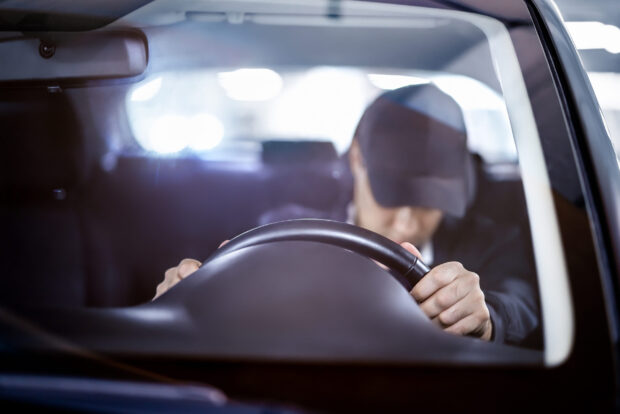
New data indicates a steady increase in drivers falling asleep behind the wheel since 2020, according to a survey sponsored by Erie Insurance.
The insurer found that 14 percent of Americans have admitted to falling asleep at the wheel.
Since April is National Distracted Driving Month, Erie wanted to spotlight the disturbing increase in drowsy drivers.
More than half (54 percent) reportedly sleeping less than seven hours, with roughly 11 percent getting four or less hours of sleep, according to the survey.
The largest percentage of respondents (43 percent) reported averaging five-to-six hours nightly.
Increased drowsiness can impact the ability to focus, think clearly, respond quickly and perform daily tasks, the insurer said.
A driver’s inability to focus on and be aware of other road users impairs their ability to brake or swerve promptly.
With an average car weighing 4,100 pounds (EPA), a sleepy driver can quickly turn a car into a dangerous weapon.
The survey identified when drivers are the most fatigued and likely to be involved in an accident.
Data showed that Americans are most tired while driving during late-night hours.
Between 10 p.m. to 3 a.m., 42 percent of respondents reported feeling the most tired.
The next most dangerous time was during the early hours of the morning between 3 a.m. and 10 a.m. when 23 percent of responding drivers reported feeling the drowsiest.
Drivers are more tired because driving at night disrupts the body’s circadian rhythm which governs sleep and wakefulness and is highly sensitive to light cues.
Driving during darkness, when the body expects to sleep, throws this rhythm off balance, resulting in fragmented sleep and persistent drowsiness.
The survey revealed a quarter of Americans (25 percent) indicated that driving is a core responsibility of their jobs.
This encompasses a wide range of professions, from gig economy workers delivering food and taxi drivers to long-haul truckers, all of whom face the challenge of staying alert on the road, regardless of their sleep patterns.
Despite feeling drowsy, drivers participating in the survey reported attempting to stay awake while driving through several methods, including:
- Consuming a caffeinated beverage (63 percent).
- Turning up the music (62 percent).
- Rolling down the window/cooling the car (58 percent).
- Talking to someone on the phone (28 percent).
Many drivers reported taking a rest breaks (59 percent).
Women are more likely to participate in the distracting action of talking on their cell phones (32 percent) compared to men (23 percent).
Nearly half of survey participants (48 percent) reported struggling to get enough rest.
This widespread sleep deficit stems from various sources, including stress related to personal or family life (52 percent), anxiety over current events (42 percent), excessive social media use (24 percent), and the demands of parental duties (14 percent).
 Friend of Suspected FBI Data Thief Warned Teen Not to Hack Bureau
  Majority of Online Scam Campaigns Target Common Infrastructure: Study
  AI Data Center Boom: Understanding How Risks Are Changing
  Most Americans Think AI Is Developing Too Fast: Poll