












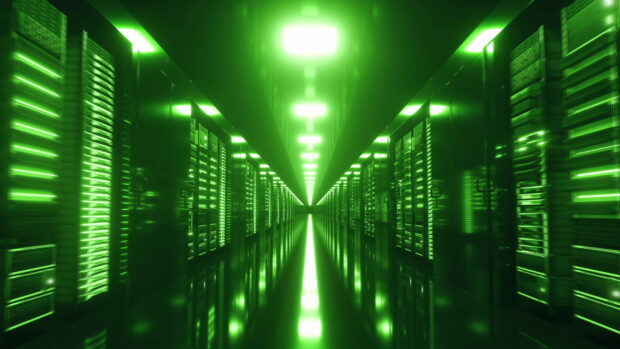
The U.S. data center market is expanding rapidly, driven by artificial intelligence, advanced encryption, cryptocurrency mining and other emerging technologies.
New data center construction is surging to meet the demand for computer servers, information storage and networking equipment that powers our digital lifestyles and economy.
But growth is about more than square footage. It is about complexity, large amounts of electricity and cooling capacity, and dependence on critical components and systems.
The shift toward hyperscale, high-density data centers carries significant implications for the insurance industry, particularly property and equipment breakdown carriers.
Larger losses, business interruption and new liability risks may result. Claims can be triggered by weather and a greater reliance on electrical grids outside the control of center operators.
Understanding the risks and how they are changing will require strong engineering insight.
The Boom Has Just Begun
There were more than 5,000 data centers in the United States as of 2024 and there is a 9% annual increase in demand expected through 2030, according to the National Telecommunications and Information Administration (NTIA).
Different types of data centers include:
- Enterprise data centers, located within or near a corporate campus
- Cloud data centers that own the equipment and rent it out to tenants
- Colocation facilities that own the space and rent to multiple tenants
- Outsourced data centers that take over the operations of an enterprise data center
- Edge data centers, positioned close to end users to reduce latency
The new hyperscale facilities, often remote and purpose‑built, require 100 megawatts or more of continuous power.
Specialized data centers process AI models and other online services such as cryptocurrency mining, using dedicated computer systems to validate crypto transactions. These applications often rely on specialized hardware—GPUs (Graphics Processing Units), ASICs (Application-Specific Integrated Circuits) and other accelerators optimized for high performance.
Powered equipment and systems that run 24/7 experience greater mechanical risk of breakdowns.
As new hyperscale facilities are built, their large footprint and heavy use of water and electricity also raise considerations of sustainability, environmental impact and regulatory approvals.
Power Under Pressure
Older data centers, often consuming 100 megawatts of power or less, were built for relatively smaller workloads. The much larger data centers built today, powering cloud platforms and AI, are massive in size with thousands of computer servers and consume enormous amounts of electricity. These data centers can consume up to a gigawatt or more of electrical power—where a single gigawatt, by comparison, can supply electricity to roughly 800,000 average U.S. homes.
The total U.S. electricity demand for data centers is estimated to be 12% by 2028, according to the U.S. Department of Energy, while the U.S. Energy Information Administration Use for Commercial Computing projected commercial electricity demand for computing to be 20% by 2050.
Utility grids may not be able to meet the demand, forcing operators to consider on-site power generation, battery energy storage systems, gas turbines, fuel cells, renewables or future nuclear options.
These solutions bring new equipment types, complex switching and sequencing, and specialized components with long replacement timelines.
When components such as transformers or generators fail, it can take months or even years to obtain a replacement, extending downtime far beyond the initial failure.
Data Density, Rising Risk
At the heart of every data center is a tightly integrated set of systems.
The more concentrated these systems become, the greater the exposure when something goes wrong, since failure in one area can quickly cascade into others.
A key design trend is higher equipment density, packing more computing power into less space.
Some data centers now operate with rack densities—the amount of power used by all computer servers and other technology inside a single cabinet—between 20 and 50 kilowatts of electricity.
Higher density power increases efficiency; it also generates more heat, raises dependence on high-performance cooling and amplifies the impact of even short interruptions.
To help prevent failures, data centers are built with resilience in mind.
A key part of resilience is redundancy, including backup equipment and independent systems so operations continue if a component fails or needs maintenance. This redundancy does not eliminate risk, however, especially when systems are tightly integrated and exposed to the external power grid, water sources, and weather.
Cooling Failures Hit Hard
Modern data centers rely on increasingly sophisticated cooling systems and strategies.
Air cooling uses chilled air and hot/cold containment. Chilled water systems circulate cold water through coils or equipment. Direct liquid cooling, immersion cooling and cryogenic cooling used for quantum computing are other types of systems that must be maintained, monitored and integrated.
When cooling systems are impaired, temperatures can rise quickly, risking damage to computer servers, switchgear and power equipment.
Access to water is critical, and community and regulatory scrutiny of energy and water usage could result in new liability exposures for insureds and insurers.
Carriers may need to account for environmental liabilities in addition to traditional property and equipment breakdown risks.
Lightning, Water and Wildfires
Weather-related perils also pose a direct and often underestimated threat to the electrical and mechanical equipment that data centers rely upon.
- Lighting can strike a facility directly or send damaging power surges through connected systems. Water can leak from roofs and HVAC systems, while droughts can impact critical water sources.
- Wildfires are both direct and indirect risks. Flames and heat can damage exterior infrastructure, while smoke can clog HVAC filters, degrade air quality and raise internal temperatures.
- High winds, ice storms and extreme heat and cold temperatures can damage data center equipment and lead to power outages and service interruptions.
A New Era of Risk Complexity
The U.S. data center industry is at a turning point. The demand for high-density power will continue to drive the market and economies of scale will become increasingly important as larger facilities offer cost advantages for power and operating efficiency.
The success of the industry will depend not only on new technology but also on sustainable and reliable energy sources, community support, regulatory compliance and insurance protection.
For insurers, this transformation signals a new era of risk complexity. As hyperscale data centers become the backbone of the digital economy, insurance carriers must evolve their underwriting strategies. Technical expertise is essential to prepare for higher severity losses that are likely in a rapidly changing data industry and technology landscape.
 Adaptive Insurance CTO Sees a Future for Parametric in Homeowners
 Insurance AI’s Next Test: Can Carriers Trust the Data?
 Despite Improved Hurricane Warning Maps, Public Understanding of Danger Lags
 Whether NFL Guardian Caps Prevent Head Injuries Still Up for Debate