













There is general consensus among insurance and reinsurance underwriters about the safest property risks to accept in the California market, according to the co-founder of a company that uses technology to better understand catastrophic risks.
Executive Summary
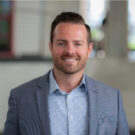
With experiences in clean technology and data delivery for crisis response leading him forward, Nathaniel Manning took his desire to help stop the progression of climate change in a new direction after he became enthralled with the mission of insurance and reinsurance industries. Here, Manning, COO of Kettle, shares the backstory of the company, which uses technology to better understand catastrophic risks—and to sell insurance and reinsurance. He describes the machine learning models and the contributions they can make to solving growing availability and affordability in the California wildfire market.Nathaniel Manning, chief operating officer of Kettle, which uses its AI models of cat risks—and wildfire risk, in particular—to sell insurance and reinsurance as an MGA, shared his assessment during a recent interview with Carrier Management as he described the dynamics of a growing availability and affordability crisis in the state.
Offering rough numbers, Manning said that when he compares a ranking from lowest-to-highest risks from Kettle’s wildfire models to similar outputs from older property-catastrophe models, they agree on the bottom 50 percent. “This is what’s in the admitted market. It’s the downtown areas, low probability of burn.”
But historical models and probabilistic property-catastrophe models don’t provide clarity to the market on the upper 50 percent. As a result, many insureds are getting nonrenewed, priced dramatically higher or thrown into the E&S market or the FAIR Plan, Manning told Carrier Management. “You see people getting dropped across the state. We’ve talked to folks who’ve had their premiums increased by 11X in a single year,” Manning said, referring to the magnitude of rate hikes for HOA insurance.
Admitted carriers, he said, recognize that wildfire risk is growing, but they really don’t know exactly where it is, referring to State Farm, Allstate and Farmers, among others. In addition, they’re capped on how much they can increase rates overall. “And the cap is not anywhere near close to what the actual risk increase is,” he said, rationalizing their decision to pause and decline to take new customers.
“The truth is, it is riskier than it used to be due to climate change. We’re in the middle of a heat wave across the entire world right now. Heat causes increased fires. You dry everything out. Then it burns. And California particularly gets a lot of wind off the ocean…”
“The big carriers are stuck because the reinsurance prices have all increased a ton” as risks increase. “They really should. It’s due…But then the carriers are more regulated so they can’t increase as quickly.”
‘The Climate Changed’
Reinsurers also can’t understand the risk well because they’re using cat models that haven’t captured climate change impacts, Manning suggested as he referenced the often-expressed idea that hundred-year cat events are happening every two or five years. “That is exactly what I’m talking about. The models still say it’s a hundred-year flood because they’re based on statistical modeling…Actuarial models are built on the law of large numbers, which works well for life insurance or auto crashes. It never worked great for catastrophic events because they are fairly infrequent, high-impact events. But it was the best tool we had. And now due to climate change—it’s right there in the words, the climate changed—they work even less well than they used to,” he said.
Kettle’s new approach is to train machine learning models on patterns—to predict when fires will ignite, how they’ll spread and the vulnerability of properties. Putting that all together to assign a risk probability on each property, the models show that almost all the damage is going to happen in the top 25 percent riskiest properties—or about 3.5 million of the 14 million across the state. That means Kettle can give capacity providers comfort in writing those ranked between 50 percent and 75 percent on a scale of risky properties.
“The truth is, in the worst year in history, 2017, it was 20,000 properties burned down, which is 0.1 percent of all the properties in the state,” Manning said. “That’s not making light of 20,000 properties, but it’s actually a very small percentage of 14 million, compared to a hurricane that can really affect quite a lot of buildings all at the same time,” he said.
Kettle boasts 89.2 percent accuracy in its predictions, according to the company’s website. Manning described some model back-testing that Kettle has been able to do on three years’ information. About 20,500 properties have burned down in the state. Of those, 98 percent of them—just shy of 20,000—are the areas which the model flags as the 25 percent riskiest.
Obsessed With Insurance
While it may seem otherwise, Manning hasn’t spent most of his career working in the insurance and reinsurance world like Kettle’s co-founder, Andrew Engler, or Kettle Chairman Nigel Mortimer. Engler, who had an early position as COO of an Allstate agency in Santa Monica, headed up the digital product and machine learning team of Bermuda-based Argo Group before joining Manning to launch Kettle as CEO in 2019. Mortimer, a past president and EVP for Argo, spent 30 years in the industry in underwriting and product development roles, primarily in London and Bermuda.
But Manning spent the first third of his career in the clean technology sector working on ways to reduce carbon emissions. An impulse to gravitate toward big problems pulled him in the direction of the biggest one of his lifetime—climate change, he said.
“I’ve always been really drawn to big problems, things that feel like they are really going to affect a billion people or more,” [asking] ‘How do you get everyone to work together to try to solve for this?'”
Reflecting some more on the path of his career, Manning recalled seeing the film “An Inconvenient Truth”—a documentary about former U.S. Vice President Al Gore’s campaign to educate people about global warming—during the early days of his college career. “It really just blew my mind. I thought, ‘Wow, this is happening, and it affects every part of our economy and everything we do. This is going to be a major thing.’ I readjusted my class load and major,” he said, explaining that he pursued a master’s in environmental science and international relations in the hopes of having some part in trying to build consensus around stopping the progression of global warming.
But at some point years later, Manning realized that the time had passed to stop the planet from winding up at the place we are now. He ultimately got pulled in another direction—toward the insurance industry.
“I just got totally obsessed” with insurance, he said, noting that the obsession started to take hold during the second phase of his career, when he was in crisis response.
“I was working with USAID and FEMA on opening up datasets,” he said, describing a stint working in the Office of Science and Technology of the Obama White House in 2012 and 2013. “Who do you think might have been really interested in the data that we were making available in machine readable formats? It was insurance companies and reinsurance companies,” he said.
“We were doing basically the same thing that NASA and NOAA have done for years,” making information like satellite imagery and weather data available in open APIs. “And some of the folks that love and access that data are insurance companies, or the platforms that use all that information to do modeling” for insurers and reinsurers.
Continued Manning: “Folks working in insurance and reinsurance are really the most incentivized to understand climate change, because they’re really the ones holding the bag. They have the most to lose if all of these disasters increase, as the scientists have told us.”
Insurance is “also this really beautiful thing where we all pool our money together,” he added, giving more evidence of his obsession. “‘If your house burns down, I’ll put in a dollar and they’ll put in a dollar. We’ll all put in a dollar, and we’ll help you rebuild it, because I know if mine burns down the next year, you’ll do the same and we’ll use this trusted third party to help us do that.’ That’s what insurance is. It’s this really special thing that we do, and it’s really effective and efficient for the economy.”
A Data and Modeling Problem
Manning’s preoccupation with the world of insurance ultimately led a mutual friend to connect him and Engler. Looking past the noble purpose, the co-founders saw a data and modeling problem for insurers and reinsurers.
“If you have the best models, then you’re going to have the best loss ratios, which lets you have the most competitive prices, which lets you win more contracts and also gives the buyer the best product for the best price,” Manning said. But during the last 10 years, insurer and reinsurer loss ratios and overall returns on equity have deteriorated as multibillion-dollar catastrophes have increased.
If models had been keeping pace with the post-climate change world, insurers and reinsurers would have been able to anticipate what he said is a 3X surge in $1 billion-plus catastrophes—and they would have priced accordingly. (Editor’s Note: Admitted insurers in California are restricted in the types of models they can use for pricing by rules requiring them to simple cat models based on at least 20 years of historical actual experience for cat adjustments to rates and by rules requiring public disclosure of all information provided to regulators in connection with rate applications.)
“The data availability—it felt like a huge opportunity,” Manning said, going on to cite the “amazing improvement in machine learning” that’s happened at about the same time—over the last 15 years. Leveraging machine learning, “a pattern-based approach to understanding risk vs. the traditional insurance way, which is statistical approach, is going to have a better outcome. That was really the genesis for Kettle,” Manning said.
Seeing Patterns: Genesis and Contagion
“The insurance and reinsurance industries hadn’t really adjusted too much around climate change. And AI, if it was being talked about at all, was sort of a throwaway comment. No one was actually adjusting the way they were underwriting…Maybe there was a little AI innovative example they could put in a slide presentation,” he said, summarizing the conditions in which Kettle could make things happen for the good of the industry and consumers by building machine learning models to better understand climate change-exacerbated risks.
Online descriptions of Kettle’s technology refer to swarm neural networks and to two Kettle-specific technologies: a Genesis model and a Contagion model.
“The swarm component basically just means that we have multiple [neural networks] used in an ensemble model…There’s a neural network trained on wind, and there’s another one trained on vegetation moisture index. Then you’re piecing these together,” he said. (Editor’s Note: Online sources, including Amazon Web Services, TechTarget and Wikipedia, define artificial neural networks as systems of hardware and software, or machine learning models, that use interconnected nodes or neurons in a layered structure resembling the operation of neurons in the human brain.)
The Genesis model, he explained, is an ignition model. In other words, it is “focused on training how fires start” by picking up patterns from the data that Kettle ingests—predominantly satellite imagery, weather data, real estate data and then some utility information. (According to Kettle’s website, the technology is trained on 3 petabytes of data.) “To anthropomorphize what the model is doing, what it’s saying is, ‘I noticed that 97 percent of fires that start, start when you have a brown dot next to these straight lines of gray dots,'” Manning said. Translation: 97 percent of fires start alongside roads. “It just notices that because we’re running millions and millions of simulations training it.”
Offering the reason for the pattern, Manning explained that “most fires start alongside roads because that’s where electricity lines are and people throw trash out and different things can happen.”
“It’s taking a pattern-based approach vs. a stochastic [probabilistic] approach,” he said, differentiating the technology from the property-catastrophe models that insurers and reinsurers have been relying on since the 1990s.
Continuing to learn patterns, the AI model will notice that if you have a gray line near a big gray splotch, it never turns into one of the 10 fires that caused 99 percent of the damage. “That’s because if a fire starts and runs into a Walmart parking lot, it doesn’t go anywhere,” he said, describing the Contagion component.
On the other hand, the Contagion model may pick up higher risk probabilities for a fire turning into a top-10 contagion event if there’s 20 miles of brown area east of the road where the fire started—”where you’ve got lots of forest land and it hasn’t rained and the vegetation moisture index is really low, and you’ve got no other road access so that fire trucks can’t really get into it,” he said. Manning went on to paint a picture of two hills west of the road—”causing a 50-mile-an-hour wind coming off the coast to turn into a 90-mile-an-hour wind” as it tunnels through the hills, creating “a real hotspot,” also noting that fires burn faster uphill than downhill.
“Then, if that fire burns through that 20 square miles really fast and there’s a big development right on the other side, that community is a high risk,” he said, summarizing the basics of the Genesis and Contagion models. He noted that a building model figures into the mix also, factoring in home hardening efforts and conditions such as brush near the home.
Reinsurance Lens
How do these models differ from other AI predictive models that have been developed in the wildfire space in recent years?
“I would say we start from a reinsurance lens…We’re looking at the earth environment and how fires are starting,” he said, distinguishing the approaches of new players that are predominantly starting with the insurers’ vantage point first.
“When you think about it more from an insurance perspective, if you’re just looking at that single house, then what you’re looking at [measures like] just how close is the tree to the house” to determine if it’s a high risk. “But what matters a lot more is where’s the fire starting and how is it going to spread—because if you’re in a house in the middle of a giant fire, you’re pretty much toast. But if you’re a house on the edge of a fire and it’s throwing off a bunch of embers, then it does make a big difference whether or not you have closed your vents or have cut trees back,” he said.
“A pattern-based approach to understanding risk versus the traditional insurance way, which is statistical approach, is going to have a better outcome.”
Nathaniel Manning, Kettle
After running a building index, the last step of Kettle’s modeling process is to do “portfolio balancing from the ground up.” Manning explained this by starting with the simplified example of a homeowner securing coverage for $1 and sharing the news with his neighbor. When the neighbor asks his agent to buy the same fire coverage, “it hits our API and it comes back with a $2 quote even though the properties are literally exactly the same right next to each other. That’s because it’s more risky for us to cover two houses on the same street. They’re both going to get burned down by the same fire. The second one is going to have to cost more because of that,” he said. The model “is live, doing that based upon the balance,” he said, going on to describe how the model would also adjust prices downward as the portfolio diversifies. “If we then sold three other properties down in Santa Rosa and two down in Beverly Hills, six months later that $2 price could drop back down to $1.10 or something lower.”
What Kettle Offers
Kettle has leveraged its technology to offer a reinsurance product known as a Grid Rated Industry Loss, or GRIL, and two insurance products. (See related online article, “Evacuation Policies and Cat Strips: Wildfire Insurance and Reinsurance Ideas That Failed,” for a discussion of two other product ideas that didn’t get off the drawing board.)
The first insurance product, launched in partnership with Amwins, was an excess wildfire insurance product that kicks in over the California FAIR Plan’s $3 million coverage for high-value homes in wildfire-prone areas. More recently, as Californians deal with the affordability and availability crisis, Kettle has rolled out a commercial wildfire insurance product, Manning reported.
GRIL, also focused on wildfire, is similar to an index-based product that catastrophe ILS manager Nephila created for wind and earthquake known as County-Weighted Industry Loss, or CWIL. “We divide the whole state into these square kilometers,” Manning said, describing GRIL as a parametric product similar to CWIL but using smaller, more high-definition grids—419,000 of them, focused on fire only. “We then put damage ratios and the values into each kilometer based upon the existing [insurance] book. We price it accordingly, saying, ‘If fire enters into this square kilometer, we will pay out.'”
Kettle works with insurers to select the square kilometers they want covered.
Capacity providers for GRIL are Everest, Vantage and Ariel, Manning said, noting that a handful of other reinsurers can provide “line boosting.” In other words, Kettle has the pen for the trio, but if demand exceeds committed capacity, others are ready to offer more.
Both GRIL and the excess FAIR Plan product were launched in 2022. Arch and SiriusPoint were the original capacity providers for the Amwins product, but the program was relaunched for 2023 with PartnerRe providing the coverage.
Asked about Kettle’s role in restoring insurance availability in California, Manning said the GRIL reinsurance product can help, alluding to the fact that higher reinsurance costs are among the problems sending admitted carriers packing. A more recent product—a commercial wildfire product with a parametric trigger—may be even more helpful, he said, noting that Kettle has seen growing demand for this since the product launch in March. It’s in the E&S market, and it’s sold in combination with another carrier that covers claims from all other perils, he said, confirming that demand is coming from communities of garden-style condominiums and golf course groups, for example.
“There are 55,000 HOAs in California, [where] 35 percent of the state lives in an HOA community,” he said, noting they range from small HOAs in the city, a condo building, all the way to garden-style communities. Estimating that the latter make up some 40,000-plus properties, he said, “They really are getting hit because [they’re] stuck in between.” It looks like residential but is commercial.
What’s Next for Kettle
Kettle hasn’t rolled out a purely residential wildfire insurance product. COO Nathaniel Manning explains that finding a partner to write the other non-fire perils is the tricky part of delivering a residential or commercial offering, although that mission is more easily accomplished in the E&S market on the commercial side.
Another reason to test the waters in commercial before personal lines is that commercial insurance buyers are a little more insurance-educated. There’s usually a chief risk officer of an entity, and they’re buying a much higher price point. They are probably spending hundreds of thousands of dollars on the property, and they’re more used to the process of assembling different policies for a full package of coverage, he said. “For a regular homeowner that’s pretty difficult.”
Looking ahead, Kettle aims to offer an all-perils policy instead of a cat carveout, Manning said, noting that the buildout will start on the commercial side.
Manning reported that Kettle is also in the process of launching GRIL and the commercial wildfire product in all lower 48 states. And in late June, Kettle also launched a wind GRIL product in partnership with ClimateTech Reask.
Asked about the pricing of the existing California E&S and GRIL products, Manning said that if there are competing policies, Kettle typically wins the deal because it’s cheaper. “But a lot of times also, it might be the only option in the market. So, it’s not even really a comparison sometimes. Or maybe the only other option is the FAIR Plan.”
On the reinsurance side, he confirmed that a lot more coverage has come into the market in 2023 vs. 2022 when buyers had no other alternative to fill their towers. “I think all things held equal, most buyers are always going to try to buy a UNL [ultimate net loss] product—a traditional indemnity claims product, instead of an ILW or a parametric product. Those work well in a very hard market,” he said.
Read more about Manning and Kettle in the related article, “Evacuation Policies and Cat Strips: Wildfire Insurance and Reinsurance Ideas That Failed.”
 The New Corporate Status Symbol Is How Much AI Access You Have
 Trusting a Broker Facility
 Email Cyber Attacks Becoming More Precise and Evasive: Report
 Multimodal Claims Intake with Agentic AI: A Practical Architecture