




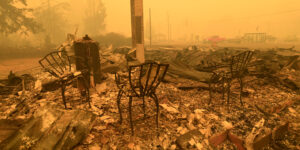














 For decades, insurers have relied on Verisk’s LOCATION® Public Protection Classification (PPC®) as a benchmark for evaluating fire protection capabilities within communities. The classification system has long provided an important baseline for understanding how local fire departments, water supply systems, and emergency communications contribute to property protection.
But today’s property risk landscape is becoming more complex.
Expanding development into higher-risk areas, increasing wildfire exposure, and infrastructure variability across municipalities are pushing insurers to look for more granular insight into how effectively individual properties can be protected during a fire event. In many cases, community-level classifications alone may not capture differences between properties within the same PPC-rated area.
To address this challenge, Verisk has introduced LOCATION® Property Protection Score (PPS), for Personal Lines Homeowners, an analytic designed to provide a more property-specific view of fire protection conditions.
Rather than relying solely on broad community indicators, such as hydrant counts or drive times to the nearest fire station, LOCATION PPS evaluates fire protection infrastructure and accessibility at the individual property level. The approach aims to give insurers a clearer understanding of how response capabilities may vary within a single community.
For underwriting and portfolio management teams, this type of address-level intelligence can support more precise risk segmentation and improved visibility into fire protection variability across a book of business.
As property exposures evolve and catastrophe pressures increase, insurers are continuing to refine how fire protection risk is evaluated. Property-level analytics such as LOCATION PPS reflect the industry’s broader shift toward more granular, data-driven underwriting insights.
Learn More: Verisk’s LOCATION® Public Protection Classification (PPC®)
 TikToker Sentenced to 7 Years for Stealing More Than a Dozen Cars Valued at $600,000
  Vehicle Customization, Strong Used Car Market Create Headache for Auto Underwriters
  Berkshire-owned PacifiCorp Utility Ruling Win Could Reduce Oregon Wildfire Damages
  Liberty Mutual Announces Leadership Restructuring for CRS and LMI