














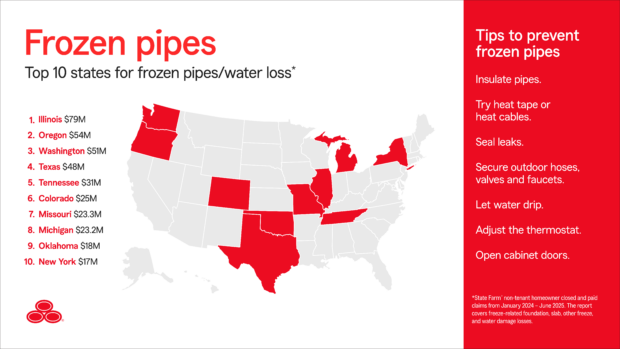
New analysis highlights just how costly frozen and winter water damage claims can be. From January 2024 through June 2025, State Farm received more than 20,000 claims, totaling over $628 million in paid losses.
The average claim payment exceeded $30,000, according to the insurer’s non-tenant homeowner closed-payment claims data.
Claims of water damage caused by freezing, including damage to foundations and slabs, other freeze-related damage, and water damage resulting from frozen conditions, were included in the report.
The five states with the highest total claim costs paid were Illinois, Oregon, Washington, Texas, and Tennessee.
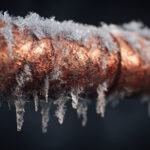
Pipe bursts due to freezing can be more extensive than most homeowners expect.
Frozen pipes can ruin drywall, foundations, floors, toilets, electrical systems, and personal belongings.
Repairs can take weeks or even months to complete.
What to Do if Pipes Freeze:
- If faucets run dry, keep them open and call a plumber.
- Avoid using electrical appliances near standing water due to the risk of electrocution.
- Never use an open flame to thaw pipes; it’s a fire hazard.
- Use a hair dryer cautiously to warm pipes, starting near the faucet and moving toward the frozen section—avoid standing water.
- If pipes burst, shut off your main water valve and leave faucets open. Know where your shutoff valve is before an emergency.
- Contact your insurance company if damage occurs.
Prevent Frozen Pipes:
- Let faucets drip during cold nights to keep water flowing.
- Open cabinet doors to warm pipes under sinks and exterior walls.
- Seal leaks that let cold air in.
- Disconnect garden hoses and drain outdoor pipes.
- Winterize pools by draining equipment and turning off freeze guards.
- Keep your home heated to at least 55°F.
- Remember, turning off water can prevent freezing, but it will disable fire sprinklers.
Formed when melting snow refreezes at the roof edge, ice dams cause leaks that damage walls, ceilings, and insulation—and can lead to mold.
Prevent Ice Dams:
- Ventilate eaves and ridges to circulate cold air under the roof.
- Seal attic hatches and whole-house fans to keep heat inside.
- Add insulation to the attic floor.
- Replace recessed lights with sealed “IC” fixtures to safely insulate.
- Properly flash chimneys with steel and fire-stop sealant—avoid spray foam.
- Seal and insulate HVAC ducts with mastic and foil-faced fiberglass.
- Caulk around cables, vents, and any spots letting air escape.
Use a box fan in the attic aimed at the roof’s underside where the leak is located to warm the ice dam. Carefully remove snow with a long-handled aluminum roof rake. Avoid climbing onto the roof during winter weather.
 AI Data Center Boom: Understanding How Risks Are Changing
  Laws to Protect Workers from AI Risks Signed by California Governor
  Nearly 100% of U.S Now Covered by NOAA’s Flood Mapping Tool
  Sedgwick: Property Claims Face Delays, Are Growing More Complex