











A bill that promises legislative reform in California to speed up disaster recovery for homeowners and renters through improved insurance coverage and expanded consumer protections was introduced on the anniversary of the Los Angeles wildfires, the California Department of Insurance announced.
The Disaster Recovery Reform Act, Senate Bill 876, would also require a disaster recovery plan from insurers for handling claims effective in emergency situations and it would double penalties during declared emergencies for violations of insurance fair claims practices and settlement law. SB 876 was introduced by Senate Insurance Committee Chair Steve Padilla.
The proposed legislation is a response to wildfire disaster survivors’ calls for swifter claims payments, CDI said.
According to Insurance Commissioner Ricardo Lara, identified by CDI as a bill sponsor, wildfire survivors have continued to report ongoing problems accessing their insurance benefits, with delays, denials and miscommunication from insurance companies at the top of the list of consumer complaints filed with CDI since the January 2025 L.A. wildfires.
Related articles: The Good Neighbor; Unpacking a Consumer Intervenor’s Novel Idea
Insurers have paid more than $22.4 billion on tens of thousands of claims from the L.A. wildfires, according to the latest CDI data. In a report one year on from the wildfires in 2025, Morningstar DBS Research issued a perspective that called the fires “a significant stress event” for California’s property/casualty insurance sector.
The CDI’s latest data shows 94 percent of 42,121 policyholder claims filed have been fully or partially paid, but Lara said more action is needed for successful recoveries and safer communities.
SB 876 would require a “disaster recovery plan” from insurers for handling claims and meeting timelines to be reviewed by the CDI in advance and put into effect in an emergency situation.
It would double penalties during a declared emergency for violations of insurance fair claims practices and settlement law, and require insurance companies pay restitution to policyholders when they violate the law.
(Editor’s Note: More specifically, the current language of the Insurance Code, which sets forth a civil penalty “not to exceed five thousand dollars ($5,000)” for each unfair or deceptive act, and “not to exceed ten thousand dollars ($10,000) for each [willful] act,” would be changed to require a civil penalty “of no less than five thousand dollars ($5,000)…, not to exceed ten thousand dollars ($10,000) for each act, or….no less than ten thousand dollars ($10,000) for each [willful] act, not to exceed twenty thousand dollars ($20,000) for each act.” Emphasis added.)
The bill aims to address the reported delays in payment from the assigning of multiple adjusters to claims by requiring insurers to give status reports to policyholders within five days anytime a new adjuster is assigned.
It would also:
- Expand policy limits for additional living expenses by 100% in a declared disaster.
- Expand up-front payments by requiring actual cash value and structure replacement cost be paid quickly following a total loss, with interest payable if late.
- Provide recovery funds by requiring a mandatory offer of extended and guaranteed replacement cost coverage when writing a policy, and regular updated replacement cost estimates for new business and renewals.
- Apply mandatory building code upgrade coverage at the time of rebuild — not at the time of loss — to account for updated rules.
Separately, after the CDI announcement was published, Consumer Watchdog and the Eaton Fire Survivors network announced two different bills introduced by Senator Sasha Pérez: the Fair Claims Practices and Transparency Act, SB 877, and the Insurance Payment Accountability Act, SB 878.
According to the Consumer Watchdog media statement, SB 877 requires transparency and accountability in loss estimate documentation so homeowners can clearly see how their payout was calculated, what changes were made, who made them and why—allowing survivors to verify accuracy, challenge errors and access the full benefits due to them. Specifically, the language of the bill spells out residential property insurers would be required “to provide the named insured every version of a claim-related document…within 15 calendar days of the creation or generation of the document,” including “the full name and title of every person who made, ordered, reviewed, or approved a change to the versions provided and a detailed explanation of why the change was made.”
The Payment Accountability Act, SB 878, which aims to strengthen existing prompt-payment insurance laws, would impose interest penalties when insurers delay issuing payments. The bill language indicates an interest penalty of 20 percent per year for insurer who miss existing deadlines for responding to claim notices, acceptances, denials and payments.
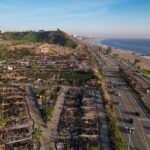
The L.A. wildfires, which destroyed 11,000 homes, put a spotlight on the state’s already existing homeowners insurance crisis. The fires precipitated moves by several insurers to curtail or halt offering homeowners insurance in the wildfire-prone state, and prompted the state’s insurance regulator to initiate several changes to regulations to fast-track rate requests and use better catastrophe modeling to encourage carriers to return.
Lara took several steps to try and shore up the state’s ailing insurance market, which according to the Morningstar report have enabled carriers to get premium increases quickly. This reform and others, which includes letting insurers use more catastrophe modeling, are “a move in the right direction to create a sustainable property insurance market,” according to Morningstar, which also cautioned that a heavy reliance on the FAIR Plan insurer of last resort still poses a risk for the industry.
In another move aimed at relief for wildfire survivors, California Gov. Gavin Newsom said a group of major banks has agreed to extend mortgage relief for L.A. wildfire victims, as the area struggles to rebuild one year after the devastating blazes.
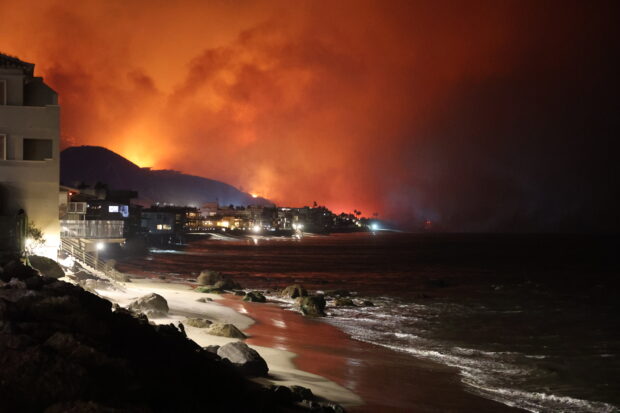
Top photo: 2025 Pacific Palisades Fire. Source: CalFire.
A version of this article was previously published by Insurance Journal.
 Six Flags Magic Mountain Retires X2 Roller Coaster Amid Brain Injury Lawsuits
  Amazon Cargo Plane Pilots Weren’t Warned About Wind Before Miami Crash: NTSB
  Federal Bill Seeks to Reduce Work Week to 32 Hours
  The Technology Taking Parametric Insurance Mainstream