



















Three new projects directed at advancing safety in mobility technologies were announced by Toyota’s Collaborative Safety Research Center (CSRC).
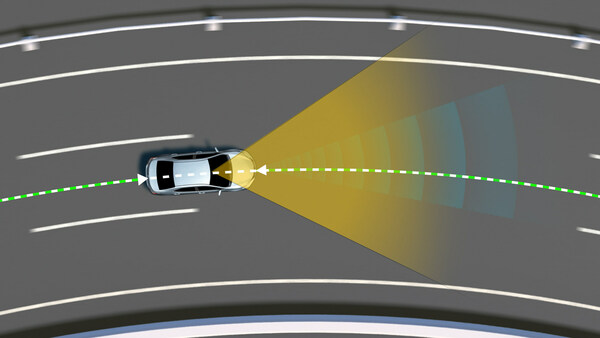
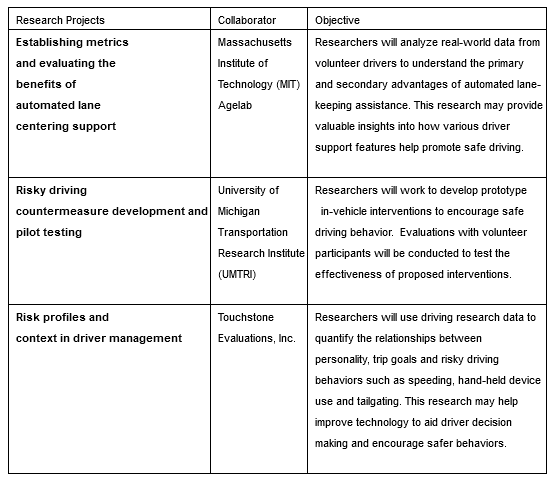
The projects include a review of the benefits of vehicle lane centering, the creation of an in-vehicle intervention prototype to promote safe driving and using data technology to aid driver decision-making to encourage safer driving behavior.
The automaker’s research center also announced that it has joined the Vulnerable Road User Injury Prevention Alliance (VIPA) at the University of Michigan International Center for Automotive Medicine (ICAM) to support ongoing accident research with shared road-users including pedestrians, cyclists and e-scooter riders.
VIPA’s role is to enhance the understanding of “common scenarios between motor vehicles and non-vehicle road users that have historically led to crashes and injuries” in order to effectively limit or prevent them from ever occurring.
The three latest projects, along with 13 projects announced in 2022, are part of the current five-year $30 million commitment to “explore diverse safety needs and analyze inclusive mobility options that cater to various applications, physical characteristics and accessibility levels for individuals and society,” the research center said.
“By collaborating with researchers to study real-world problems related to mobility technologies, we aim to develop enhanced engineering tools and empower drivers to maximize the potential of advanced technologies,” said Danil Prokhorov, director of Toyota’s CSRC.
The new projects will leverage experts from Massachusetts Institute of Technology Agelab, University of Michigan Transportation Research Institute and Touchstone Evaluations, Inc.
Project findings will be shared publicly.
The Collaborative Safety Research Center (CSRC) was created in 2011 with the intent to advance mobility safety.
To date, the research center has received $115 million for foundational and applied safety research, including development of tools and testing procedures related to advanced driver assistance systems (ADAS) and research into human factors on vehicle safety.
The current phase of research, set between 2022 – 2025, is focused on three key tracks:
Human-Centric: Ensuring that safe mobility technologies are universally accessible and comprehensible, enabling everyone to benefit from them.
Safety Assurance: By investigating traffic environment, human drivers and potential safety hazards, the aim is to enhance safe operations and mitigate risks associated with mobility technologies.
Assessment: Focus on quantifying mobility safety measures to facilitate informed decision-making and drive effective safety strategies.
The new initiatives join CSRC’s roster of 98 research projects with more than 30 different institutions.
To date, the center has published over 275 research papers and engaged more than 300 researchers, who have publicly shared the output on a global scale.
 Edison Utility Shares Drop Due to Willful Misconduct Allegations in Eaton Fire Case
  Insurers Say French Supermarkets’ Cyber Insurance Unlikely to Cover Food Losses
  Business Interruption Claims Approach $1M Average, Says Allianz
  Monster Tsunami Sent Water 1,580 Feet Up an Alaskan Mountain