













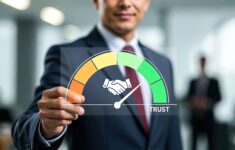

The U.S. has joined a list of mostly emerging-market countries where ESG supply-chain risks are “high,” after the world’s richest economy failed to provide adequate protections for vulnerable populations including migrant children, according to a fresh study.
The U.S. saw its ranking decline on almost all metrics, according to an analysis published by Elevate, an ESG (Environmental Social Governance) advisory and analytics company that’s owned by LRQA, which sits in the investment arm of Goldman Sachs Group Inc.
The authors of the Elevate report said they found it “especially concerning” that the deterioration registered in U.S. scores was tied to the “most severe forms of ESG risk,” such as those relating to the treatment of children. In last year’s ranking, the U.S. posed a “medium” supply-chain risk in the Elevate scale, which has four levels spanning “low” to “extreme.”
The downgrade follows months of revelations first reported by the New York Times that companies have been employing children as young as 12 to work in dangerous conditions. The U.S. Department of Labor says there’s been a 69 percent jump in illegal child labor since 2018. That’s ignited a political firestorm, with Democrats wanting more resources to police employers. Yet in some states, Republican lawmakers are seeking to relax laws amid labor shortages.
The composition of supply chains is set to play an increasingly important role for businesses and investors as new regulations raise the specter of legal liability for those who fail to screen for violations.
A study by RBC Capital Markets found that this year’s proxy season saw an increase in the number of shareholder proposals on ESG risks supply chains. Clarity AI, a technology platform that provides sustainability information to the finance industry, says it’s experimenting with satellite data amid demand from clients to confirm information provided by corporations.
“There are new data points and new metrics that are becoming more relevant, and some are big, for example, transition plans,” said Patricia Pina, product research and innovation head. “We need to focus on the gap between what companies say and what they do to make real progress.”
Stricter environmental, social and governance rules are coinciding with less transparency and increasing risks in regions normally deemed safe, the Elevate study found.
“Of the many conclusions that can be drawn from our 2023 supply chain ESG risk ratings update, perhaps the most important one is that the West—long assumed to be a safe haven for its better production standards—is high risk,” the report said.
With the U.S. performing worse in the latest assessment, roughly half the global markets Elevate ranks are now considered “high” risk, the report said. And while countries like the UK, Germany and Portugal continued to be ranked “medium” for overall ESG supply-chain risks, they were also deemed “high” risk in categories such as child labor and wage-related violations, the study found.
Elevate’s definition of “high” risk:
“A high-risk designation indicates that a country is highly likely to experience risk events that contravene ESG governance frameworks, including those supported by local and international law. These violations could range from environmental degradation to the use of child labor within local supply chains. Our analysis spans 38 categories of supply chain ESG risk indexes, which we compile through the 20,000+ audits we undertake annually.”
At the same time, it’s getting harder to collect data on such violations as assurance companies face increasing obstacles to viewing first-hand working conditions and environmental issues, the Elevate report found.
Auditors hired by companies to check on their supply chains are being turned away and even lied to, according to Erin Lyon, head of ESG consulting at LRQA. Employees are coached on how to answer questions by firms hired for that purpose, she said.
That’s eroding what’s known as audit transparency, which is the ability to assess the credibility of information. It’s an issue that’s particularly acute in China, where about two-thirds of audits conducted in the second half of 2022 are unreliable due to inadequate access, the report found. In India, just over half the audits conducted were transparent, it said.
For audits, “transparency is a critical concern, particularly as it relates to ensuring compliance with the EU Due Diligence Directive,” Lyon said.
In the EU, the Corporate Sustainability Due Diligence Directive has just made it through the bloc’s parliament. The framework, which would hold companies liable for social and environmental violations in their value chains, is now being debated across EU member states.
Treasury Secretary Janet Yellen told U.S. lawmakers on Tuesday that while the Biden administration supports efforts to clean up supply chains, it’s concerned about the “extra-territorial scope” of EU regulations. She also warned of potential “negative, unintended consequences” of such rules.
Companies that fail to clean up their supply chains face not just the risk of legal liability, “but to reputation and business relationships,” Lyon said. Such violations are “being increasingly understood as a material risk.”
Photo: Photographer: AFP/Getty Images
 Sedgwick: Property Claims Face Delays, Are Growing More Complex
  Federal Bill Seeks to Reduce Work Week to 32 Hours
  Viewpoint: The One Thing Holding Back Insurers’ AI Efforts
  California Tops List of Homes Facing Extreme Wildfire Risk, Mitigation Cuts Risk up to 70%