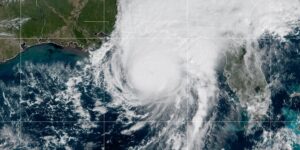















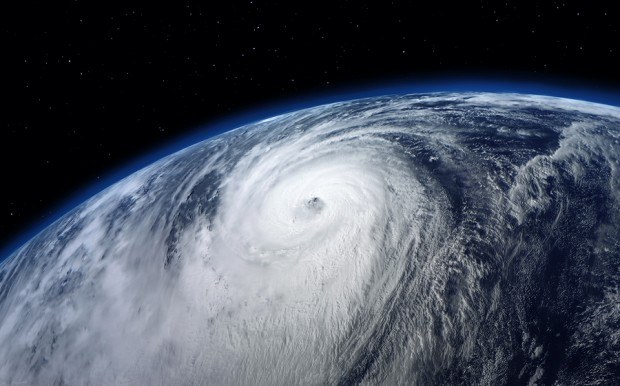
Japan maintained flood and landslide warnings covering much of the nation after Typhoon Halong moved out to the Sea of Japan this afternoon.
Halong crossed Shikoku, the smallest of Japan’s four main islands, and western Honshu earlier today, with winds gusting as high as 160 kilometers (100 miles) per hour. It was centered about 60 kilometers west of Kanazawa city on the Japan Sea coast, moving north-northeast at about 35 kilometers per hour as of 4 p.m., according to the Japan Meteorological Agency.
The storm disrupted rail and air services yesterday and today, causing hundreds of flight cancellations and shutting down train service in western Honshu and Shikoku, the local rail operators reported.
Emergency warnings remained in effect for Mie prefecture in central Japan where Typhoon Vera, the deadliest storm ever recorded in the nation, left more than 5,000 dead and 1.6 million homeless in 1959, according to the website hurricanescience.org.
Japan averaged more than 11 typhoons annually during the 30-year period through 2010, most of them occurring between July and October, according to the weather agency. Typhoon Neoguri last month left at least three dead after passing over Kyushu and skirting the nation’s Pacific coast.
 Push to End U.S. Changing Clocks Hits Dead End
  AI Data Center Boom: Understanding How Risks Are Changing
 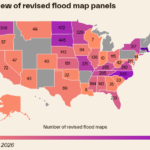 FEMA’s New Flood Maps Mean More Homes Require Flood Insurance: Cotality
  The Latest Launches from Vertafore, One Inc., Qumis