















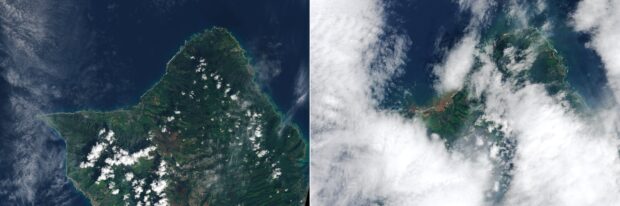
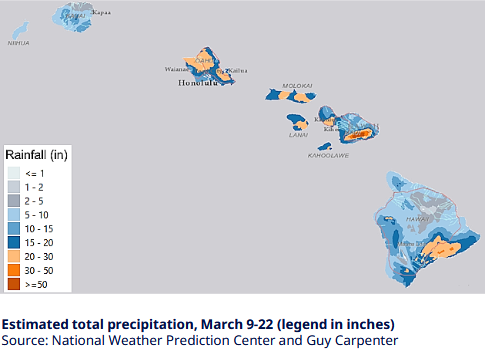
Hawaii’s multi-day storm event last month resulted in swaths of heavy rain totaling up to 25 inches in some areas, according to analysis by Marsh’s Guy Carpenter.
Subtropical weather systems, known as Kona lows, siphoned moisture from the tropics, fueling slow-moving thunderstorms with torrential, destructive rains, according to a NASA summary of the weather event.
The double Kona storm patterns caused Honolulu to break a 75-year-old 24-hour record, with rainfall totaling nearly 50 inches on Maui and 39 inches on Hawaii. Damaging winds with hurricane gusts of 135 MPH were recorded.
Homes were swept into rivers, roads collapsed, and catastrophic flooding and landslides cut off island communities for days. The Department of Transportation estimates highway damage will exceed $23 million.
Hawaii Governor Josh Green, M.D., issued a disaster proclamation for the islands effective through next week.
Flood insurance coverage across the state remains low, according to Guy Carpenter’s analysis, with just 4.2% of properties in Hawaii covered by flood insurance.
FEMA estimated that more than 400,000 properties statewide don’t carry flood insurance, increasing the likelihood of uninsured losses for homeowners, small businesses, and the agricultural sector.
Extreme rainfall, rising sea levels, and an aging infrastructure highlight the impact of climate change on the Hawaiian islands.
 Texas Reports Downward Trend in Home, Auto Insurance Rates
  AI Models May Soon Self-Replicate Across Smart-Home Devices, Anthropic Warns
  Most Americans Think AI Is Developing Too Fast: Poll
  The Latest Launches From The Zebra, Sigo Seguros, Applied Systems