













January’s Winter Storm Fern caused insured losses of $6.7 billion, making it one of the costliest winter storms since 1950, according to catastrophe modeler KCC.
The tally includes privately insured losses from damage to residential, commercial and industrial properties from the snow, ice, wind and deep freeze that engulfed more than half of U.S. states, affecting about 200 million people starting on Jan. 23 and lasting until Jan. 27.
Meanwhile, Verisk estimates insured losses to property and auto from the storm could reach $4 billion, according to an initial analysis by the company’s Catastrophe and Risk Solutions group. Freeze impacts are expected to be the largest driver of losses, with supplemental losses from wind and snow.
Early results from Verisk’s updated U.S. Winter Storm Model indicate that 14 states, stretching from Texas to Massachusetts, may each exceed $50 million in insured losses.
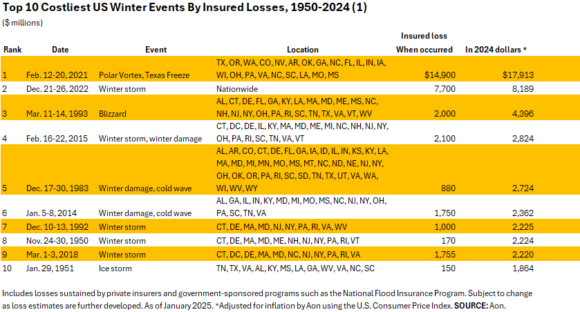
If either estimate is accurate, Winter Storm Fern will be the third costliest winter event to insurers, ahead of a blizzard in 1993.
Fern’s freezing temperatures caused the most damage, followed by the snow and ice. Fallen trees and power lines caused widespread outages in southern New Mexico and Texas, up to Kentucky. Austin, San Antonio and Houston recorded record low temperatures.
Losses were highest in the states of Texas and Tennessee, said KCC.
The most outages were in Louisiana through north Mississippi, into Tennessee. Prolonged outages increase the chance of damage, especially from frozen pipes. These effects will likely be more pronounced in the southern and southeast states since properties are usually not constructed to withstand the types of low temperatures seen in Fern. Commercial properties were more significantly damaged than homes. KCC said commercial claims are, on average, generally much higher than residential.
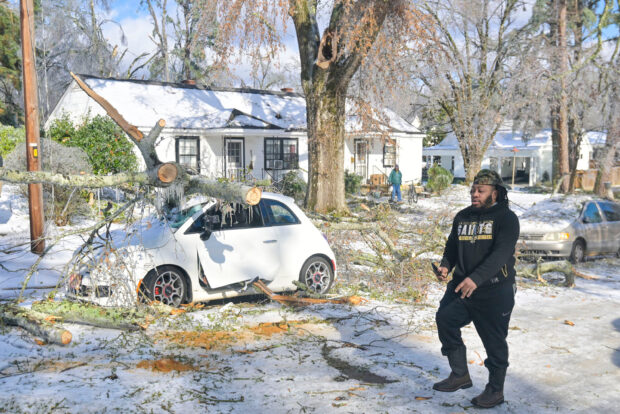
Photo: A man walks past a car damaged by a tree that fell during an ice storm, in Oxford, Miss. on Jan. 26. (AP Photo/Bruce Newman)
 Federal Bill Seeks to Reduce Work Week to 32 Hours
  Amazon Cargo Plane Pilots Weren’t Warned About Wind Before Miami Crash: NTSB
  Zurich Insurance Group Completes Acquisition of Beazley, Names New Leadership for Insurer
  California Tops List of Homes Facing Extreme Wildfire Risk, Mitigation Cuts Risk up to 70%