















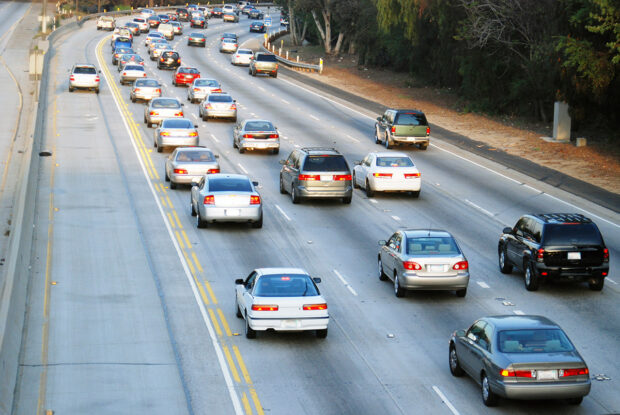
Congestion and traffic delays continued to increase in urban areas around the world; analysis of 290 U.S. cities showed congestion increased in 88 percent of them. In certain cities, like London, Paris, and New York City, traffic congestion remained at current levels or even decreased, according to the latest Global Traffic Scorecard by INRIX.
Congestion Rises, Commuters Return, Transit Lags
Chicago (112 hours lost), New York City (102 hours), Philadelphia (101 hours), Los Angeles (87 hours), and Boston (83 hours) are the most congested cities in the United States, costing drivers $2,063 each in Chicago alone, according to the transportation data and analytics provider.
Congestion levels in New York City remained flat in 2025, likely due to the city’s new congestion pricing policy.
Overall, U.S. cities experienced increasing traffic congestion in 2025.
Congestion increased in 254 of the 290 cities analyzed, as travel returned to pre-COVID congestion levels. The percentage of people commuting by car is nearly back to 2019 levels.
Public transit has not made the same recovery and is down 22 percent from 2019.
More than three-fourths of people in U.S. cities commute by car, significantly outweighing other modes of commuting to work. Just 13 percent of people work from home, 4 percent take public transit, and 5 percent rely on other modes like taxis, walking, and cycling.
Where people are working is stabilizing, the report noted.
In 2023 and 2024, fewer people worked from home as businesses and organizations increasingly brought employees back into the office, often in urban areas, a factor in travel returning to pre-COVID levels. This return to the office slowed significantly in 2025, dropping by only 2 percent, indicating that shifts in working environments and habits have stabilized, the report added.
Housing Costs and Infrastructure Strain
Structural factors are intensifying congestion pressures. Rising housing costs are pushing many workers farther from job centers, contributing to the rise of so‑called “super commutes,” the report outlined.
Billions in infrastructure spending have not kept pace with demand. Aging bridges, major construction corridors, and delayed upgrades continue to amplify delays, especially in fast‑growing metro areas.
Traffic Safety: U.S. Fatality Rates Improve for First Time in Four Years
2025 brought one of the few bright spots in U.S. mobility. Traffic fatalities declined, returning to pre-COVID levels after spiking for four years, INRIX found.
Fatality rates in the U.S. remain significantly higher than those in the U.K. and Germany, a reminder that Vision Zero goals for 2030 remain challenging.
London and Paris: Building Cities Designed for Fewer Cars
Along with New York City’s congestion decline, traffic congestion in London and Paris either remained the same or decreased in 2025, data showed.
In the U.K., congestion increased in most urban areas. This increase was outweighed by London’s drop in traffic, which accounts for nearly half of all delays in the U.K.
Germany saw relative spikes in 2025 traffic delays.
Congestion increased in 62 German cities, with Cologne taking the top spot in the German ranking.
Eight German cities experienced decreases in congestion, while three remained the same.
Overall, INRIX found that congestion in the U.K. and Europe returned to pre-COVID levels.
Micromobility and Driverless Tech: Two Growth Forces to Watch
Across several U.S. cities, micromobility saw meaningful adoption, driven not just by demand but by cities expanding fleets and introducing new vehicle types like seated scooters and throttle-only e-bikes. Seattle and Washington, D.C., are among those seeing notable quarter-over-quarter growth.
The report noted that autonomous vehicles are entering a new phase.
Waymo expanded its service onto freeways in San Francisco, Phoenix, and Los Angeles, and launched paid robotaxi service in Florida and Texas.
As congestion intensifies and safety remains a priority, interest in automated vehicle technologies, from driverless taxis to automated braking, continues to grow.
With the World Cup coming to U.S. cities in 2026, it’s expected to bring massive amounts of traffic and fans from across the globe. U.S. cities, particularly Los Angeles, are already planning for the influx of traffic and commuters.
The World Cup games will be a true test of how well cities address congestion, INRIX added.
 Viewpoint: The One Thing Holding Back Insurers’ AI Efforts
  Highway Safety Agency Plans to Revise Outdated Vehicle Lighting Rules
  The Latest Launches From The Zebra, Sigo Seguros, Applied Systems
  Sedgwick: Property Claims Face Delays, Are Growing More Complex