














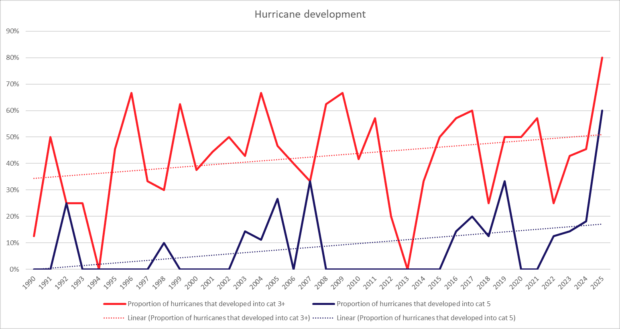
The 2025 Atlantic hurricane season ended with a record number of Category 5 storms, signaling new climate-driven extremes ahead, according to researchers at MS Amlin.
“On paper, this year’s Atlantic storm season appeared relatively benign,” said Sam Phibbs, MS Amlin’s head of Catastrophe Research. “The total number of named storms and hurricanes fell below both forecasts and the long-term average. Yet 2025 will be remembered for the unprecedented share of storms reaching high intensities.”
“The impact of climate change on hurricane wind losses in the U.S.” is a peer-reviewed article published in the Journal of Catastrophe Risk and Resilience, analyzing how a two-degree warming scenario could impact future Atlantic hurricane seasons.
Category 4 and 5 hurricanes with winds exceeding 130mph could become more frequent, maintaining strength further north due to warming ocean temperatures, the researchers found.
Florida would see the largest projected increase, with insured losses rising by 44 percent.
New York’s insured losses could rise by 64 percent, researchers said, while Rhode Island and Massachusetts could see potential increases of over 70 percent in average annual loss.
The Carolinas may face a 60 percent increase in losses during major storm years, three times higher than the projected increases expected in Texas.
A repeat of the 2022 hurricane season, which cost US$62 billion, could exceed $90 billion in insured losses under the warming scenario.
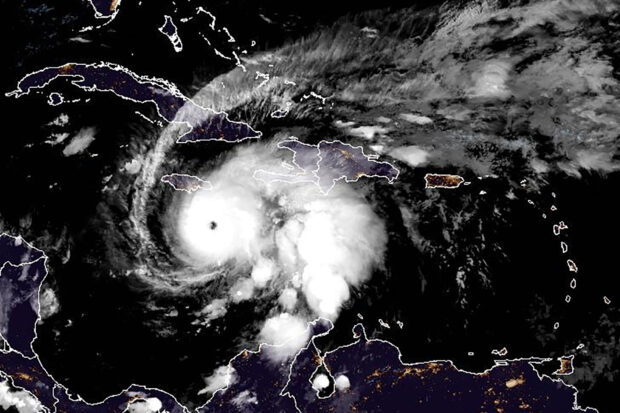
Phibbs noted that Hurricane Melissa was the most powerful storm ever recorded, with sustained winds reaching 185mph.
“Melissa was not an anomaly but a warning of the supercharged storms we are likely to face more often in a warming world. Its rapid intensification – with winds doubling from 68mph to 139mph in a single day – illustrates how warmer oceans are fuelling hurricane strength in the Atlantic basin,” Phibbs added. “This trend is deeply concerning, particularly as rapid intensification remains difficult to forecast, leaving communities with less time to prepare or evacuate.
A staggering 60 percent of hurricanes hit a Category 5 level, Phibbs said.
“This aligns with projections that climate change is pushing more storms towards extreme intensity, and potentially devastating consequences if they make landfall,” he said.
Despite frequency and intensity, no hurricanes made landfall in the U.S. this year.
Phibbs said this is due to luck, rather than any long-term trend.
“The season should serve as a cautionary tale: our research indicates insured losses from U.S. hurricanes could rise nearly 50 percent under a 2°C global warming scenario,” the research head stated. “Warmer oceans will also enable storms to maintain their terrifying strength further north, threatening cities along the upper East Coast – regions historically less exposed and less prepared.”
The findings suggest compelling reasons for stronger building codes across the Northeast and mid-Atlantic, said Phibbs, bringing standards in line with hurricane-prone states such as Florida and Louisiana.
“Without such measures, the protection gap will widen, leaving more people vulnerable to the catastrophic impact of these storms,” he added. “This season stands as one of the starkest reminders of the risks we now face.”
 Majority of Online Scam Campaigns Target Common Infrastructure: Study
  Friend of Suspected FBI Data Thief Warned Teen Not to Hack Bureau
  Building Trusted Insurance Brands: How Nationwide Delivers Tangible Value to Customers
  Push to End U.S. Changing Clocks Hits Dead End