














A new report highlights how nighttime road safety improved with automatic pedestrian detection, according to research conducted by AAA.
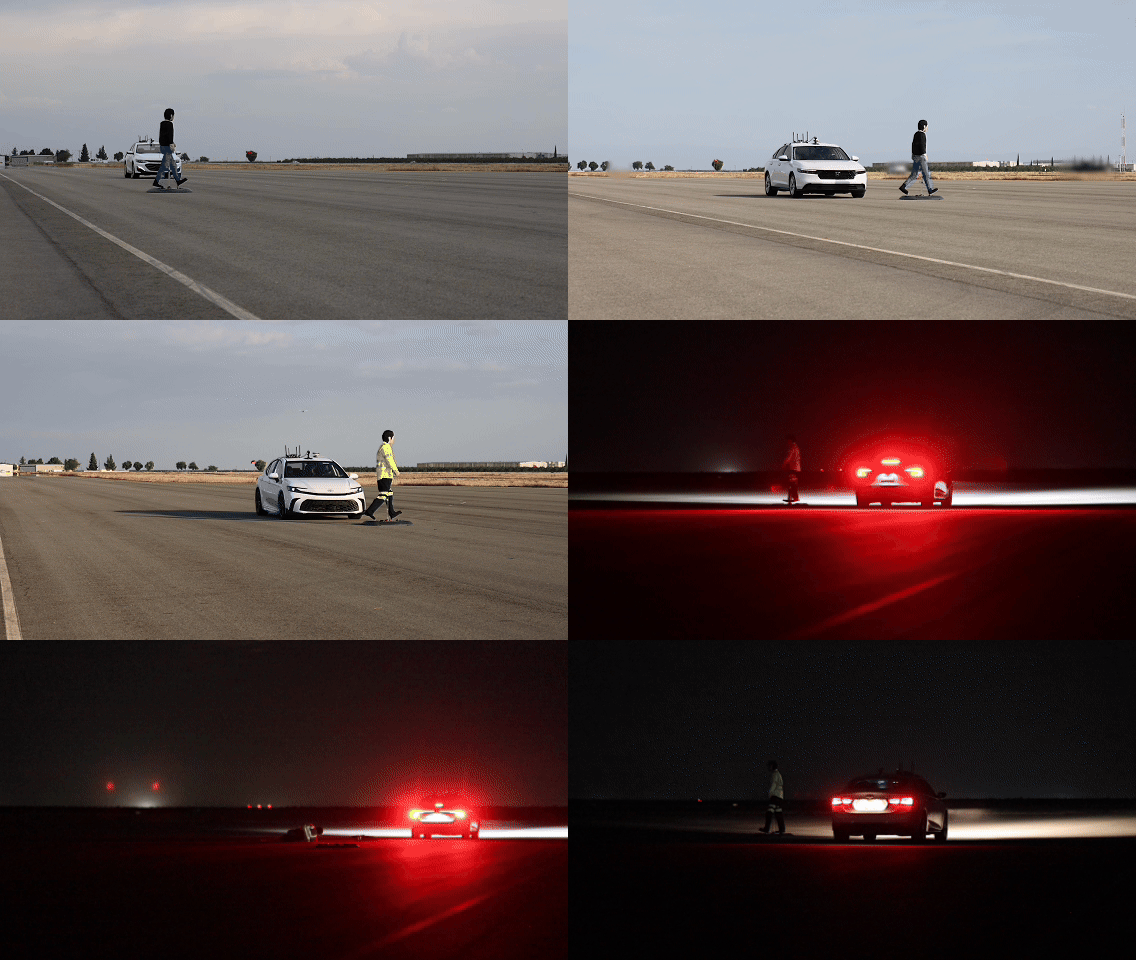
Testing was conducted on a closed course using a robotic pedestrian adult crossing in front of the test vehicles traveling at 25 mph. Tests were conducted during the day and night with the adult pedestrian dressed in both standard, non-reflective clothing and ANSI Class 3 high-visibility apparel.
A review of vehicles equipped with pedestrian automatic emergency braking (PAEB) systems revealed that nighttime PAEB impact avoidance improved from 0 percent in 2019 to 60 percent in 2025.
Challenges remain because when the pedestrian target was outfitted with an ANSI Class 3 ensemble, the type of high-visibility clothing used by roadside assistance providers, the performance of the evaluated PAEB systems was mixed.
The impact of high-visibility clothing on PAEB systems showed no negative effect on performance during the daytime, avoiding a collision 95 percent of the time, but varied under nighttime conditions, ranging from improved avoidance to a complete loss of detection.
“Recent improvements in pedestrian automatic emergency braking systems are promising; however, there is still more work to be done,” said Greg Brannon, AAA’s director of Automotive Engineering Research. “Most pedestrian fatalities occur at night, and these systems can make a significant difference during those hours. However, mixed performances with high-visibility clothing indicate that further refinement and testing are necessary to save more lives, including those of our roadside assistance providers.”
Detection and response inconsistency poses ongoing risks to pedestrian safety, given that over 75 percent of pedestrian fatalities occur after dark, the AAA report stated.
Recent findings from the AAA Foundation for Traffic Safety (FTS) revealed pedestrian fatalities in the U.S. rose by more than 80 percent in the past 15 years, with this increase occurring on urban arterial roads and after dark.
AAA recommends that manufacturers enhance the reliability of PAEB systems during nighttime conditions. Evaluations should also consider the system’s effectiveness when pedestrians wear different types of apparel, particularly high-visibility clothing, the report added.
In addition, regulators and standards organizations are encouraged to improve pedestrian safety protocols by adding nighttime scenarios that include high-visibility apparel. Expanding evaluation practices will provide a better assessment of PAEB performance and help reduce pedestrian injuries and fatalities.
In partnership with the Automobile Club of Southern California’s Automotive Research Center, four test vehicles —the 2024 Honda Accord, the 2025 Toyota Camry, the 2025 Chevrolet Malibu, and the 2025 Tesla Model 3 — were evaluated under controlled day and night conditions, traveling at a constant speed of 40 km/h (25 mph) toward a perpendicular crossing pedestrian. Tests compared results from 2019 with standard and ANSI Class 3 high-visibility clothing, recording system warnings, braking responses, and outcomes.
Video provided by AAA.
 The Latest Launches from Vertafore, One Inc., Qumis
  Lyft to Pay $272M to Settle California Rideshare Drivers’ Wage Theft Lawsuit
  Highway Safety Agency Plans to Revise Outdated Vehicle Lighting Rules
  Building Trusted Insurance Brands: How Nationwide Delivers Tangible Value to Customers