















New research confirms creating an ember-resistant buffer around a home cuts its risk of igniting from a wildfire in half, according to the Insurance Institute for Business & Home Safety (IBHS).
“The upcoming Labor Day weekend is the perfect time to get started,” said IBHS Senior Director for Wildfire Steve Hawks, who had a 30-year career with CAL FIRE. “You can begin at the curb with a lush lawn and native landscaping that extends up to five feet from your home. Then use those last few steps to create an outdoor space where embers can’t survive.”
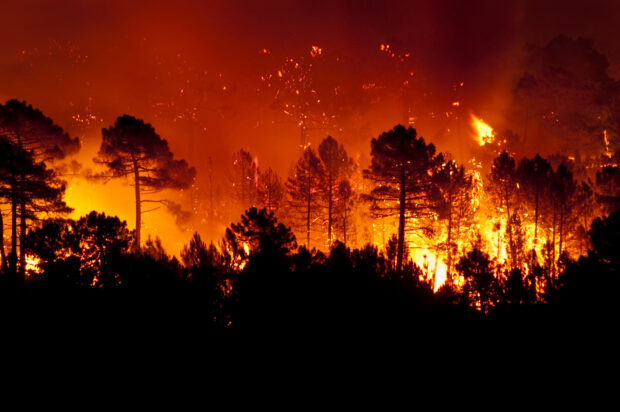
A leading cause of ignition, embers can travel miles ahead of a fire front, accumulating at the base of a structure.
Replacing combustible ground cover with hardscaping, such as river rocks or steppingstones and using ceramic planters and wrought iron patio furniture in the five-foot buffer eliminates items that can ignite, spreading the fire to a structure.
A 2021 research study from IBHS and ZestyAI found property owners who clear vegetation from the perimeter of their home can nearly double their structure’s likelihood of surviving a wildfire.
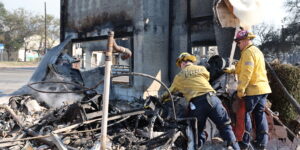
“Time and time again in our post-fire analysis of the Los Angeles County wildfires, we saw the damage done by combustible items like plastic garbage cans right up against a home,” said Hawks. “Something as simple as moving these at least five feet away could be the game-changer for your home surviving a wildfire.”
IBHS launched a new 90-minute online self-paced learning course to help homeowners better understand the science of wildfire and how a system of research-based actions can meaningfully reduce a home’s wildfire risk.
“We want homeowners to have accurate information based on science,” Hawks said. “Unfortunately, some public conversation has caused great confusion, particularly around the idea that some trees actually help catch embers or certain plants don’t burn. The bottom line based on the latest research is this – a limited area that is completely noncombustible prevents ember ignition. And the good news is that it’s easy to create and maintain without reducing your home’s curb appeal.”
The online learning platform includes imagery of IBHS wildfire research, examples of real-life mitigation actions and details of actionable steps to better protect homes. Besides the ember-resistant buffer, homes should have a Class A fire-rated roof and external features such as ember-resistant vents and a minimum of six vertical inches of noncombustible material on exterior walls.
Hawks noted that a 2024 CSAA and UC Berkeley landscape design contest serves as another helpful resource.
In addition to providing examples of an ember-resistant zone, the drawings include ideas for including native trees, plants, flowers and grass extending beyond the first five feet to help provide shade and privacy.
 Push to End U.S. Changing Clocks Hits Dead End
  Why Your Boss Matters More Than Remote or Hybrid Work When It Comes to Burnout and Job Satisfaction
  The Latest Launches from Soteris, CLARA, Cozmo AI
  Most Americans Think AI Is Developing Too Fast: Poll