














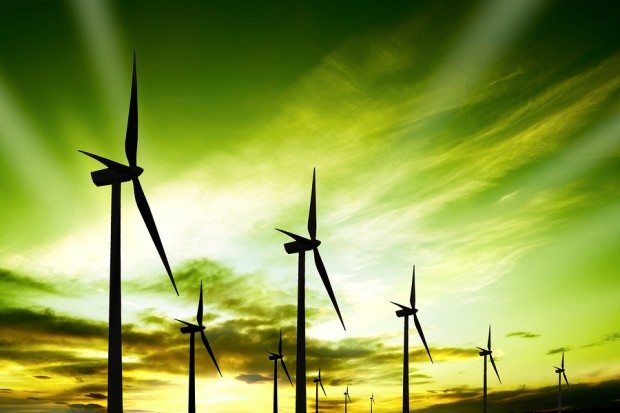
China Re Corp. is launching a renewable energy consortium at Lloyd’s, with a focus on project-specific reinsurance for the construction and operation of offshore wind farms in mainland China.
China Re’s Syndicate 2088 manages and co-leads the consortium along with Canopius Syndicate 4444 and Travelers Syndicate 5000. It is also supported by Chaucer Syndicate 1084, a member of the China Re Group, AXIS Syndicate 1686 and GCube Underwriting Ltd.
 “We are tremendously proud to be launching this consortium,” Janet Helson, CEO of China Re Underwriting Agency 2088, said in prepared remarks. “It’s the first of its kind, enabling international involvement in the Chinese renewable energy market and a great example of the collaboration that exists between the London and Chinese markets.”
The consortium covers construction all risks (CAR), erection all risks (EAR) and third-party liability (TPL) and can provide capacity of up to $225 million per risk.
The offshore sector in China has benefited in recent years from a commitment by President Xi Jinping to provide $360 billion to renewable power development by 2020, explained China Re in a statement. This is intended to improve health and reduce CO2 emissions, which, according to the International Renewable Energy Agency, will provide savings of more than $55 billion a year to the Chinese economy.
Oliver Litterick, renewable energy underwriter at China Re Syndicate 2088, noted in prepared remarks that Lloyd’s has a compelling opportunity to be involved because China is investing heavily in renewable energy.
The consortium, he said, “will be able to access China Re’s domestic client base of offshore wind specialists to bring this new and diverse premium to the London market.”
Source: China Re
*A version of this story appeared previously in our sister publication Insurance Journal.
 Laws to Protect Workers from AI Risks Signed by California Governor
  US States Allege Corteva Spinoff a Bid to Evade PFAS Liabilities
  AI Data Center Boom: Understanding How Risks Are Changing
  How a Kelvin Wave Is Raising the Sea Level Along the West Coast